MCQ
Using visible light what is the shortest wavelength which can be measured?
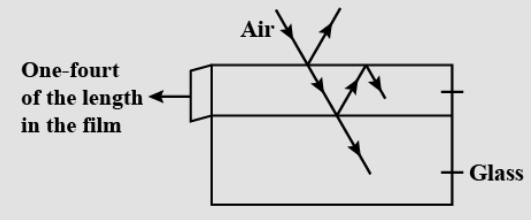
- A200nm
- B100nm
- C350nm
- D175nm
Generate a complete, print-ready paper with questions like this in minutes — across 16+ boards, with answer keys.
Two equal point charges are fixed at x = -a and x = +a on the x-axis. Another point charge Q is placed at the origin. The Change in the electrical potential energy of Q, when it is displaced by a small distance x along the x-axis, is approximately proportional to
|
(a) x |
(b) |
(c) |
(d) 1/x |
A hollow metal sphere of radius 5cm is charged such that the potential on its surface is 10V. The potential at a distance of 2cm from the centre of the sphere
|
(a) Zero |
(b) 10 V |
(c) 4 V |
(d) 10/3 V |
The work done in carrying a charge of 5μC from a point A to a point B in an electric field is 10mJ. The potential difference ( is then
|
(a) + 2kV |
(b) – 2 kV |
(c) + 200 V |
(d) – 200 V |
Select the right option in the following
|
(a) Christian Huygens a contemporary of Newton established the wave theory of light by assuming that light waves were transverse |
|
(b) Maxwell provided the compelling theoretical evidence that light is transverse wave |
|
(c) Thomas Young experimentally proved the wave behaviour of light and Huygens assumption |
|
(d) All the statements give above, correctly answers the question “what is light” |
One junction of a certain thermoelectric couple is at a fixed temperature  and the other junction is at temperature T. The thermo electromotive force for this is expressed by E = K(
 ] . At temperature
  the thermoelectric power is
|
(a) |
(b) |
(c) |
(d) |


