MCQ
Water falls from a tap, down the streamline.
  • Area decreases
  • B
    Area increases
  • C
    Velocity same
  • D
    Area remains same

Answer

Correct option: A.
Area decreases
a
When water falls from a tap, down the streamline area decreases due to increase in velocity of liquid as it experiences gravity, i.e., by equation of continuity.

$A_{1} v_{1}=A_{2} v_{2}$

Need a full question paper?

Generate a complete, print-ready paper with questions like this in minutes — across 16+ boards, with answer keys.
Start Generating Free

Similar questions

A roller coaster is designed such that riders experience "weightlessness" as they go round the top of a hill whose radius of curvature is $20\, m.$ The speed of the car at the top of the hill is between
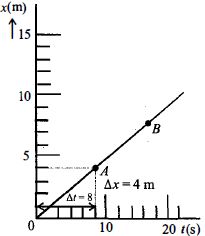
The graph of an object's motion (along the $x-$ axis) is shown in the figure. The instantaneous velocity of the object at points $A$ and $B$ are $v_A$ and $v_B$ respectively. Then
Rain is falling vertically with a speed of $30\,ms^{-1}$ . A woman rides a bicycle with a speed of $12\,ms^{-1}$ in east to west direction. She should hold her umbrella
The time dependence of a physical quantity $P$ is given by $ P = P_0 exp^{(-\alpha t^{2})} $ where $\alpha$ is a constant and $t$ is time. The constant $\alpha$ 
Spacing between two successive nodes in a standing wave on a string is $x$ . If frequency of the standing wave is kept unchanged but tension in the string is doubled, then new spacing between successive nodes will  become
The displacement of an object at any instant is given by $ x = 30 + 20t^2$ , where $x$ is in metres and $ t$ in seconds. The acceleration of the object will be:
The focal length of a converging lens are $f_v$ and $f_r$ for violet and red light respectively:
Dimension formula of $\text{AQ}$, heat supplied to the system is:
A particle free to move along the $x-$axis has potential energy given by $U(x) = k[1 - \exp {( - x)^2}]$ for $ - \infty \le x \le + \infty $, where k is a positive constant of appropriate dimensions. Then
The distance of a particle moving on a circle of radius $12 \,m$ measured from a fixed point on the circle and measured along the circle is given by $s=2 t^3$ (in meters). The ratio of its tangential to centripetal acceleration at $t=2 \,s$ is .........