MCQ
Watt-hour meter measures
  • Electric energy
  • B
    Current
  • C
    Voltage
  • D
    Power

Answer

Correct option: A.
Electric energy
a
(a)Watt-hour meter measures electric energy.

Need a full question paper?

Generate a complete, print-ready paper with questions like this in minutes — across 16+ boards, with answer keys.
Start Generating Free

Similar questions

Two unlike charges attract each other with a force of $10N.$ If the distance between them is doubled, the force between them is:
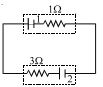
In the figure shown, battery $1$ has $\mathrm{emf}$ $= 6\, V$ and internal resistance $= 1 \,\Omega$. Battery $2$ has $\mathrm{emf}$ $= 2\,V$ and internal resistance $= 3\, \Omega$ . The wires have negligible resistance. What is the potential difference across the terminals of battery $2$ ? ................ $V$
A small circular coil of radius $1\ cm$ and number of turns $100$ is placed inside a long solenoid of radius $5\ cm$ and number of turns $8per \ cm$. The axis of the coil is parallel to the solenoid axis. Then, the coefficient of mutual inductance of the two coils is $($in milli Henry$).$
If $ m$ is magnetic moment and $B$ is the magnetic field, then the torque is given by
Out of dia, para and ferromagnetism, the universal property of all substances is:
For transistor action 

$(1)$ Base, emitter and collector regions should have similar size and doping concentrations.

$(2)$ The base region must be very thin and lightly doped.

$(3)$ The emitter-base junction is forward biased and base-collector junction is reverse biased.

$(4)$ Both the emitter-base junction as well as the base-collector junction are forward biased.

Which one of the following pairs of statements is correct? 

If two charges of $1$ coulomb each are placed $1\ km$ apart in vacuum, the force between them will be:
Two radioactive samples $A$ and $B$ have half lives $T_1$ and $T_2\left(T_1 > T_2\right)$ respectively At $t=0$, the activity of $B$ was twice the activity of $A$. Their activity will become equal after a time
A light wave has a frequency of $4 \times 10^{14}$ Hz and a wavelength of $5 \times 10^{-7}$ meters in a medium. The refractive index of the medium is
A charge (-q) and another charge (+Q) are kept at two points A and B respectively. Keeping the charge (+Q) fixed at B, the charge (-q) at A is moved to another point C such that ABC forms an equilateral triangle of side l. The net work done in moving the charge (-q) is