Question
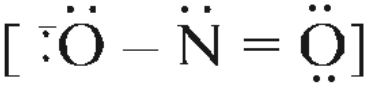
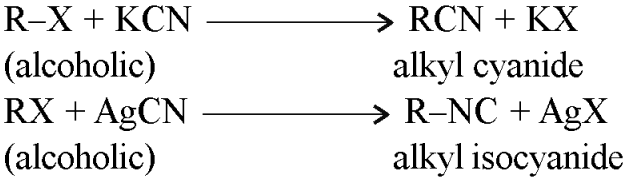
What are ambident nucleophilies? Explain with an example.

Need a full question paper?

Generate a complete, print-ready paper with questions like this in minutes — across 16+ boards, with answer keys.

Start Generating Free

Similar questions

How will you distinguish between the following pairs of compounds:
Chloroform and carbon tetrachloride.
An unknown aldehyde ‘$A’$ on reacting with alkali gives a $ \beta-$ hydroxy aldehyde, which loses water to form an unsaturated aldehyde, $ 2-$ butenal. Another aldehyde ‘$B’$ undergoes disproportionation reaction in the presence of conc. alkali to form products $C$ and $D. C$ is an arylalcohol with the formula, $\ce{C_7H_8O}$.
  1. Identify $A$ and $B$.
  2. Write the sequence of reactions involved.
  3. Name the product, when ‘$B$’ reacts with zinc amalgam and hydrochloric acid.
How will you convert ethanal into the following compounds:
(i) Butane-1,3-diol,
(ii) But-2-enal,
(iii) But-2-enoic acid.
Show that half life of first order reaction is independent to initial concentration.
Name two complexes which are used in medicines.
Explain the nucleophilic substitution reaction of aldehydes and ketones with Grignard reagent (R'-Mg-X) with chemical equations ### Write only chemical reactions to obtain 1º, 2º and 3º alcohols from aldehyde andketone compounds.
An antifreeze solution is prepared from 222.6 g of thylene glycol (C2H6O2) and 200 g of water. Calculate the molality of the solution. If the density of the solution is $1.072 g mL ^{-1}$ , then what shall be the molarity of the solution?
What is weak electrolyte? Explain relation between concentration of weak electrolyte and molar conductivity.
How is the molar conductivity of a weak electrolyte at infinite dilution determined?
i. Define rate constant of reaction.
ii. A first order reaction takes $40$ mins for $30\%$ decomposition. Calculate $t_ \frac{1}{2}$