Question
What are hydrocarbons? Give examples.

Answer

Hydrocarbons are the organic compounds containing only carbon and hydrogen atoms as their constituents. These may be alkanes, alkenes and alkynes.
Alkane: $\ \ \ \ \ \ \ \ \text{H}\\\ \ \ \ \ \ \ \ \ |\\\text{H}-\text{C}-\text{H}\\\ \ \ \ \ \ \ \ \ |\\\ \ \ \ \ \ \ \ \text{H}\\\ \ \ \text{Methane}$ $\ \ \ \ \ \ \ \ \text{H}\ \ \ \ \ \text{H}\\\ \ \ \ \ \ \ \ \ |\ \ \ \ \ \ |\\\text{H}-\text{C}-\text{C}-\text{H}\\\ \ \ \ \ \ \ \ |\ \ \ \ \ \ \ |\\\ \ \ \ \ \ \ \text{H}\ \ \ \ \ \ \text{H}\\\ \ \ \ \ \ \ \text{Ethane}$ $\ \ \ \ \ \ \ \ \text{H}\ \ \ \ \ \text{H}\ \ \ \ \ \text{H}\\\ \ \ \ \ \ \ \ \ |\ \ \ \ \ \ |\ \ \ \ \ \ \ |\\\text{H}-\text{C}-\text{C}-\text{C}-\text{H}\\\ \ \ \ \ \ \ \ |\ \ \ \ \ \ \ |\ \ \ \ \ \ \ |\\\ \ \ \ \ \ \ \text{H}\ \ \ \ \ \ \text{H}\ \ \ \ \text{H}\\\ \ \ \ \ \ \ \ \ \ \text{Propane}$
Alkyl group: $\ \ \ \ \ \ \ \ \text{H}\\\ \ \ \ \ \ \ \ \ |\\\text{H}-\text{C}-\\\ \ \ \ \ \ \ \ \ |\\\ \ \ \ \ \ \ \ \text{H}\\ \text{Methyl group}$ $\ \ \ \ \ \ \ \ \text{H}\ \ \ \ \ \text{H}\\\ \ \ \ \ \ \ \ \ |\ \ \ \ \ \ |\\\text{H}-\text{C}-\text{C}-\\\ \ \ \ \ \ \ \ |\ \ \ \ \ \ \ |\\\ \ \ \ \ \ \ \text{H}\ \ \ \ \ \ \text{H}\\\ \ \ \text{Ethyl group}$ $\ \ \ \ \ \ \ \ \text{H}\ \ \ \ \ \text{H}\ \ \ \ \ \text{H}\\\ \ \ \ \ \ \ \ \ |\ \ \ \ \ \ |\ \ \ \ \ \ \ |\\\text{H}-\text{C}-\text{C}-\text{C}-\\\ \ \ \ \ \ \ \ |\ \ \ \ \ \ \ |\ \ \ \ \ \ \ |\\\ \ \ \ \ \ \ \text{H}\ \ \ \ \ \ \text{H}\ \ \ \ \text{H}\\\ \ \ \ \ \ \text{Propyl group}$
The structures of compounds belonging to a few families are:
$\ \ \ \ \ \ \ \ \text{H}\\\ \ \ \ \ \ \ \ \ |\\\text{H}-\text{C}-\text{Cl}\\\ \ \ \ \ \ \ \ \ |\\\ \ \ \ \ \ \ \ \text{H}$ $\ \ \ \ \ \ \ \ \text{H}\ \ \ \ \ \text{H}\\\ \ \ \ \ \ \ \ \ |\ \ \ \ \ \ |\\\text{H}-\text{C}-\text{C}-\text{OH}\\\ \ \ \ \ \ \ \ |\ \ \ \ \ \ \ |\\\ \ \ \ \ \ \ \text{H}\ \ \ \ \ \ \text{H}$ $\ \ \ \ \ \ \ \ \text{H}\ \ \ \ \ \text{H}\ \ \ \ \ \text{H}\\\ \ \ \ \ \ \ \ \ |\ \ \ \ \ \ |\ \ \ \ \ \ \ |\\\text{H}-\text{C}-\text{C}-\text{C}-\text{NH}_2\\\ \ \ \ \ \ \ \ |\ \ \ \ \ \ \ |\ \ \ \ \ \ \ |\\\ \ \ \ \ \ \ \text{H}\ \ \ \ \ \ \text{H}\ \ \ \ \text{H}$

Need a full question paper?

Generate a complete, print-ready paper with questions like this in minutes — across 16+ boards, with answer keys.

Start Generating Free

Similar questions

Match the organisms given in column I with the methods of reproduction/propagation given in column II:
 
Column I
 
Column II
(i)
Plasmodium
(a)
Spore formation
(ii)
Spirogyra
(b)
Leaves
(iii)
Jasmin
(c)
Regeneration
(iv)
Apple tree
(d)
Budding
(v)
Bryophyllum
(e)
Binary fission
(vi)
Potatoes
(f)
Layering
(vii)
Rhizopus
(g)
Fragmentation
(viii)
Hydra
(h)
Tubers
(ix)
Planaria
(i)
Cutting
(x)
Leishmania
(j)
Multiple fission
(xi)
Sugar cane
(k)
Grafting
(xii)
Rose
 
 
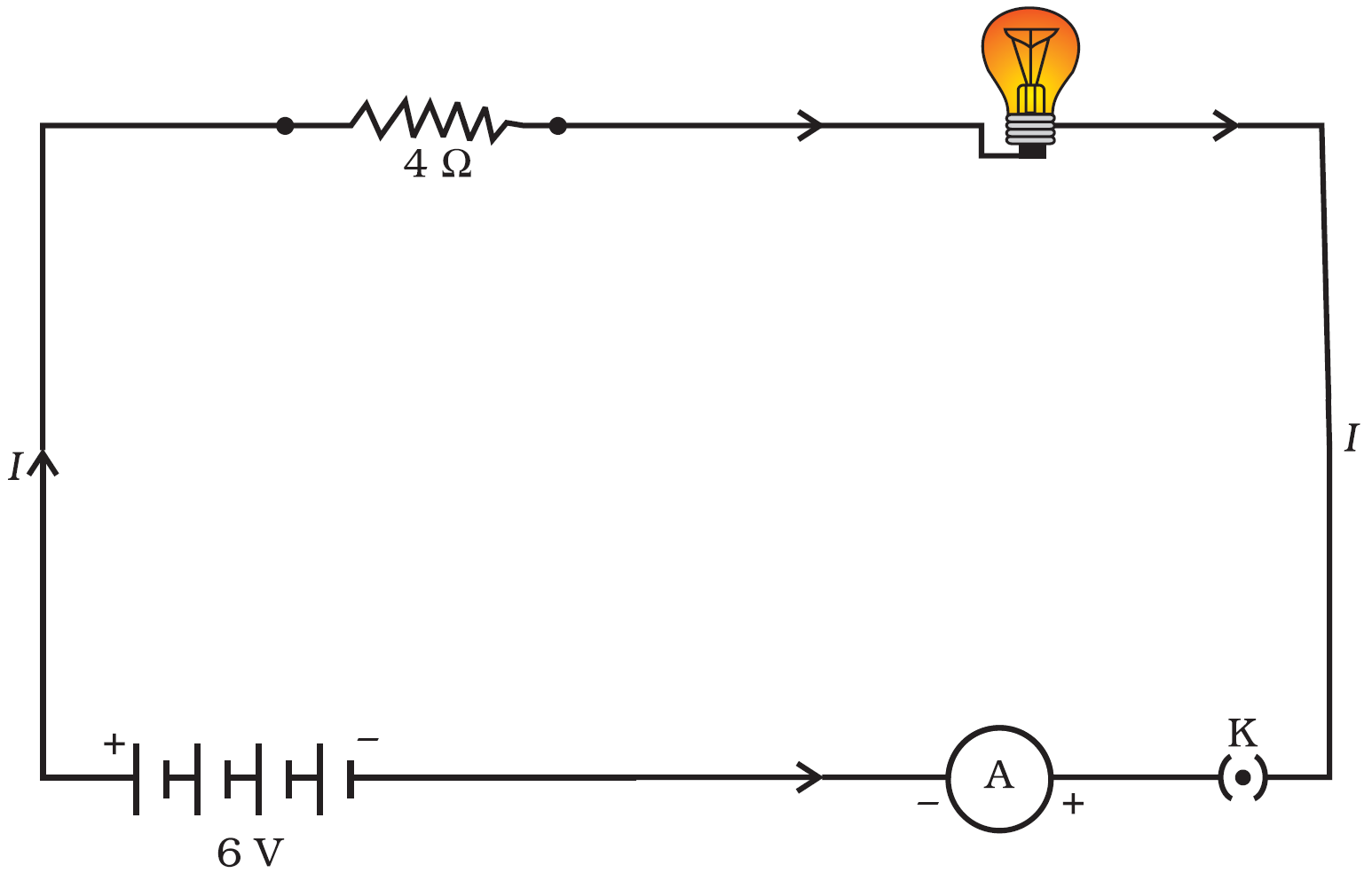
An electric lamp of resistance $20\Omega$ and a conductor of resistance $4\Omega$ are connected to a 6V battery as shown in the circuit. Calculate:
  1. The total resistance of the circuit,
  2. The current through the circuit,
  3. The potential difference across the (i) electric lamp and (ii) conductor, and
  4. Power of the lamp.
  1. List the three events that accur during the process of photosynthesis. Explain the role of stomata in this process.
  2. Describe an experiment to show that ''sunlight is essential for photosynthesis.''
  1. Draw a diagram of excretory system in human beings and label on it: Aorta, Vena cava, Urinary bladder, Urethra.
  2. List two vital functions of the kidney.
  1. List three common refractive defects of vision. Suggest the way of correcting these defects.
  2. About 45 lac people in the developing countries are suffering from corneal blindness. About 30 lac children below the age of 12 years suffering from this defect can be cured by replacing the defective cornea with the cornea of a donated eye. How and why can students of your age involve themselves to create awareness about this fact among people?
  1. Draw the structure of a nephron and label the following on it: Glomerulus, Bowman’s capsule, Renal artery, Collecting duct.
  2. What happens to glucose that enters the nephron along with filtrate?
With the help of a labelled diagram, illustrate the pathway of response when someone pricks in your hand with a pin.
Atoms of eight elements A, B, C, D, E, F, G and H have the same number of electron shells but different number of electrons in their outermost shells. It was found that elements A and G combine to form an ionic compound. This ionic compound is added in a small amount to almost all vegetables and dishes during cooking. Oxides of elements A and B are basic in nature while those of elements E and F are acidic. The oxide of element D is, however, almost neutral. Based on the above information, answer the following questions:
  1. To which group or period of the periodic table do these elements belong?
  2. What would be the nature of compound formed by a combination of elements B and F?
  3. Which two of these elements could definitely be metals?
  4. Which one of the eight elements is most likely to be found in gaseous state at room temperature?
  5. If the number of electrons in the outermost shell of elements C and G be 3 and 7 respectively, write the formula of the compound formed by the combination of C and G.
In what ways damages are caused to the environment?

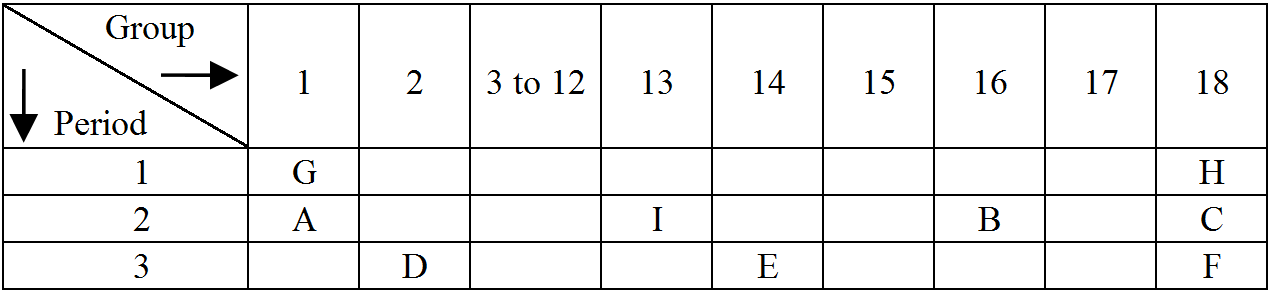
The position of certain elements in the Modem Periodic Table are shown below.

Using the above table answer the followmg questions giving reasons in each case:
  1. Which element will form only covalent compounds?
  2. Which element is a non-metal with valency 2?
  3. Which element is a metal with valency 2?
  4. Out of H, C and F which has largest atomic size?
  5. To which family does H, C and F belong?