Question
What is ecological pyramid? Describe the different types of pyramid.

Answer

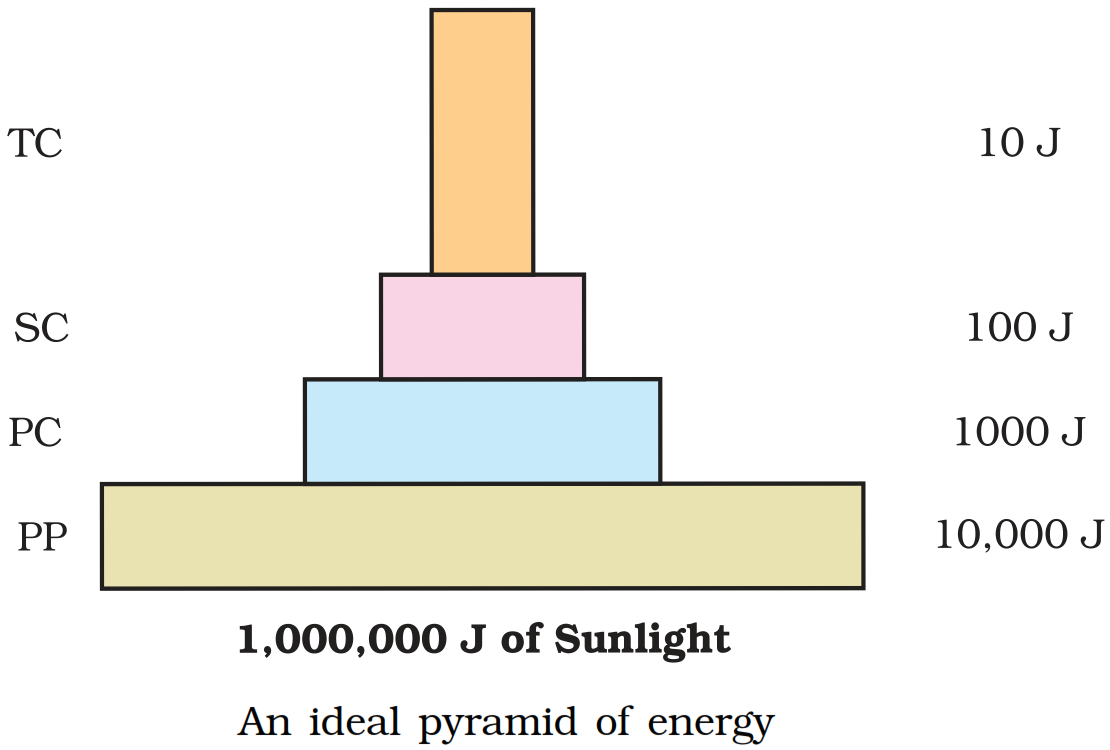
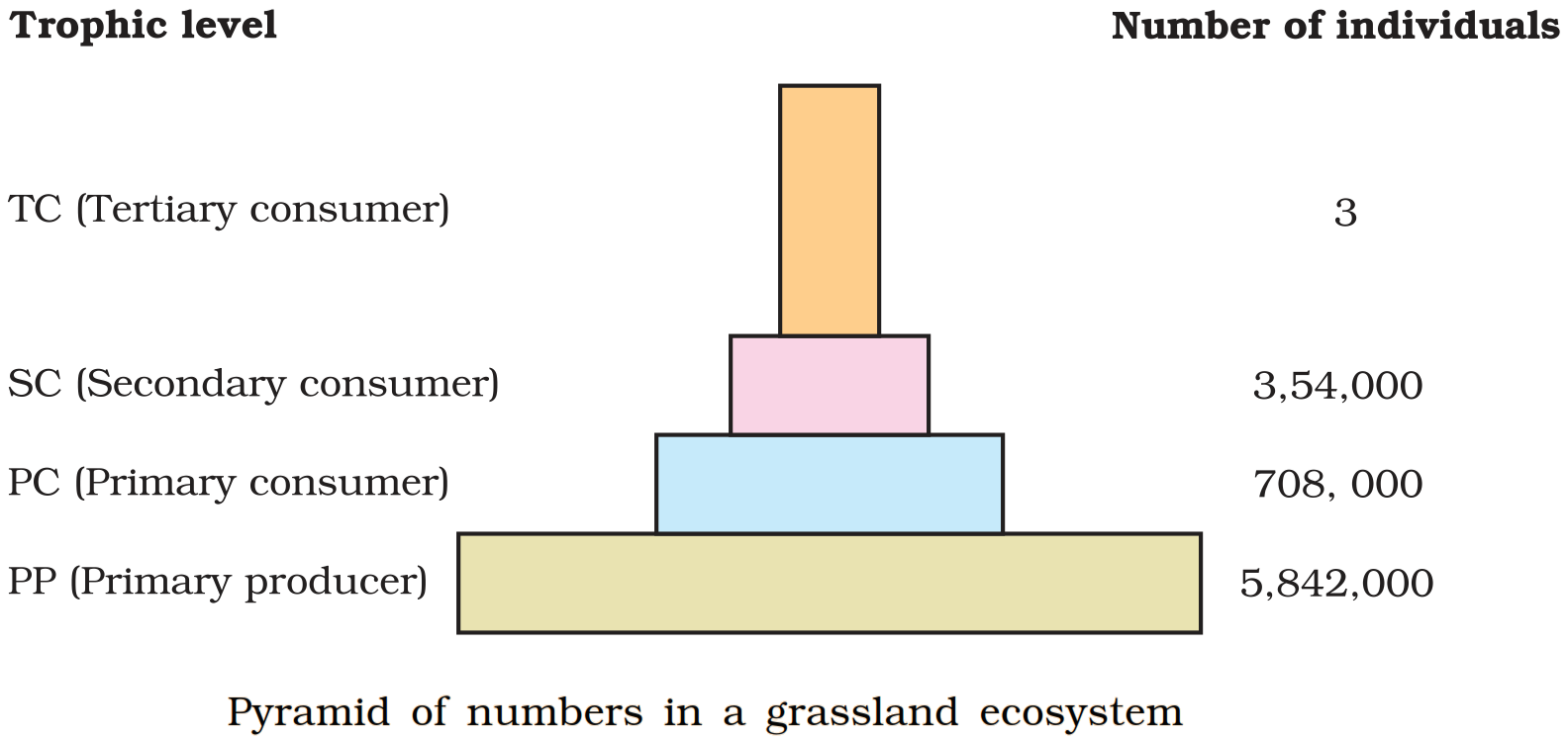
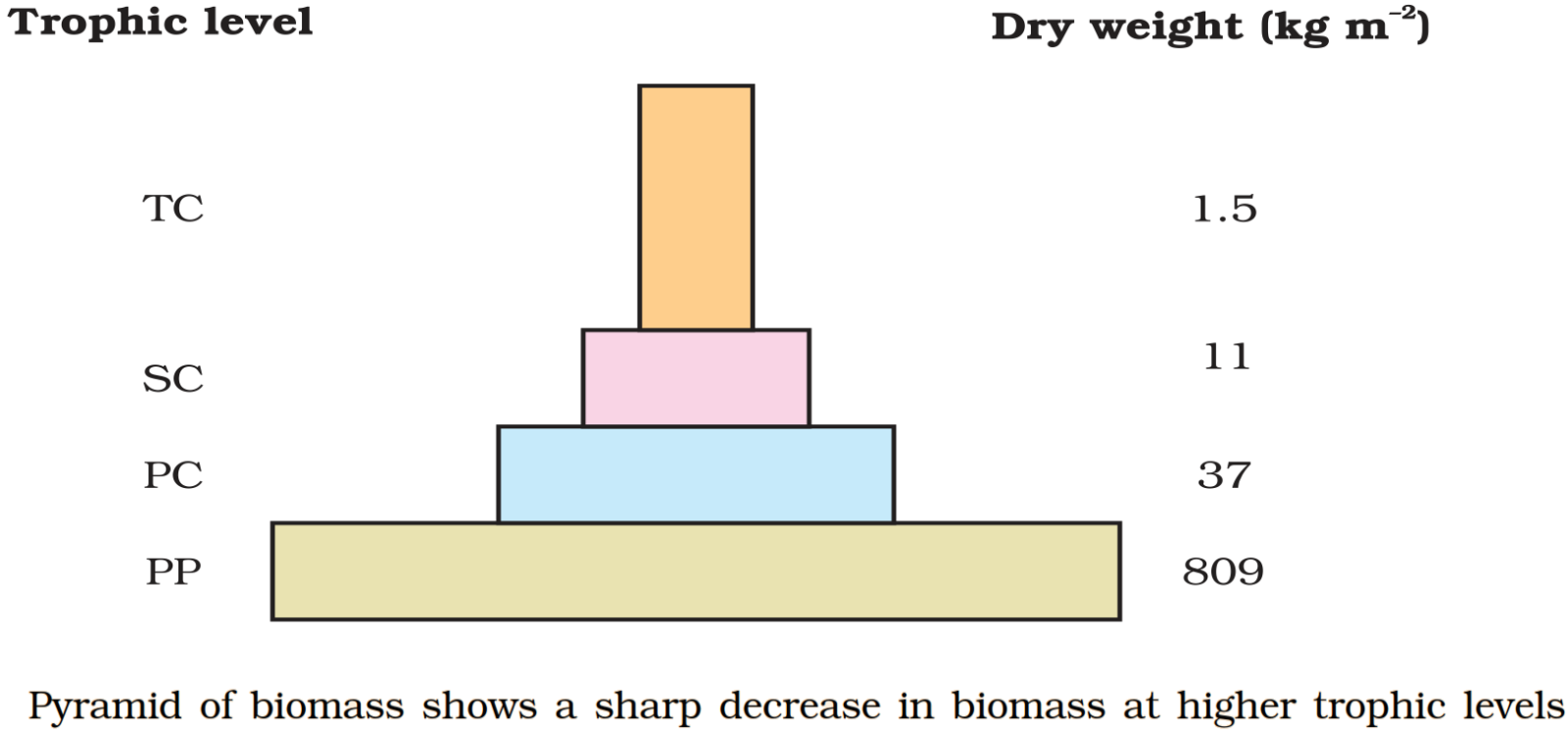
The relation between producers and consumers in an ecosystem can be graphically represented in the form of a pyramid called ecological pyramid.

  • Structure: The base always represents the producers or the first trophic level and the apex represents top level consumer or the last trophic level.

  • Ecological pyramids are of three types:

  1. Pyramid of number: The relationship between producers and consumers in an ecosystem can be represented in the form of a pyramid in terms of number called pyramid of number.

  1. Pyramid of biomass: The relationship between producers and consumers in an ecosystem can be represented in the form of a pyramid in terms of biomass called pyramid of biomass.

It can be:

  1. Upright, e.g., in case of grassland ecosystem;
  2. Inverted, e.g., in case of pond ecosystem.

  1. Pyramid of energy: The relationship between producers and consumers in an ecosystem can be represented in the form of a pyramid, in terms of flow of energy called pyramid of energy. It is always upright because energy is always lost as heat at each step.

Need a full question paper?

Generate a complete, print-ready paper with questions like this in minutes — across 16+ boards, with answer keys.
Start Generating Free

Similar questions

State the laws of inheritance that can be derived from such a cross.
Name the type of cells attacked by AIDS virus in the human body. Also, explain the events in sequence undertaken by virus to increase its progeny.
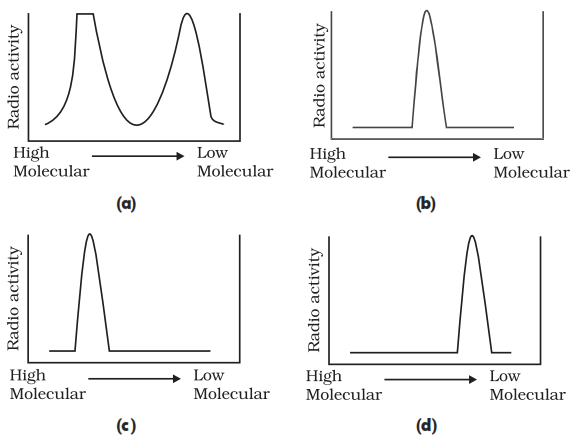
Replication was allowed to take place in the presence of radioactive deoxynucleotides precursors in E.coli that was a mutant for DNA ligase. Newly synthesised radioactive DNA was purified and strands were separated by denaturation. These were centrifuged using density gradient centrifugation. Which of the following would be a correct result?

  1. Why are colourblindness and thalassemia categorised as Mendelian disorders? Write the symptoms of these diseases seen in people suffering from them.
  2. About 8% of human male population suffers from colourblindness whereas only about 0·4% of human female population suffers from this disease. Write an explanation to show how it is possible.
The following is the illustration of the sequence of ovarian events (a – i) in a human female.

Write the difference between ‘c’ and ‘h’.

Two organisms occupying a particular geographical area (say desert) show similar adaptive strategies. Taking examples, describe the phenomenon.
Describe in sequence the process of spermatogenesis in humans.
Do you think microbes can also be used as source of energy? If yes, how?
Define transgenic animals. Explain in detail any four areas where they can be utilised.
What develops into a microspore mother cell in a flower? Trace the development of this cell into a pollen grain which is ready for germination. Draw a labelled figure of a mature pollen grain.