When $D-$ glucose is treated with $Br_2$ water then the product is :
- A
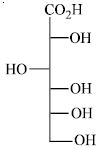
- B
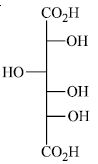
- C
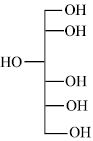
- D
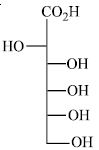
Advanced


Download our appand get started for free
Experience the future of education. Simply download our apps or reach out to us for more information. Let's shape the future of learning together!No signup needed.*
Similar Questions
- 1View SolutionLeucine amino acids is the
- 2The substituents $R_1$ and $R_2$ for nine peptides are listed in the table given below. How many of these peptides are positively charged at $pH =7.0$ ? $Image$View Solution
Peptide $R _1$ $R _2$ $I$ $H$ $H$ $II$ $H$ $CH _3$ $III$ $CH _2 COOH$ $H$ $IV$ $CH _2 CONH _2$ $( CH _2)_4 NH _2$ $V$ $CH _2 CONH _2$ $CH _2 CONH _2$ $VI$ $( CH _2)_4 NH _2$ $( CH _2)_4 NH _2$ $VII$ $CH _2 COOH$ $CH _2 CONH _2$ $VIII$ $CH _2 OH$ $( CH _2)_4 NH _2$ $IX$ $( CH _2)_4 NH _2$ $CH _3$ 
- 3$DNA$ molecule contains $4$ bases whoes structure are shown below. One of the structure is not correct, identify the incorrect base structure.View Solution
- 4View SolutionOn hydrolysis, which produces only glucose
- 5All structures given below are of vitamin $C$. Most stable of them is:View Solution
- 6Which of the following statement($s$) is(are) true ?View Solution
$(1)$ Oxidation of glucose with bromine water gives glutamic acid
$(2)$ The two six-membered cyclic hemiacetal forms of $D-(+)$-glucose ard called anomers
$(3)$ Hydrolysis of sucrose gives dextrorotatory glucose and laevorotatory fructose
$(4)$ Monosaccharides cannot be hydrolysed to give polyhydroxy aldehydes and ketones
- 7View SolutionThe commonest disaccharide has the molecular formula
- 8View SolutionWhich of the following is a basic amino acid :
- 9The correct match between Item $I$ and Item $II$ isView Solution
Item $I$ Item $II$ $A$ Ester test $P$ Tyr $B$ Carbylamine test $Q$ Asp $C$ Phthalein dye test $R$ Ser $S$ Lys - 10View SolutionWhich of the following is not an amino acid