Question
When no current is passed through a conductor?

Answer

  1. The average of the velocities of all the free electrons at an instant is non zero.

Need a full question paper?

Generate a complete, print-ready paper with questions like this in minutes — across 16+ boards, with answer keys.

Start Generating Free

Similar questions

Electric room radiator which operates at 225 volts has resistance of 50 ohms. Power of the radiator is approximately(a) 100 W(b) 450 W(c) 750 W(d) 1000 W
       
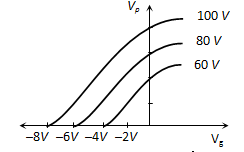
The value of amplification factor from the following graph will be
Which among the following is an example of a semiconductor?
Lenz's law is associated with the principle of conservation of :
According to Wien's displacement law in relation to radiation the wavelength $ \lambda_{m} $ corresponding to minimum radiant energy and absolute temperature T are related as :
The particles emitted by radioactive decay are deflected by magnetic field. The particles will be(a) Protons and α - particles(b) Electrons, protons and α -particles(c) Electrons, protons and neutrons(d) Electrons and α -particles
   
   
The velocity of photon is proportional to $($where $v$ is frequency$)$
An inductor, a resistance and a capacitor are joined in series with an $AC$ source. As the frequency of the source is slightly increased from a very low value, the reactance$:$
A coil takes 15 min to boil a certain amount of water, another coil takes 20 min for the same process. Time taken to boil the same amount of water when both coil are connected in series (a) 5 min(b) 8.6 min(c) 35 min(d) 30 min
       
Two thick wires and two thin wires, all of the same materials and same length form a square in the three different ways $P, Q$ and $R$ as shown in fig with current connection shown, the magnetic field at the centre of the square is zero in cases