Question
When we stir a liquid vigorously, it becomes warm. Is it a reversible process?

Answer

When we stir a liquid vigorously, we do work on it due to which its temperature rises and it becomes warm. To bring back the liquid to the initial temperature, heat needs to be extracted from it. But it is an irreversible process that cannot be brought back to the initial state by stirring the liquid again in the opposite direction.

Need a full question paper?

Generate a complete, print-ready paper with questions like this in minutes — across 16+ boards, with answer keys.
Start Generating Free

Similar questions

Mass of a particle depends on its speed. Does the attraction of the earth on the particle also depend on the particle's speed?
A capacitor is connected to an alternating-current source. Is there a magnetic field between the plates?
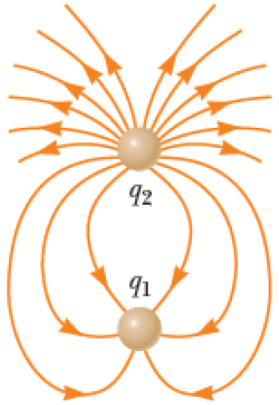
Consider the situation shown in figure. What are the signs of q1 and q2? If the lines are drawn in proportion to the charge, what is the ratio $\frac{\text{q}_1}{\text{q}_2}?$

If several forces act on a particle, the total torque on the particle may be obtained by first finding the resultant force and then taking torque of this resultant. Prove this. Is this result valid for the forces acting on different particles of a body in such a way that their lines of action intersect at a common point?
Use Huygens's principle to explain the formation of diffraction pattern due to a single slit illuminated by a monochromatic source of light.
When the width of the slit is made double the original width, how would this affect the size and intensity of the central diffraction band?
Answer the following:
  1. Name the em waves which are produced during radioactive decay of a nucleus. Write their frequency range.
  2. Welders wear special glass goggles while working. Why? Explain.
  3. Why are infrared waves often called as heat waves? Give their one application.
A block of mass 250g is kept on a vertical spring of spring constant 100N/m fixed from below. The spring is now compressed to have a length 10cm shorter than its natural length and the system is released from this position. How high does the block rise? Take g =10m/s2.
Suppose the rod in the previous problem has a mass of 1kg distributed uniformly over its length:
  1. Find the initial angular acceleration of the rod.
  2. Find the tension in the supports to the blocks of mass 2kg and 5kg.
Suppose we have 12 protons and 12 neutrons. We can assemble them to form either a :uMg nucleus or two 12C nuclei. In which of the two cases more energy will be liberated?
Define the term magnetic inclination. Deduce the relation connecting the horizontal component and inclination with the help of a diagram.