MCQ
Which ionic compound has the largest amount of lattice energy?
- A$NaF$
- B$AlF_3$
- C$AlN$
- D$MgF_2$
Generate a complete, print-ready paper with questions like this in minutes — across 16+ boards, with answer keys.
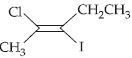
How many structural isomers are possible when one of the hydrogens is replaced by a chlorine atom?
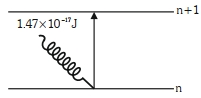
$Cu^{2+} + 2e^-\to Cu$ ; $E^o = X_2V$
Then For $Cu^{2+} + e^- \to Cu^+$ $;E^o$ will be ?
$ {I_2} + 2{e^ - } \to \,2{I^ - }\,;\,\,{E^o}\, = \,\,0.54\,\,V $
$ MnO_4^ - \, + \,8{H^ + }\, + \,5{e^ - } \to \,M{n^{2 + }}\, + \,4{H_2}O\,;\,{E^{o\,}} = 1.52\,\,V $
$ F{e^{3 + }} + {e^ - } \to \,\,F{e^{2 + }}\,;\,\,{E^o}\, = \,\,0.77\,\,V $
$ S{n^{4 + }} + 2{e^ - } \to \,\,S{n^{2 + }}\,;\,\,{E^o}\, = \,\,0.1\,\,V $
The strongest reducant and oxidant respectively are

$S_8,\,S_2O_3^{2-},\, S_2O_7^{-2},\, S_4O_6^{-2},\, SO_3^{-2}$