MCQ
Which of the following is not halide ore ?
  • A
    Cryolite
  • B
    Fluorspar
  • C
    Horn silver
  • Limonite

Answer

Correct option: D.
Limonite
d
The disproportionation reaction is as given below.

$5 I _2 O _4 \rightarrow 4 I _2 O _5+ I _2$

Need a full question paper?

Generate a complete, print-ready paper with questions like this in minutes — across 16+ boards, with answer keys.
Start Generating Free

Similar questions

Among $K{O_2},$ $NO_2^ - ,$ $Ba{O_2}$ and $NO_2^ + $ unpaired electron is present in
Native silver metal forms a water soluble complex with a dilute aqueous solution of $\mathrm{NaCN}$ in the presence of
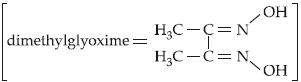
Red precipitate is obtained when ethanol solution of dimethylglyoxime is added to ammoniacal $Ni(II).$ Which of the following statements is not true?
The photoelectric current from Na (work function, $\left. w _{0}=2.3\, eV \right)$ is stopped by the output voltage of the cell 

$Pt ( s )\left| H _{2}( g , 1 bar )\right| HCl ( aq \cdot, pH =1)| AgCl ( s )| Ag ( s )$

The $pH$ of aq. HCl required to stop the photoelectric current from $K \left( w _{0}=2.25 eV \right),$ all other conditions remaining the same, is..........$\times 10^{-2}$ (to the nearest integer).

Given, $2.303 \frac{ RT }{ F }=0.06 V ; E _{ AgC1|Ag|C ^{-}}^{0}=0.22\, V$

For the reaction, $2A + B\,\to $ products , when the concentrations of $A$ and $B$ both were doubled, the rate of the reaction increased from $0.3\,mol\,L^{-1}\,s^{-1}$ to $2.4 \,mol\,L^{-1}\,s^{-1}.$ When the concentration of $A$ alone is doubled, the rate increased from $0.3\,mol\,L^{-1}\,s^{-1}$ to $0.6\,mol\,L^{-1}\,s^{-1}.$ Which one of the following statements is correct?
The concentration in gms per litre of a solution of cane sugar $(M = 342)$ which is  isotonic with a solution containing $6\,gms$ of urea $(M = 60)$ per litre is :-
Copper sulphate dissolves in ammonia due to the formation of:
Reaction of zinc with cold and very dilute nitric acid yields
Extra pure $\mathrm{N}_2$ can be oblained by heating
In the given reaction

$X + Y\mathop {\xrightarrow{{NaOH}}}\limits_{5\,^oC} \begin{array}{*{20}{c}}
  {OH\,\,\,\,\,\,\,\,\,\,\,\,\,\,\,\,\,\,\,} \\ 
  {|\,\,\,\,\,\,\,\,\,\,\,\,\,\,\,\,\,\,\,\,\,\,\,\,\,} \\ 
  {C{H_3} - CH - CH - CHO} \\ 
  {\,\,\,\,\,\,\,\,\,|} \\ 
  {\,\,\,\,\,\,\,\,\,\,\,\,\,\,\,\,\,C{H_3}} 
\end{array}$

$(X)$ and $(Y)$ will respectively be :