MCQ
Which of these metals do not corrode?
- ALead
- BCopper
- CPlatinum
- DSilver
Explanation:
Corrosion is a process through which metals in manufactured states return to their natural oxidation states. This process is a reduction-oxidation reaction in which the metal is being oxidized by its surroundings, often the oxygen in air. As platinum is least reactive so it will not corrode.
Generate a complete, print-ready paper with questions like this in minutes — across 16+ boards, with answer keys.
$\mathrm{CH}_{3}-\mathrm{CH}=\mathrm{CH}_{2}$ $\xrightarrow[{{\text{H}}_{2}}{{\text{O}}_{2}},\bar{O}\text{H}]{\text{B}{{\text{H}}_{3}},\text{THF}}(P)$ $\xrightarrow[\text{C}{{\text{H}}_{2}}\text{C}{{\text{l}}_{2}}]{\text{ Pyridinium Chloro Chromate }(\text{PCC})}$ $(Q)$
$\mathrm{CH}_{3}-\mathrm{CH}=\mathrm{CH}_{2}$ $\xrightarrow[NaB{{H}_{4}}\,,\,H{{O}^{\Theta }}]{Hg\,{{(OAc)}_{2}}\,,\,{{H}_{2}}O}(R)$ $\xrightarrow[\text{C}{{\text{H}}_{2}}\text{C}{{\text{l}}_{2}}]{\text{ Pyridinium Chloro Chromate }(\text{PCC})}$ $(S)$
| Test | Interference |
| $(a)$ $2, 4-DNP$ test | Colorued precipitate |
| $(b)$ Iodoform test | Yellow precipitate |
| $(c)$ Azo-dye test | No dye formation |
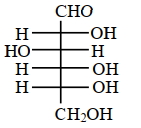
Compound $‘X’$ is