MCQ
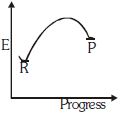
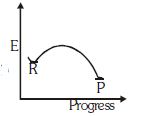
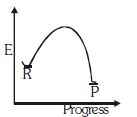
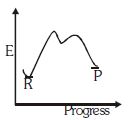
Which one of the following is complex reaction
- A
- B
- C
- ✓
Generate a complete, print-ready paper with questions like this in minutes — across 16+ boards, with answer keys.
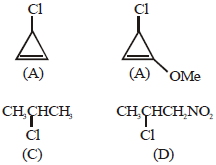
$\left. \begin{gathered}
(A)\,\,\xrightarrow{{PB{r_3}}}\,(C)\,\xrightarrow{{Mg\,,\,ether}}Grignard\,\,reagent \hfill \\
(A)\,\,\xrightarrow[{{H_2}S{O_4}}]{{N{a_2}C{r_2}{O_7}}}\,(B) \hfill \\
\end{gathered} \right\}$ $ \to \,(D)\xrightarrow{{{H_3}{O^ \oplus }}}$ $(3,4-$ dimethyl $3-$ hexanol$)$
$(A)$ The stronger the temperature dependence of the rate constant, the higher is the activation energy.
$(B)$ If a reaction has zero activation energy, its rate is independent of temperature.
$(C)$ The stronger the temperature dependence of the rate constant, the smaller is the activation energy.
$(D)$ If there is no correlation between the temperature and the rate constant then it means that the reaction has negative activation energy.