MCQ
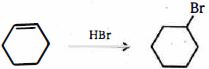
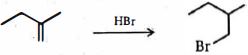
Which reaction will occur at the fastest rate ?
- A
- B
- C
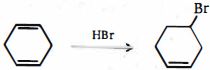
- ✓

Generate a complete, print-ready paper with questions like this in minutes — across 16+ boards, with answer keys.
$(I)$ they exhibit high enthalpies of atomisation as the $d-$ subshell is full
$(II)$ $zn$ and $Cd$ do not show variable oxidation states while $Hg$ shows $+ I$ and $+ II$
$(III)$ Compound of $Zn,\,Cd$ and $Hg$, are paramagnetic in nature
$(IV)$ $Zn,\,Cd$ and $Hg$ are called soft metals
The $pI$ (isoelectric point) of aspartic acid

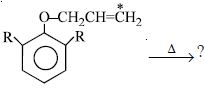
Assertion $(A)$: There is a considerable increase in covalent radius from $\mathrm{N}$ to $\mathrm{P}$. However from $As$ to $Bi$ only a small increase in covalent radius is observed.
Reason $(R)$: covalent and ionic radii in a particular oxidation state increases down the group.
In the light of the above statement, choose the most appropriate answer from the options given below: