MCQ
Which type of a physical quantity is electric current?
- AScalar quantity
- BVector quantity
- CBipolar quantity
- DThermodynamic quantity
Explanation:
The electric current is a scalar quantity. Laws of ordinary algebra are used to add electric currents and the law of vector algebra are not applicable.
Generate a complete, print-ready paper with questions like this in minutes — across 16+ boards, with answer keys.
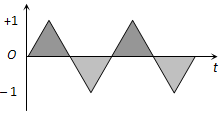
An alternating current of frequency 200 rad/sec and peak value 1A as shown in the figure, is applied to the primary of a transformer. If the coefficient of mutual induction between the primary and the secondary is 1.5 H, the voltage induced in the secondary will be
|
(a) 300 V |
(b) 191 V |
(c) 220 V |
(d) 471 V |
A particle of mass M and charge Q moving with velocity  describes a circular path of radius R when subjected to a uniform transverse magnetic field of induction B. The work done by the field when the particle completes one full circle is
|
(a) BQv2πR |
(b) |
(c) Zero |
(d) BQ |
A voltmeter having resistance of 50 × 103 ohm is used to measure the voltage in a circuit. To increase the range of measurement 3 times the additional series resistance required is
|
(a) 105 ohm |
(b) 150 k.ohm |
(c) 900 k.ohm |
(d) 9 × 10⁶ ohm |
The mean electric energy density between the plates of a charged capacitor is (here q = charge on the capacitor and A = area of the capacitor plate)
|
(a) |
(b) |
(c) |
(d) None of the above |


