MCQ
Work done in moving a positive charge on an equipotential surface is
  • A
    Finite, positive but not zero
  • B
    Finite, negative but not zero
  • Zero
  • D
    Infinite

Answer

Correct option: C.
Zero
c
(c) Work done $ = (\Delta V)\,Q$
For an equipotential surface.

Need a full question paper?

Generate a complete, print-ready paper with questions like this in minutes — across 16+ boards, with answer keys.
Start Generating Free

Similar questions

Which of the following statements regarding magnetic lines of force is correct?
A coil of area $100\,c{m^2}$ has $500$ turns. Magnetic field of $0.1\;weber/metr{e^2}$ is perpendicular to the coil. The field is reduced to zero in $0.1$ second. The induced $e.m.f$. in the coil is......$V$
The resistivity of a wire depends on its
Consider an optical communication system operating at $800\, nm$. Suppose, only $1%$ of the optical source frequency is the available channel bandwidth for optical communication. How many channels can be accommodated for transmitting audio signals requiring a bandwidth of $8 \,kHz$
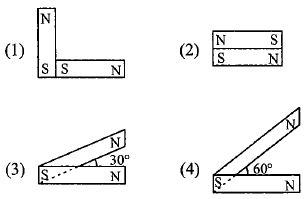
Following figures show the arrangement of bar magnets in different configurations. Each magnet has magnetic dipole moment $\vec m$ . Which configuration has highest net magnetic dipole moment
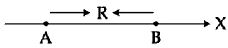
Two electric dipoles $A, B$ with respective dipole moments $\overrightarrow {{d_A}}  =  - 4\,qa\,\hat i$ and $\overrightarrow {{d_B}}  =  2\,qa\,\hat i$ are placed on the $x-$ axis with a separation $R$, as shown in the figure. The distance from $A$ at which both of them produce the same potential is
If the deBroglie wavelength of an electron is equal to $10^{-3}$ times the wavelength of a photon of frequency $6\,\times 10^{14}\,Hz,$ then the speed of electron is equal to: (Speed of light $=3\times 10^8\,m/s\,;$ Planck’s constant $=6.63\times 10^{-34}\,J.s\,;$ Mass of electron $=9.1\times 10^{-31}\,kg$ )
Two cells, $e.m.f.$ of each is $E$ and internal resistance $r$ are connected in parallel between the resistance $R$. The maximum energy given to the resistor will be, only when
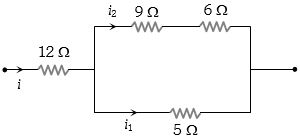
In the following circuit, $5$ $\Omega$ resistor develops $45$ $J/s$ due to current flowing through it. The power developed per second across $12$ $\Omega$ resistor is ............. $W$
A particular hydrogen like ion emits radiation of frequency $2.92 \times 10^{15}\, {Hz}$ when it makes transition from ${n}=3$ to ${n}=1 .$ The frequency in ${Hz}$ of radiation emitted in transition from ${n}=2$ to ${n}=1$ will be : (in $\,\times 10^{15}$)