Question
Write a short note on Double fertilisation.

Answer

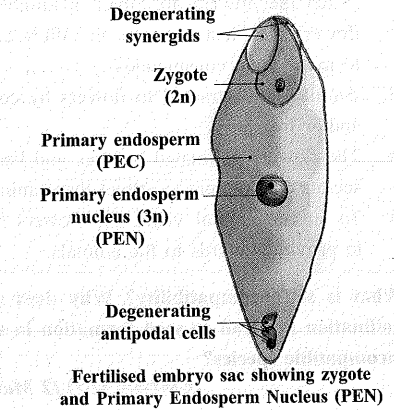
Image
→ After entering one of the synergids, the pollen tube releases the two male gametes into the cytoplasm of the synergid.
→ One of the male gametes moves towards the egg cell and fuses with its nucleus thus completing the syngamy. This results in the formation of a diploid cell, the zygote.
→ The other male gamete moves towards the two polar nuclei located in the central cell and fuses with them to produce a triploid Primary Endosperm Nucleus (PEN).
→ As this involves the fusion of three haploid nuclei it is termed triple fusion.
→ Since two types of fusions, syngamy and triple fusion take place in an embryo sac the phenomenon is termed double fertilisation, an event unique to flowering plants.
→ The central cell, after triple fusion, becomes the Primary Endosperm Cell (PEC) and develops into the endosperm while the zygote develops into an embryo.

Need a full question paper?

Generate a complete, print-ready paper with questions like this in minutes — across 16+ boards, with answer keys.

Start Generating Free

Similar questions

What is meant by emasculation? When and why does a plant breeder employ this technique?
The length of a DNA molecule in a typical mammalian cell is calculated to be approximately 2.2m. How is the packaging of this long molecule done to accommodate it within the nucleus of the cell?
When Morgan conducted dihybrid cross on Drosophila like Mendel did with pea plants, the $F_2$ ratio deviated significantly from that of Mendel's F, ratio. Write the explanation Morgan and his group gave to the observations they obtained from their experiment.
Which part of the blastula is destinated to form germ layers of the developing embryo in humans?
Describe the three different types of IUDs available at present, with an example for each.
Study the age pyramids ‘A’, ‘B’ and ‘C’ of the human population given below and answer the questions that follow:
  1. Identify pyramids ‘B’ and ‘C’.
  2. Write the basis on which the above pyramids are plotted.
  1. Draw a diagram of a sectional view of a monocot seed (grain).
  2. Label and write the function of: Coleoptile, Coleorrhiza, Endosperm.
Given below are the events that are observed in artificial hybridisation programme. Arrange them in the correct sequential order in which they are followed in the hybridisation programme.
(a) Re-bagging; (b) Selection of parents; (c) Bagging; (d) Dusting the pollen on stigma; (e) Emasculation; (f) Collection of pollen from male parent.
Microbes are used for industrial production on a large scale. Explain with examples.
Study the diagram given below.

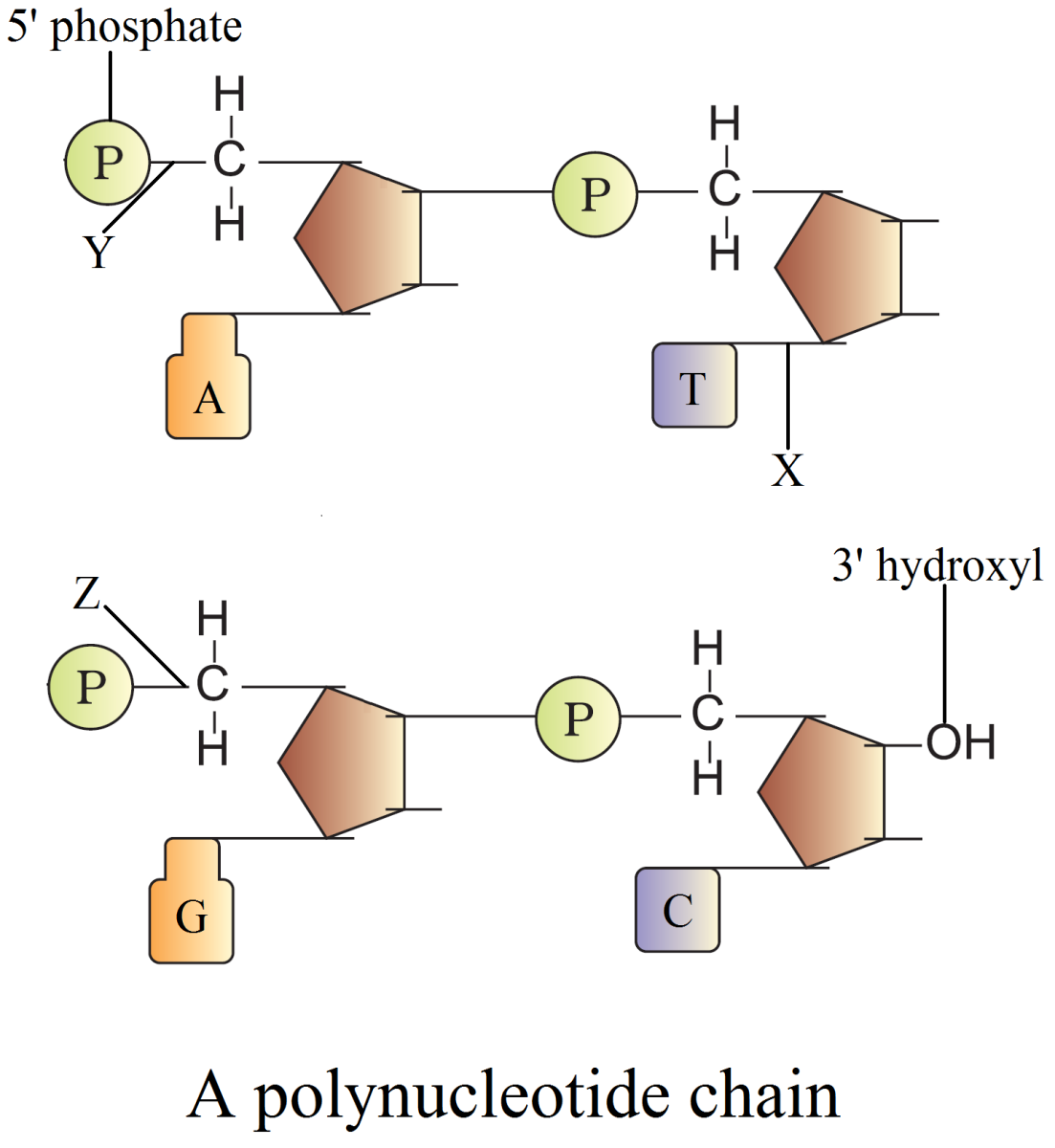
Name the linkage X, Y, Z and the respective molecules formed by them.