Question
Write correctly the balanced equations for the following redox reactions using half reactions.

  1. H2S+ Fe3+ → Fe2+ + S + H+ 
  2. I + $\text{IO}^-_3$ + H+ → I2 + H2
  3. Bi(s)+ $\text{NO}_3^-$ + H+ → NO2 + Bi3+ + H2O
  4. I- + O2(g) + H2O → I2 + OH-

State what is oxidised to what and what is reduced to what in the reactions expressed by the equations?
Answer

Get the step-by-step solution for this question inside the Vidyadip app.

Get the answer in the app

Need a full question paper?

Generate a complete, print-ready paper with questions like this in minutes — across 16+ boards, with answer keys.

Start Generating Free

Similar questions

What is the minimum volume of water required to dissolve 1g of calcium sulphate at 298K? (For calcium sulphate, Ksp is 9.1 × 10⁻⁶).
Classify the following species into Lewis acids and Lewis bases and show how these act as Lewis acid/base:
  1. OH
  2. F
  3. H+
  4. BCl3
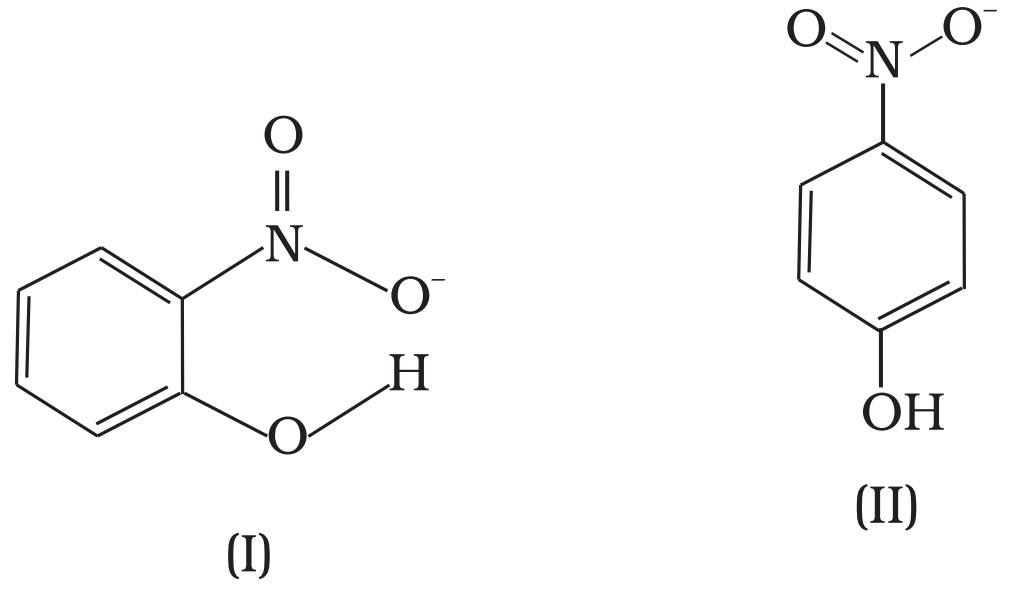
Structures of molecules of two compounds are given below:

  1. Which of the two compounds will have intermolccular hydrogen bonding and which compound is expected to show intramolecular hydrogen bonding?
  2. The melting point of a compound depends on. among other things, the extent of hydrogen bonding. On this basis explain which of the above two compounds will show higher melting point.
  3. Solubility of compounds in water depends on power to form hydrogen bonds with water. Which of the above compounds will form hydrogen bond with water easily and be more soluble in it?
What is common ion effect? Explain with examples.
Pressure is determined as force per unit area of the surface. The SI unit of pressure, Pascal is as shown below:
1Pa = 1N m–2
If mass of air at sea level is 1034g cm–2, calculate the pressure in Pascal.
What does atomic radius and ionic radius really mean to you?
A compound on analysis found to contain following percentage composition:
Na = 43.4%, C = 11.4% and O = 45.3%. Determine the empirical and molecular formulae.
Given: the relative molecular mass of the compound is 106.
What are extensive qualities and intensive qualities? Explain.
Explain the effect of temperature on spontaneity.
Briefly describe the valence bond theory of covalent bond formation by taking an example of hydrogen. How can you interpret energy changes taking place in the formation of dihydrogen?