Question
Write short notes on:
  1. Mitochondria.
  2. Plastids.

Answer

  1. Mitochondria: The mitochondria are tiny bodies of varying shapes and size. Each mitochondria is bounded by a double membrane envelope. Outer membrane is porous. The inner membrane is thrown into folds. These folds are called cristae and are studded with small rounded bodies known as $F_1$ particles or oxysomes. The interior cavity of the mitochondria is filled with a proteinaceous matrix which contains a few small-sized ribosomes, a circular $DNA$ molecule and phosphate granules. Mitochondria are sites of cellular respiration.
  2. Plastids: Plastids occur in most plant cells and are absent in animal cells. They have their own genome and ribosomes. There are three types of plastids: chromoplasts, chloroplasts and leucoplasts.

Need a full question paper?

Generate a complete, print-ready paper with questions like this in minutes — across 16+ boards, with answer keys.
Start Generating Free

Similar questions

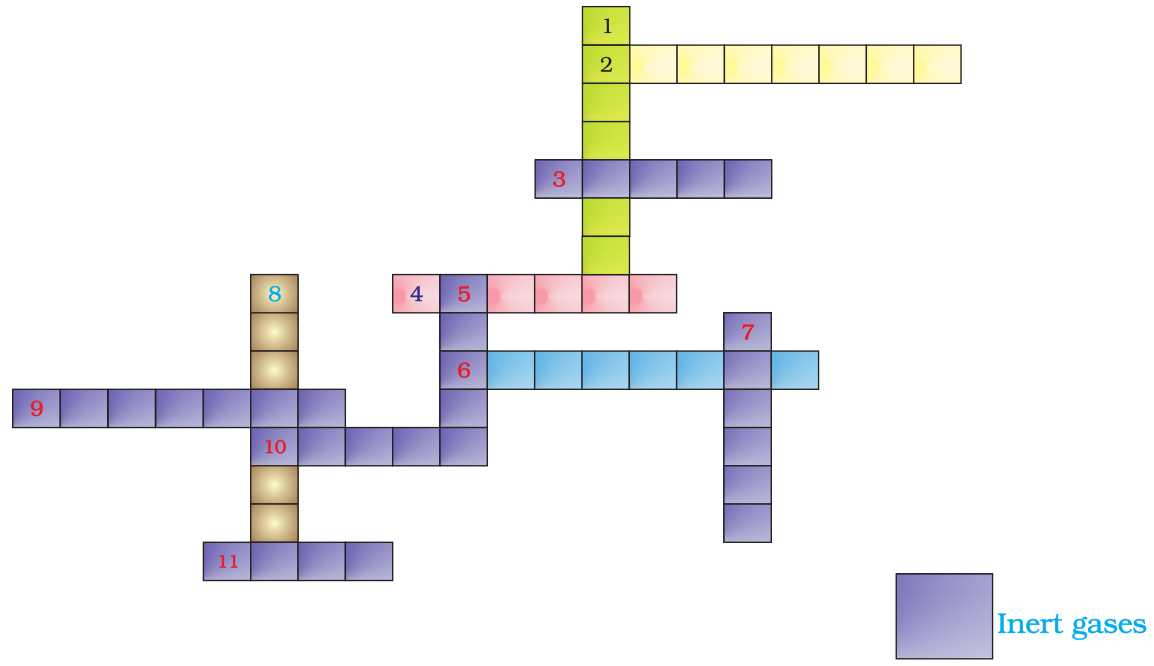
In this crossword puzzle (Figure), names of 11 elements are hidden. Symbols of these are given below. Complete the puzzle.
  1. Cl
  2. H
  3. Ar
  4. O
  5. Xe
  6. N
  7. He
  8. F
  9. Kr
  10. Rn
  11. Ne
A mixture contains water, kerosene and sand. How will you separate this mixture?
How will you separate camphor, common salt and iron nails from their mixture?
A mixture contains water, kerosene and sand. How will you separate this mixture?
State Newton’s third law of motion and give two examples to illustrate the law.

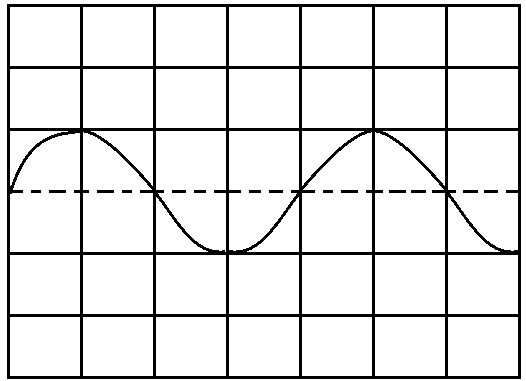
Figure X showa a trace of a sound wave produced by a particular tuning fork:


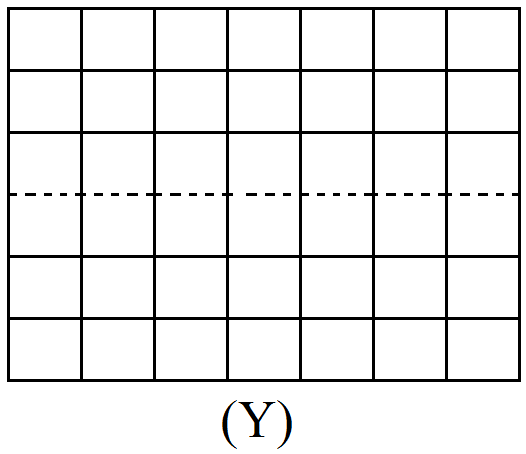
  1. On the graph paper given in Figure Y, draw a trace of the sound wave which has higher frequency than that shown in Figure X.
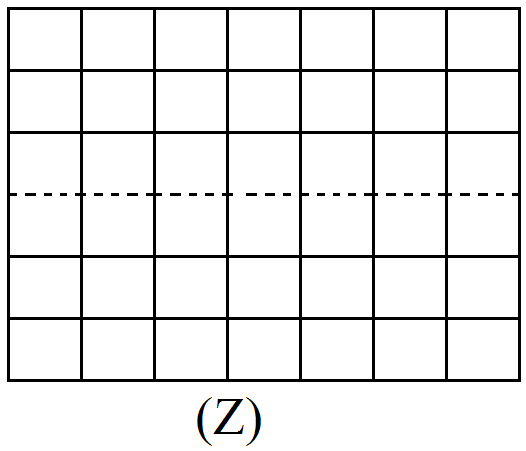
  2. On the graph paper shoen in Figure Z, draw a trace of the sound wave which has a larger amplitude than that shown in Figure X.
Describe structure and functions of plasma membrane.
In an experiment, $4.90g$ of copper oxide was obtained form $3.92g$ of copper. In another experiment, $4.55g$ of copper oxide gave, on reduction, $3.64g$ of copper. Show with the help of calculations that these figures verify the law of constant proportions.
List five characteristics by which compounds can be distinguished from mixtures.
$A, B$ and $C$ are all liquids. Liquid A has a comparatively low boiling point. On heating, liquid a vaporizes completely without leaving behind any residue. Liquid $A$ is being used increasingly as a fuel in motor vehicles either alone or by mixing with petrol. Liquid $B$ has a very high boiling point. It also vaporizes completely on heating, without leaving any residue. Liquid $B$ is a conductor of electricity and used in making thermometers. Liquid $c$ has a moderate boiling point. On heating, liquid $C$ vaporises leaving behind a white solid $D$ which is used in cooking vegetables. The condensation of vapours from $C$ give a liquid $E$ which turns anhydrous $CuSO_4$ to blue.
  1. Which liquid could be an element? Name this element.
  2. Which liquid could be a mixture? Name this mixture.
  3. Which liquid could be a compound? Name this compound.
  4. What could the solid $D$ be?
  5. What do you think is liquid $E$?