Question
Write the properties of $d$-block element.

Answer

The properties of $d$-block elements are as follows: The elements belongs to group $3^{\text {rd }}$ to $12^{\text {th }}$ of periodic table are known as d-block elements. Their last electron enters in ( $n -1$ ) d orbitals. The outermost electronic configuration of these elements is $(n-1) d^{1-10}$ $ns ^{0-2}$ (where $n =4$ to 7 ). All of these elements are metals. The ions of these elements are generally coloured and represent the oxidation state and paramagnetism. They are also used as catalyst. $Zn , Cd$ and Hg (group 12) are non-transition elements although they have general electronic configuration $( n -1) d ^{10} ns^2$.

Need a full question paper?

Generate a complete, print-ready paper with questions like this in minutes — across 16+ boards, with answer keys.
Start Generating Free

Similar questions

$\mathrm{K}_{\mathrm{b}}$ for $\mathrm{NH}_4 \mathrm{OH}$ is $1.8 \times 10^{-5}$ and for $\mathrm{CH}_3 \mathrm{NH}_2$ is $4.4 \times 10^{-4}$. Which of them is strongest base and why?
All Bronsted acids are not Lewis acids. Explain.
Would you expect the first ionization enthalpies of two isotopes of the same element to be the same or different?
When would the wavelength associated with an electron be equal to the wavelength associated with a proton? Mass of electron $=9.1095 \times 10^{-28} \mathrm{~g} ;$ Mass of proton $=1.6725 \times 10^{-24} \mathrm{~g} \cdot \mathrm{OR}$
Calculate the velocity condition for the wavelength associated with a moving electron to be equal to the wavelength associated with a moving proton.
(Mass of electron $=9.11 \times 10^{-48} \mathrm{~g} ;$ Mass of proton $=1.67 \times 10^{-24} \mathrm{~g} ; \mathrm{h}=6.6 \times 10^{-34} \mathrm{Js} ; \mathrm{J}=\mathrm{kg} / \mathrm{m}^2 \mathrm{~s}^{-2}$. 

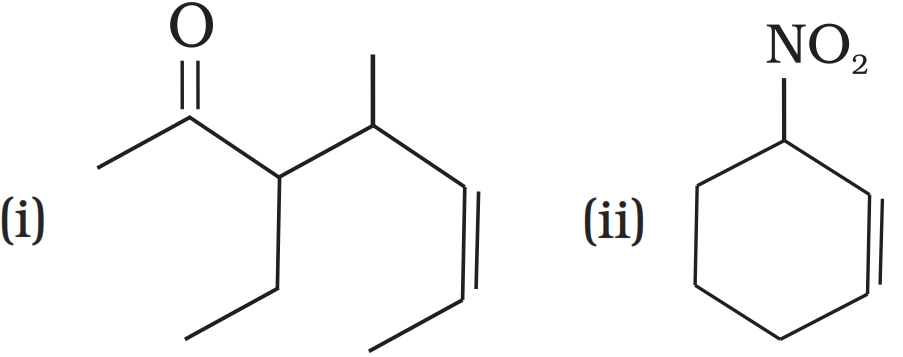
Name the compounds whose line formulae are given below:
Use the following data to calculate the $\text{K}_{\text{sp}}$ value for Agl(s)$\text{H}_{2}\text{(g)} + \text{Cl}_{2} \text{(g)} \rightleftharpoons\text{2HCl(g)}$
$\Delta\text{H}^{\circ} = -92\text{kJ}, \ \Delta\text{S}^{\circ} = -95\text{JK}^{-1}$
Compare the $\text{H}-\text{N}-\text{H}$ bond angle in the following molecules and ions:
$\text{NH}_3,\text{NH}_4^+,\text{NH}^-_2$
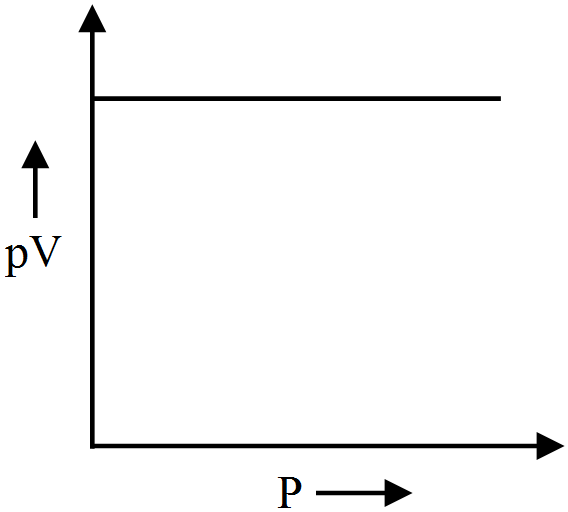
Which gas law is shown by following graph?
i. Why is it necessary to remove $\mathrm{CO}_2$ continuously during the manufacture of CaO from $\mathrm{CaCO}_3$ ?
ii. $\mathrm{CaCO}_3 \rightarrow \mathrm{CaO}+\mathrm{CO}_2$ why the temperature of this reaction is maintained at 1270 K ?
Name the indicator used in redox titration involving $\mathrm{K}_2 \mathrm{Cr}_2 \mathrm{O}_7$ as an oxidising agent.