MCQ
$X-$ rays are not used for radar purpose because
  • They are not reflected by the target
  • B
    They are not electromagnetic waves
  • C
    They are completely absorbed by the air
  • D
    They sometimes damage the target

Answer

Correct option: A.
They are not reflected by the target
a
(a) $X-$ rays are absorbed by the target; they are not reflected by the target.

Need a full question paper?

Generate a complete, print-ready paper with questions like this in minutes — across 16+ boards, with answer keys.
Start Generating Free

Similar questions

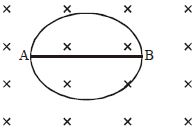
The radius of the circular conducting loop shown in figure is $R.$ Magnetic field is decreasing at a constant rate $\alpha$. Resistance per unit length of the loop is $r.$ Then current in wire $AB$ is ($AB$ is one of the diameters) :-
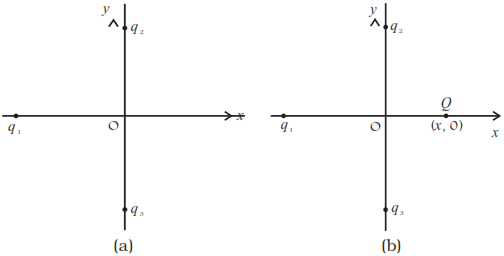
In two positive charges $q_2$ and $q_3$ fixed along the $y$ axis, exert a net electric force in the $+x$ direction on a charge $q_1$ fixed along the $x$ axis. If a positive charge $Q$ is added at $( x , 0)$, the force on $q _1$.
Potential gradient is defined as
The voltage of an $ac$ source varies with time according to the equation $V = 100\sin \,\left( {100\pi t} \right)\cos \,\left( {100\pi t} \right)$ where $t$ is in seconds and $V$ is in volts. Then
Which of the following is correct for light diverging from a point source?
Two conducting circular loops of radii $R_{1}$ and $\mathrm{R}_{2}$ are placed in the same plane with their centres coinciding. If $R_{1}>>R_{2}$, the mutual inductance $M$ between them will be directly proportional to:
A circular loop is kept in that vertical plane which contains the north-south direction. It carries a current that is towards south at the topmost point. Let $A$ be a point on axis of the circle to the east of it and $B$ a point on this axis to the west of it. The magnetic field due to the loop :-
If a conductor has a potential $V \neq 0$ and there are no charges anywhere else outside, then:
When a wire of uniform cross-section a, length l and resistance R is bent into a complete circle, resistance between any two of diametrically opposite points will be
A capacitor is charged to $200\, volt$ it has $0.1$ coulomb charge. When it is discharged, energy will be.....$J$