Questions

3 Marks Question

🎯

Test yourself on this topic

9 questions · timed · auto-graded

Question 13 Marks
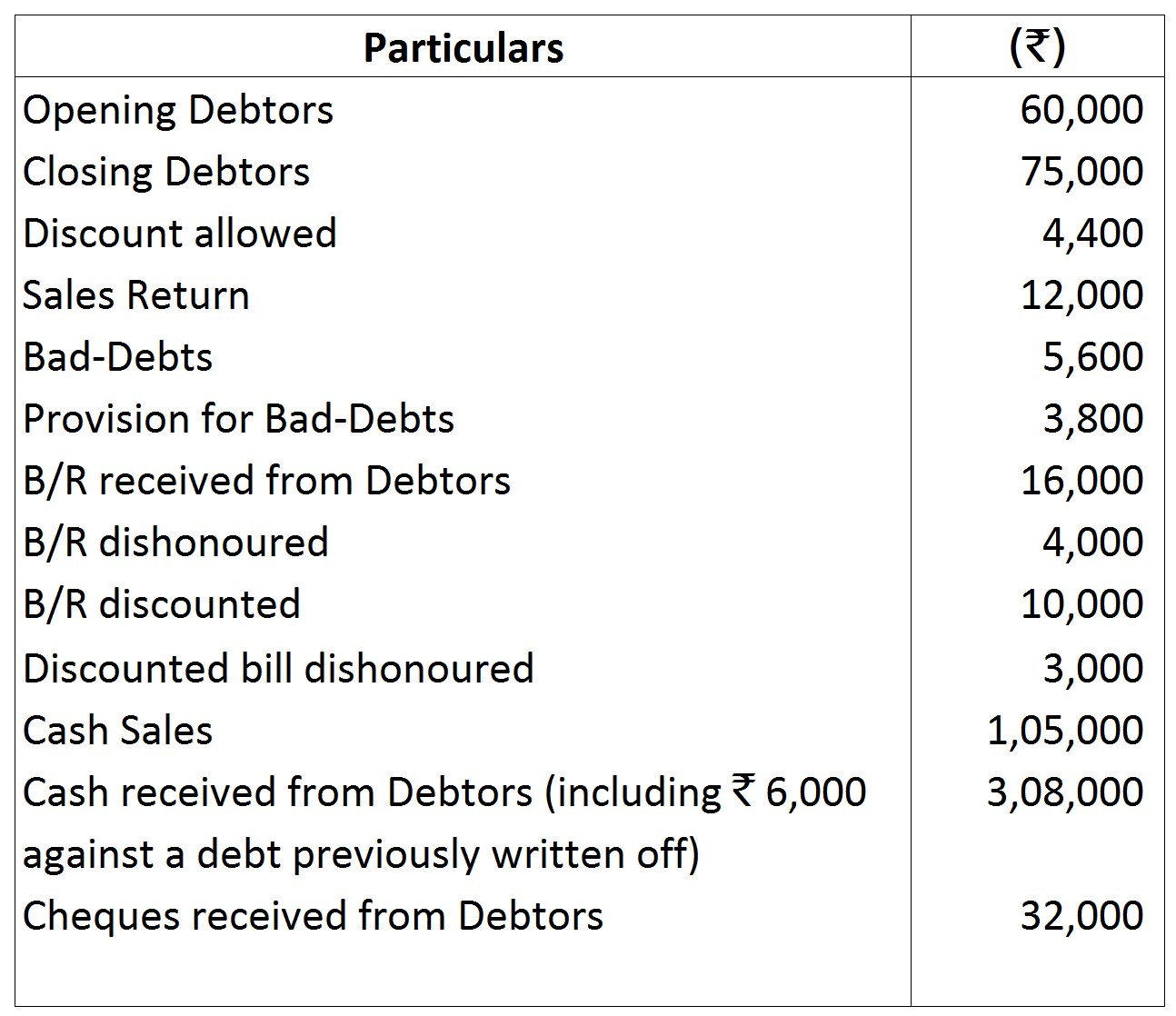
From the details given below find out the Credit Sales and Total Sales:
Answer
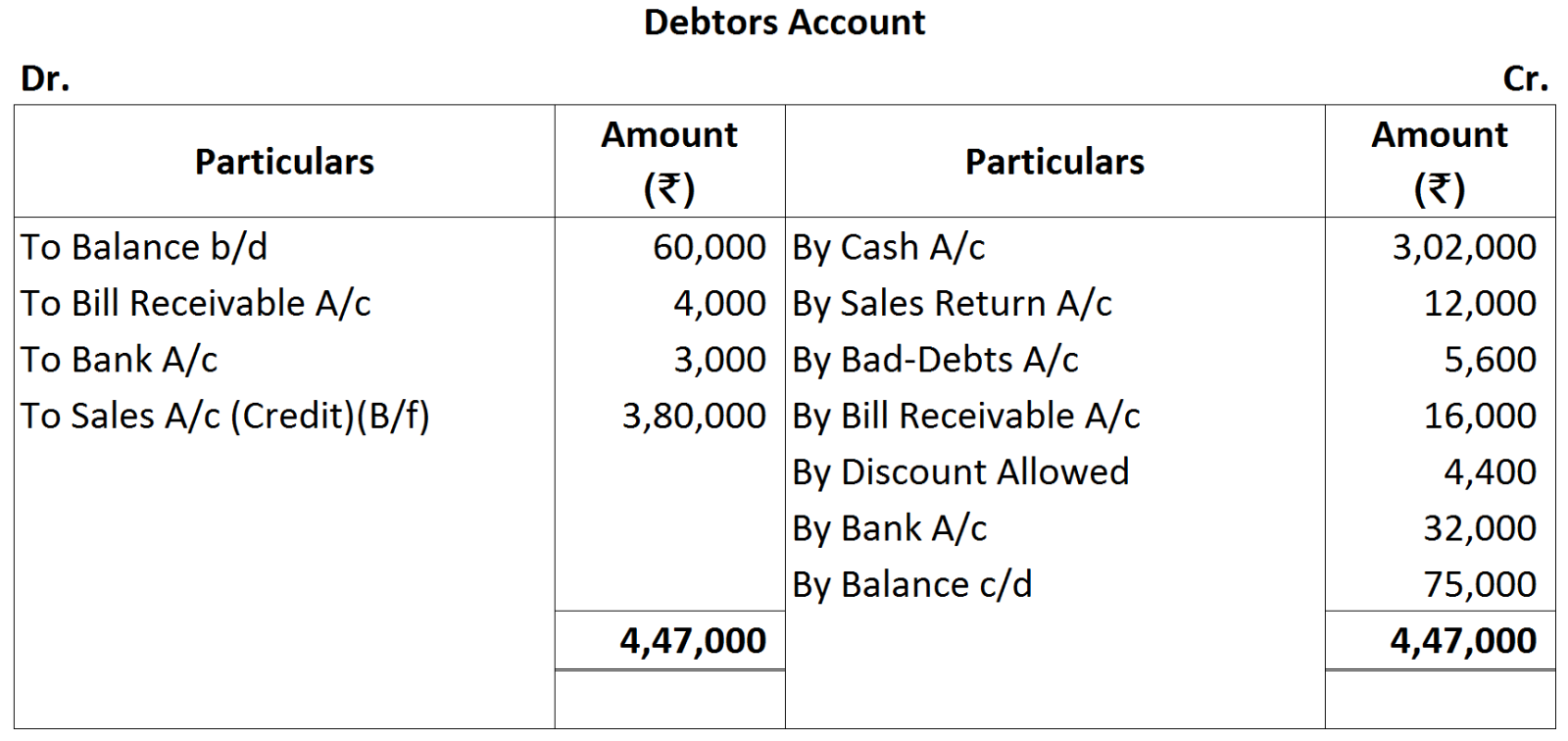
Total Sales = Cash Sales + Credit Sales
Total Sales = 1,05,000 + 3,80,000 = 4,85,000
View full question & answer
Question 23 Marks
Write any three defects of Incomplete Records.
Answer
Single Entry System is an incomplete and insufficient system of information, hence it has the following disadvantages:
  1. Arithmetical Accuracy cannot be Proved: Trial Balance cannot be prepared hence, arithmetical accuracy of books cannot be proved or tested. Chances of error mischief or fraud remaining undetected are high.
  2. No Control on Assets: Since assets accounts are not maintained, it is difficult to keep full control, in order to avoid misappropriations of assets.
  3. Correct Profit or Loss cannot be Determined: Trading and Profit and Loss Account cannot be prepared hence, correct profit earned or loss incurred during the accounting period cannot be determined.
View full question & answer
Question 33 Marks
State one point of difference between Statement of Affairs and Balance Sheet.
Answer
Differnce between Balance Sheet and Statement of Affairs
S.No.
Basis
Balance Sheet
Statement of Affairs
1.
Objective
The main objective of preparing Balance Sheet is to know about the financial position of the business.
The main objective of preparing Statement of Affairs is to know about capital at a point of time.
2.
Accounting System
Balance Sheet is prepared when accounts are maintained under Double Entry System.
Statement of Affairs is prepared when accounts are maintained under Single Entry System.
3.
Accounts and Information
This is prepared exclusively on the basis of ledger accounts.
In view of incomplete accounts, its preparation is based on limited accounts, calculations, estimates and other information.
 
View full question & answer
Question 43 Marks
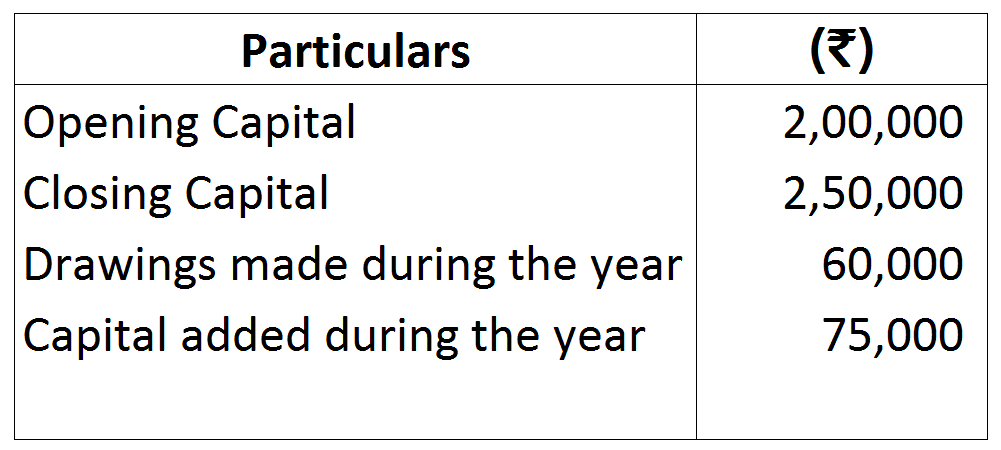
Atul does not keep proper records of his business. He gives you the following information:

Calculate profit or loss for the year.
View full question & answer
Question 63 Marks
What is meant by Statement of Affairs?
Answer
A Statement of Affairs is a statement of assets and liabilities. Difference between the amounts of the two sides is taken as capital. Under the Single Entry System, it is necessary to prepare Statement of Affairs at the end of the year and also in the beginning of the year, if not already prepared to determine profit. Statement of Affairs like Balance Sheet, has two sides-right-hand side for Assets and left-hand side for Liabilities. The difference between the total of assets and liabilities is capital.
Capital = Total Assets – Liabilities
View full question & answer
Question 73 Marks
Calculate the value of Closing Stock from the following particulars:
Answer
Rate of Gross Profit (on cost) = 25%
Rate of Gross Profit (on sales) = 20%
Gross Profit = 20% of 1,20,000 = 24,000
Gross Profit = Net Sales - Cost of Goods Sold
24,000 = 1,20,000 - Cost of Goods Sold
Cost of Goods Sold = 1,20,000 - 24,000 = ₹ 96,000
Cost of Goods Sold = Opening Stock + Purchases + Direct Expenses - Closing Stock
96,000 = 16,000 + 93,000 + 20,000 - Closing Stock
Closing Stock = 16,000 + 93,000 + 20,000 - 96,000 = ₹ 33,000
View full question & answer
Question 83 Marks
Calculate Closing Capital:
Opening Capital ₹ 90,000; Profit for the year ₹ 25,000; Drawings ₹ 17,000. During the year proprietor sold ornaments of his wife for ₹ 40,000 and invested the same in business.
Answer
Closing Capital + Drawings - Additional Capital - Opening Capital = Profits
Closing Capital = Opening Capital + Additional Capital + Profits - Drawings
Closing Capital = 90,000 + 40,000 + 25,000 - 17,000
Closing Capital = ₹ 1,38,000
View full question & answer
Question 93 Marks
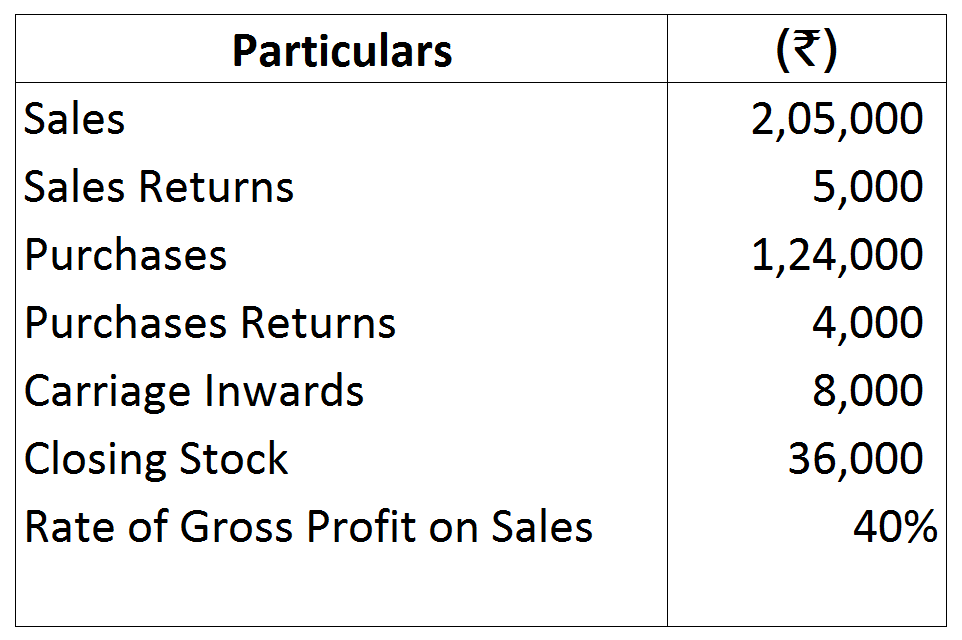
Calculate the value of Opening Stock from the following:
Answer
Rate of Gross Profit (on sales) = 40%
Gross Profit = 40% of (2,05,000 - 5,000) = 80,000
Gross Profit = Net Sales - Cost of Goods Sold
80,000 = 2,00,000 - Cost of Goods Sold
Cost of Goods Sold = 2,00,000 - 80,000 = ₹ 1,20,000
Cost of Goods Sold = Opening Stock + Purchases + Direct Expenses - Closing Stock
1,20,000 = Opening Stock + (1,24,000 - 4,000) + 8,000 - 36,000
Opening Stock = 1,20,000 - 1,20,000 - 8,000 + 36,000 = ₹ 28,000
View full question & answer
3 Marks Question - Account STD 11 Commerce Questions - Vidyadip