Questions

5 Marks Question

🎯

Test yourself on this topic

30 questions · timed · auto-graded

Question 15 Marks
"We can appoint an employee but not an entrepreneur." Describe difference between an employee and an entrepreneur in the light of this statement.
Answer
The difference between entrepreneur and employee is that an entrepreneur is the owner of the enterprise and an employee is in the service of the enterprise and both work in the interest of the enterprise. The following are the basic differences:
Basis
Entrepreneur
Employee
Motive
The motive of an entrepreneur is to start a venture by setting up of an enterprise. One undertakes the venture for his personal gratification.
The motive of an the employee’s job is to render one's service in the ongoing or new enterprise set up by someone else.
Status
An Entrepreneur is the owner of the enterprise.
Employee is the servant in the enterprise owned by entrepreneur.
Risk Bearing
An entrepreneur being the owner of the enterprise assumes all risks and uncertainty involved in running the enterprise considers and thinks about one’s business 24 hours
An employee being servant does not bear any risk, all that, can happen is one may lose one’s job with or without some compensation. One thinks of one’s enterprise that one is working on duty for certain hours only.
Rewards
An entrepreneur gets, for bearing risks involved in the enterprise is profit or at times handsome profit, which is uncertain.
An employee gets rewarded for one’s services rendered in the enterprise as salary which is fixed and certain as per appointment letter issued. In addition, one gets a bonus as per prescribed rules and festival tokens etc. in cash or kind, sometimes on performance.
Innovations
The entrepreneur himself/ herself thinks over what and how to produce goods and services. One has to bear in mind about meeting the changing demands of the customers. Hence he acts as an innovator as well as a change agent.
Employee executes the set plans as per given schedule. Thus one’s job gets to meet up the targets decided by one’s employees.
Qualification
An entrepreneur needs to possess qualities and qualifications like high achievement motive, originality in thinking, farsightedness, risk bearing abilities and much more.
An employee needs to possess qualification as per the status in the enterprise which are pre-set and detailed in black and white, like an accountant can be C.A/ M.Com etc. and a manager may be an M.B.A. in Marketing/ Finance or Human Resource etc as per the nature of the enterprise.
View full question & answer
Question 25 Marks
Differentiate between an entrepreneur and an employee.
Answer
Basis
Entrepreneur
Employee
Motive
The motive of an entrepreneur is to start a venture by setting up of an enterprise. One undertakes the venture for his personal gratification.
The motive of an the employee’s job is to render one's service in the ongoing or new enterprise set up by someone else.
Status
An Entrepreneur is the owner of the enterprise.
Employee is the servant in the enterprise owned by entrepreneur.
Risk Bearing
An entrepreneur being the owner of the enterprise assumes all risks and uncertainty involved in running the enterprise considers and thinks about one’s business 24 hours
An employee being servant does not bear any risk, all that, can happen is one may lose one’s job with or without some compensation. One thinks of one’s enterprise that one is working on duty for certain hours only.
Rewards
An entrepreneur gets, for bearing risks involved in the enterprise is profit or at times handsome profit, which is uncertain.
An employee gets rewarded for one’s services rendered in the enterprise as salary which is fixed and certain as per appointment letter issued. In addition, one gets a bonus as per prescribed rules and festival tokens etc. in cash or kind, sometimes on performance.
Innovations
The entrepreneur himself/ herself thinks over what and how to produce goods and services. One has to bear in mind about meeting the changing demands of the customers. Hence he acts as an innovator as well as a change agent.
Employee executes the set plans as per given schedule. Thus one’s job gets to meet up the targets decided by one’s employees.
Qualification
An entrepreneur needs to possess qualities and qualifications like high achievement motive, originality in thinking, farsightedness, risk bearing abilities and much more.
An employee needs to possess qualification as per the status in the enterprise which are pre-set and detailed in black and white, like an accountant can be C.A/ M.Com etc. and a manager may be an M.B.A. in Marketing/ Finance or Human Resource etc as per the nature of the enterprise.
View full question & answer
Question 35 Marks
Differentiate between an Intrapreneur and Entrepreneur.
Answer
Basis of Distinction
Entrepreneur
Intrapreneur
Definition
An particular person who has the potential of investing some money in enterprise on the onus of hazard and operates that agency beneath their administration.
An particular person who works inside a company, principally as a supervisor and comes up with revolutionary ideas that promote enchancment and promoting for that group.
Approach
The technique taken by a person who works as an entrepreneur always stays intuitive.
Always considers the state of the group and then offer you plans which have therapeutic price.
Dependency
Always stays unbiased and makes use of their belongings to run the businesses and make modifications.
Always works with the belongings given to them by the company and resulting from this reality works dependently.
Benefit
Creation and essential place all through the market.
Changing and renewing of the group development and the custom of working.
Working
Focuses and works from the pores and skin.
Works from all through the agency.
View full question & answer
Question 45 Marks
"Babita and Co. started a leather factory near Kanpur. As an entrepreneur she always helps her employees and motivate them in different ways”. You are a senior manager in an organisation according to you what motivational technique would Babita take to achieve an objective of an organisation. Explain using Maslow's theory of motivation.
Answer
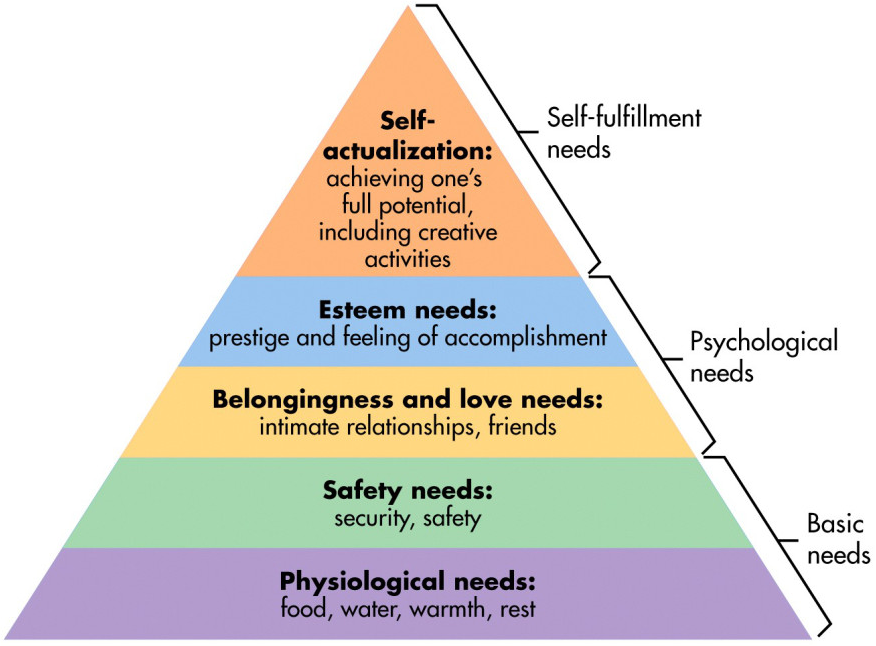
Maslow's theory relates motivation to a hierarchy of needs. At the bottom are essential physiological needs such as air, food, shelter and clothing. As individuals satisfy one level of need, their motivations change as they aspire to reach the higher order needs. Therefore, to motivate an individual Maslow suggests that it is necessary to know where within the hierarchy each employee is placed so that these factors can be taken into account. Within enterprise every employee is motivated to work through each of these levels.For example:
  1. Physiological needs:
  • Enterprise can offers competitive salaries. This gives people the means to acquire the basic needs for living.
  • Enterprise may provide different beneficial programme allows employees to choose those benefits that suit them. Like childcare vouchers, cash alternatives to company cars and discounted life assurance schemes, mediclaim policy, etc.
  • It will help workers' improve their standard of living and motivate them to be loyal to the company.
  1. Entrepreneur may provide safety needs Babita, an entrepreneur, must value the safety of all employees.
  • The company is committed to providing a safe and healthy work environment to prevent accidents. Each employees are accountable and responsible to take care for observing the health and safety rules and practices.
  • An entrepreneur may check with range and working conditions of an employees (Part-time or full time). This helps employees to choose the best option for a healthy work-life balance.
  1. Social needs:
These are associated with a feeling of belongingness.
  • By providing compatible work group and friendship at work.
  • Good communication and proper instruction keeps everybody focused on the company's aims helps individuals contribute to the company's K-Values.
  • They include values such as being positive, seeing the best in people and recognising diversity. Babita can positively recognise and reward staff achievements. This helps strengthen teams and enhances workers' sense of belonging.
  • Esteem or egoistic: a need both for self-esteem and the esteem of others, which involves self-confidence, achievement, competence, knowledge, autonomy, reputation, status and respect.
  • Self-actualisation: Babita can provide employees with the opportunity to take on challenging job, creative task demands, advancement opportunities and stimulating responsibilities, achievement for work, etc.
The above given methods and motivational technique would help Babita to take firm decisions and to achieve an objective of an organisation and get entrepreneurial success.
View full question & answer
Question 55 Marks
Explain Maslow's theory of motivation.
Answer
Maslow's Hierarchy of Needs Theory: This theory was proposed by Abraham Maslow and is based on the assumption that people are motivated by a series of five universal needs.
These needs are ranked, according to the order in which they influence human behaviour, in hierarchical fashion, as depicted below:
  1. Physiological needs: These needs are lowest in the pyramidical structure and are deemed to be the lowest level needs, such as the need for food and water. As long as physiological needs are unsatisfied, they exist as a driving or motivating force in a person's life.
A hungry person has a felt need. This felt need sets-up both psychological and physical tensions that manifest themselves in overt behaviours directed at reducing those tensions (getting something to eat).

Once the hunger is satisfied, the tension is reduced, and the need for food ceases to motivate. At this point (assuming that other physiological requirements are also satisfied), the next higher order need becomes the motivating need.
  1. Safety needs: These needs are second in the pyramidical structure and emerge only after the physiological needs are fulfilled.
These needs include a desire for security, stability, dependency, protection, freedom from fear and anxiety, and a need for structure, order and law. In the workplace, this need translates into a need for atleast a minimal degree of employment security, the knowledge that we cannot be fired on a whim and that appropriate levels of effort and productivity will ensure continued employment.
  1. Social needs: These needs rank third in the pyramidical structure and emerge after the safety needs have been fulfilled. These needs include the need for belongingness and love. Being social creatures, humans have a need to belong. In the workplace, this need may be satisfied by an ability to interact with one's co-workers and perhaps to be able to work collaboratively with their colleagues.
  2. Ego and esteem needs: These needs rank fourth in the pyramidical structure and emerge after the social needs have been fulfilled. Esteem needs include the desire for self-respect, self-esteem and the esteem of others. When focused externally, these needs also include the desire for reputation, prestige, status, fame, glory, dominance, recognition, attention, importance and appreciation.
  3. Self-actualisation needs: These needs rank the highest in Maslow's pyramidical structure and emerge after the satisfaction of ego and esteem needs. These needs comprise of the need for self-realisation, continuous self-development and the process of becoming all that a person is capable of.
View full question & answer
Question 65 Marks
Read the following case study and answer the following questions:
A young village boy, who wanted to compete the I.A.S. examination, could not succeed because he got stuck at the interview level. He opened an institute for aspiring youngsters. What started as a single teacher coaching center grew into a big education institute that provides tutorials to wide range of courses. The young manal who could not materialise his dream of becoming a civil servant, has become an entrepreneur in the field of education.
  1. Name the associated with the case study.
  2. Explain the value associated with.
Answer
  1. Independence or ownership (self-reliance).
  2.  
  • Analysts of entrepreneurial processes have found that a very strong and positive ego drive is involved in the action plan of all significant entrepreneurial ventures.
  • It enables them to develop a 'mission' concept which drives them to achieve their goal with a clear vision.
  • They drive great satisfaction in their sense of 'independence' or 'ownership'. Commitment, sense of complete identification, sincerity and hard work to achieve their 'mission constitute the ingredients of the ownership’ factor.
View full question & answer
Question 75 Marks
Discuss briefly the sources and features of attitude.
Answer
Sources of Attitude: One of the features of attitude is that it is acquired. The thoughts, feelings and tendencies to behave are acquired or learned gradually, from the following sources:
  1. Direct personal experience: The quality of a person's direct experience with the attitude object determines his/ her attitude towards it. e.g. if a worker finds his/ her job challenging, supervisors understanding and co-workers very cooperative, then he/ she will have a positive attitude towards his/ her job because of the quality of his/ her direct experience with the job.
  2. Group associations: People are influenced to one degree or another by other members of the group to which they belong. Several groups, including family, work and peer groups and cultural and sub-cultural groups are important in affecting a person's attitudinal development.
  3. Influential others: A person's attitude can be formed and changed through personal contact with influential persons such as friends, relatives, experts and celebrities. To capitalise on this type of influence, advertisers often use actors and actresses, who look similar to or act similar to their intended audiences. Another application which advertisers use to influence audience attitudes is the so called slice of life' commercial. These advertisements show typical people confronting typical problems and finding solutions in the use of advertised brand. e.g. Kareena Kapoor using 'Head and Shoulders' shampoo for dandruff problem.
Features of Attitude: Attitude generally exhibits the following features:
  1. Affects behaviour People have a natural tendency to maintain consistency between attitude and behaviour. In the absence of external intervention, attitude leads to intended behaviour.
  2. Attitude is invisible Attitude is basically a psychological phenomenon, which cannot be directly observed. However, it can be interpreted by observing its consequences. e.g. if a person is highly productive, we may infer that he/ she has a positive attitude towards his/ her work.
  3. Attitude is acquired Attitude is generally learnt or acquired over a period of time. The process of learning attitude starts from childhood and continues throughout the life of an individual. In childhood, the family members have a greater influence on the attitude a child develops.
  4. Attitude is pervasive Attitude has their presence felt in all the aspects of society. It is formed in the process of socialisation and hence, may relate to anything in the world. For instance, a person may have positive or negative attitude towards religion, politics, politicians or countries.
View full question & answer
Question 85 Marks
Explain features of attitudes.
Answer
Features of attitude:
  1. Affects behaviour: People have a natural tendency to maintain consistency between attitude and behaviour. Attitudes can lead to intended behaviour if there is no external intervention.
  2. It is invisible: It constitutes a psychological phenomenon which cannot be directly observed. However, we may observe an attitude indirectly through observing its consequences. For example, if a person is highly productive, we may infer that he has a positive attitude towards his/her work.
  3. Attitudes are acquired: Attitudes are gradually learnt over a period of time. The process of learning attitudes starts right from childhood and continues throughout the life of a person. However, in the beginning, the family members have a greater impact on the attitude of a child.
  4. Attitudes are pervasive: They are formed in the process of socialisation and may relate to anything in the world. For instance a person may have positive and negative attitudes towards religion, politics, politicians or countries.
View full question & answer
Question 95 Marks
Abhishek is a renowned entrepreneur. Few workers in his organisation are too lazy and always try to show inability and unwillingness to take up any kind of new work given to them. As a manager, how would you motivate lazy employees?
Answer
As a manager, I will take the following steps to motivate these employees to accomplish the desired target of an organisation. McClelland's Acquired Needs Theory-needs are to some extent acquired and can therefore be influenced, just as several simultaneous needs influence a person's behaviour.
  1. Start with some team building exercises.
  2. Without hiring an outside consulting company as they are costly and do not know your company the way you do. Get your employees involved in your decision-making process. They will feel happy and great with you and your company with full responsibility and work enthusiastically.
  3. As a group have your employees brainstorm ideas for workplace values and ethics. Then be sure they each have a copy of the values they come up with.
  4. Recognize their accomplishments and listen to their ideas. Give them awards for their accomplishments. Let them make the decision about who gets the award.
  5. Incentives: Offering incentives, be it in the form of cash bonuses, promotions or even physical rewards, is a great way to make them work and get your employees eager to meet their goals.
  6. Lead with trust: To get the best from his team members, the leader needs to have their trust. You must become that General and get your team to believe in whatever goals you set. Now, lead them into battle.
  7. Be Nice to People: Too many bosses think of their staff as numbers and robots instead of humans. Treat your team as you would your family and friends and you'll see how quickly they respond and put their best feet forward.
  8. The above given techniques will be sufficient for Abhishek to motivate lazy employees.
View full question & answer
Question 105 Marks
How are drone Entrepreneurs different from Fabian Entrepreneurs?
Answer
Basis
Drone Entrepreneurs
Fabian Entrepreneurs
Nature
They are leggards as they continue to operate in their traditional way and resist change.
They are shy, inactive and basically lazy and do not show any enthusiasm.
Functions
They take least interest in finding out new resources, new methods. They try to perform their functions in a routine manner.
They are not interested and willing to accept risk and likely to perform only such activities where success is guaranteed.
Period
They seldom survive for a long period.
They survive for a long period.
Flexibility
They are not flexible.
 
They are flexible to some extent.
Influence
They are not influenced.
They are influenced.
Countries
They are generally found in developing countries.
They are generally found in underdeveloped countries.
Generation
They are fourth generation entrepreneurs in a family business
enterprise.
Usually, they are second generation entrepreneurs in a family business enterprise.
View full question & answer
Question 115 Marks
How do systematic planning and persistence help entrepreneurs become effective leaders?
Answer
Systematic means “in an orderly way”. Planning is deciding what action you are going to take in future. All entrepreneurs before going to start an enterprise must make a systematic plan which will help them to prepare an action plan for every area of operation in order to achieve the pre-determined goals and persistence refers a ‘never say die’ attitude, not giving up easily, striving continuously until success is achieved. Entrepreneurs have the determination to persevere in the face of obstacles. Whenever any problem arises he takes the following steps:
  • Take action in the face of significant obstacles and challenges.
  • Take persistent actions, or switch to an alternative strategy to meet a challenge or obstacle.
  • Take personal responsibility for the performance necessary to achieve goals and objectives.
It means after making a systematic planning, whenever an entrepreneur faces certain obstacles/ barriers in business, he continues in his pursuit of excellence and become an effective leader.
View full question & answer
Question 125 Marks
What are the entrepreneurial values? Show by diagram.
Answer
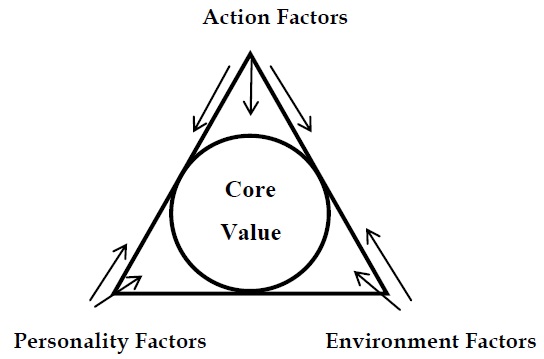
Milton Rokeach has defined values as “beliefs that guide actions and judgement across a variety of situations.” Values determine what people consider to be good or bad for a civilised society. A civilized society considers qualities like honesty, truthfulness, integrity etc., as important for happy a healthy living. These set of beliefs that provide standards which guide behaviour is known as values. In relation to business, social values define the objectives of business as well as the manner in which business affairs should be conducted. Entrepreneurs share some of these qualities that guide and direct them and hence they have come to be called entrepreneurial values. It can be summarised in the form of a diagram.

Core Values: Some research studies have revealed four core values that are generally possessed by dynamic entrepreneurs. These values are:
  1. Innovation and creativity.
  2. Independence or self-reliance.
  3. Respect for work.
  4. Quest for outstanding performance or achievement orientation.
However, these values are not found in the same degree among all the entrepreneurs.
View full question & answer
Question 135 Marks
How competency in creativity and innovation helps an entrepreneur meet the challenges of a situation?
Answer
Creativity is the ability to combine ideas in a unique way or to make unusual associations between the ideas. It means cross thinking by seeing new angles, connections and approaches. The role of creativity and creative problem solving as a structured technique for generating ideas is that a number of specific creative approaches can be used. For instance
  1. Attribute listing- in which entrepreneur develops a new idea by looking at the positive or negative attributes of a product or a service and so on.
  2. Free association- whereby, an entrepreneur develops a new idea through a chain of word associations etc.
Competency in creativity and innovation are sometimes basic traits of certain individuals. He/ she might not have any new ideas. He/ she may use the creative ideas and innovative products and services to meet the challenges of a situation, take advantage of the utility of an idea or a product to create wealth. Example, changes in the packaging of potato chips.
View full question & answer
Question 145 Marks
Classify entrepreneurs on the basis of types of business and use of technology.
Answer
Depending upon the nature, size and business types, entrepreneurs are divided into four categories, which are as follows:
  1. Business Entrepreneurs These entrepreneurs are those, who evolve an idea of a new product or service and hence, set-up an enterprise and arrange resources to make that idea into reality.
These entrepreneurs can be classified as:
  1. Trading entrepreneurs: These are the ones who undertake trading activities either in domestic markets or in foreign markets. For this, they need to identify the potential of the market by looking at the market demand and afterwards, they put many ideas to promote their business. e.g. Big Bazaar, Reliance Fresh, etc.
  2. Industrial entrepreneurs: They essentially manufacture products and offer services, which have an effective demand in the market. They have the ability to transform economic resources and technology into a profitable unit. e.g. Hero Motocorp, Tata Industries, etc.
  1. Corporate Entrepreneurs: These entrepreneurs are the ones, who through their creative and innovative ideas and skills are able to organise, manage and control a corporate undertaking very efficiently.
A corporate undertaking is one, which requires registration under existing laws such as joint stock companies and cooperative societies. e.g. Infosys, Reliance India Limited, etc.
  1. Agricultural Entrepreneurs: These entrepreneurs are those who undertake agricultural and allied activities as an area of business. They engage themselves in growing and marketing different crops, fertilizers and other inputs of agriculture, by employing new and modern techniques, machines, good quality seeds and irrigation facilities, etc. e.g. owners of coffee and tea plantations.
  1. Professional Entrepreneurs: They are the ones who start a business to sell it, when it is established. These people always look forward to develop or start an alternative project by selling the current running business. They are less interested in the management of an established business.
Classification of Entrepreneurs Based on the Technology used in Business On the basis of the use of technology, we can further divide entrepreneurs into following two categories:
  1. Technical Entrepreneurs: They are the ones, who have the ability of developing new and improved quality of goods and services out of their own knowledge, skills and specialisation. They concentrate more on production than on marketing.
  2. Non-technical Entrepreneurs: They usually focus on developing alternative ways of marketing the goods or services in order to promote their business. They are not concerned with the technique of production but they concentrate more on marketing.
View full question & answer
Question 155 Marks
Give the classification of entrepreneurs as given by Wagner.
Answer
Bill Wagner has classified entrepreneurs into seven types based on their personality traits, which are as follows:
  1. Trailblazers: They are basically leaders or pioneers in a particular field or are also defined as innovative leaders. The entrepreneurs having this characteristic are logical, analytical, practical and realistic. They tend to base decisions on facts, rather than feelings. They are very competitive, ambitious and goal-oriented. They are not satisfied with the slow progress of their venture. They tend to have two speeds-fast and faster. They prefer being the driving force of a business.
  2. Go-getters: They are usually defined as someone who is very energetic, determined to be successful and able to deal with new or difficult situations easily.
Go-getters, usually represent largest percentage of the founders. Their natural style lends itself to manage and lead, both process and people. They have a higher than average level of both dominance and sociability and are independent.
  1. Managers: They can be defined as individuals who are incharge of a certain group of tasks. So, entrepreneurs falling in this category have a tendency to look at people as vehicles for helping them to accomplish their goals. They are dominant, independent and are goal-oriented as well and can be quite analytical, focusing more on processes and outcomes, than on people. Managers also have a higher than average level of relaxation and generally understand that some projects simply take more time to get completed, unlike trailblazers and go-getters who always act urgently to complete tasks.
Managers consider employees as an extension of their family. The manager's business strengths are doing things on their own, as great behind-the-scene leaders who love working with systems, concepts, ideas and technologies. They excel at competitive selling because they enjoy overcoming rejection and achieving goals despite obstacles. They can deal well with customers, especially repetitive customers and because of this, they are great at growing a business.
  1. Motivators: They can be defined as persons who make someone enthusiastic about doing something. So, these entrepreneurs do well working by, with and through others. They have a high level of sociability, an above average level of dominance and are both driven and independent. They work well under pressure.
They can be convincing and avoid most confrontations by creating a strong emotional argument. They do well in the toughest of customer service roles, as they are able to see both sides of arguments. They tend to deal even with the most negative arguments by using the three F's-feel, felt and found.
  1. Authoritarians: They are characterised by favouring absolute obedience to authority. They generally tend to tell other people what to do in an arrogant manner. Authoritarians are the loyal workers who make the world function. They make their products and services their respective systems. They are very dedicated and cooperative, following rules, procedures and policies carefully. Very thorough with details, they are cautious, deliberate, logical and analytical.
  2. Collaborators: They generally work together, especially in a joint intellectual effort. These entrepreneurs are awarded with social skills which they use to influence other people and get what they want.
However, they aren't comfortable with cold calling (i.e. making random calls) or pitching new ideas. They generally like to follow prescribed rules and guidelines. Collaborators are good at running customer-service oriented business or retail business or any other business where being convincing is an important aspect of getting the job done right.

They do well in structured environment where people are an element of success.

Collaborators are great salesmen in a warm selling market, because they use their sociability to sell their expertise.
  1. Diplomats: They can be defined as persons who uses skills and sensitivity in dealing with others.
Diplomats are entrepreneurs, who exhibit the quality of social skills coupled with the drive to succeed. They also consider the views of the opposite party while entering into a deal or a transaction.

These entrepreneurs can work easily even under pressure and they prefer to finish work well on time. Diplomats are considered to be the best of the specialist entrepreneurs, as they have both sociability and drive in their personalities.
View full question & answer
Question 165 Marks
State the ethical practices to be followed by an entrepreneur and also discuss the importance of ethics for a business.
Answer
Ethical Practices to be followed by an Entrepreneur According to Johan Wempe, 'Ethical entrepreneurship, in a nutshell, amounts to the achievement of ethical goals through entrepreneurship’. An entrepreneur should not forget that for success to be long lasting, he/ she will have to follow some ethical standards in their business practices.
Some practices to be followed by them are given below:
  1. Providing quality and correct quantity of goods to consumers.
  2. Keeping in mind the environmental issues during production.
  3. Paying the minimum and correct wages to the workers.
  4. Not to use child labour in their production.
  5. Judicious use of natural resources.
Importance of Ethics for a Business:
Ethical behaviour can bring significant benefits to a business in the form of:
  1. Attracting customers to the firm's products which means boosting sales and profits.
  2. Making employees wanting to stay with the business, thereby, reducing labour turnover and therefore, increasing productivity.
  3. Attracting investors and keeping the share price high, thereby, protecting the business from takeover.
View full question & answer
Question 175 Marks
"An entrepreneur who is fulfilling the ethics and moral responsibility towards society is an asset for society and should be survive and grow." Explain.
Answer
According to Prof. Robert Dahd, Ethics is an obligatory on the part of business enterprise to be a socially responsible as they primarily exist to benefit society. Mahatma Gandhi observed, “If God has given you more wealth it is for the welfare of others. Keep what you need and distribute rest among less fortunate brethren.”
The following are some ethical standards in their business practices like which is to be followed by an entrepreneur:
  1. Providing quality and correct quantity of goods to consumers.
  2. Paying adequate taxes to government.
  3. Giving true information to employee, bankers, consumers, creditors, government.
  4. Fair practices for promotion, compensation, lay-off, fringe benefits, other facilities.
  5. Give proper information to customers about dangers of using a product.
  6. Respect property rights.
  7. Keeping in mind the environmental issues during production.
  8. Paying the minimum and correct wages to the workers.
  9. Not to use child labour in their production.
  10. Judicious use of natural resources.
All those entrepreneurs who is following the ethics and moral responsibility towards society is an asset for society and should be survive and grow.
Examples of such entrepreneurs:
  • Parker brothers withdrew its best selling toy, when children were chocked to death by swallowing some parts of the toy and remain successful for long term.
  • Nandita Bijur owner of Uma Food Products, an enterprise worth several crores of rupees.
  • Karsan Bhai Patel, creator of Nirma Washing powder.
  • Dhirubhai Ambani most successful entrepreneur of the world.
Their ethical value system provided them with rational economic attitude and successful entrepreneurs of the world.
View full question & answer
Question 185 Marks
What are the basic differences between Maslow's and McClelland's Theory of Needs?
Answer
 
Basis
Maslow’s Hierarchy of needs
McClelland’s theory of Needs
1.
Meaning
This theory was proposed by Abraham Maslow and is based on the assumption that people are motivated by a series of five universal needs. These needs are ranked, according to the order in which they influence human behaviour, in hierarchical fashion.
McClelland's Need for Achievement Theory is one of content theories of motivation emphasising that human needs and incentives cause human behaviour.
2.
Outline
It actually outlines different things with very specific examples of what is in each level of need.
McClelland outlined what he believed are three basic needs present in all people (in different intensities).
3.
Content
Maslow's Hierarchy of Needs-people try to satisfy the various needs according to a specific hierarchical pattern.
McClelland's Acquired Needs Theory-needs are to some extent acquired and can therefore be influenced, just as several simultaneous needs influence a person's behaviour.
4.
Levels of needs
The 5 levels of needs are:
  • Physiological.
  • Safety/ Security.
  • Belongingness and Love.
  • Esteem.
  • Self-actualisation
The three needs motivate people are.
  • Achievement.
  • Affiliation.
  • Power.
5.
Based on
This theory was proposed by Abraham Maslow and is based on the assumption that people are motivated by a series of five universal needs.
This theory was proposed by McClelland's and is based on the experiment, i.e. conducted, over 1,000 studies.
6.
Order/ layer of needs
Until the lower-layer needs are satisfied, they will not move to satisfy the upper-layer needs.
No specific level in employee's needsthere is no order for the three needs, no particular one has to come first or last.
7.
Usefulness
Maslow's can help you to use the hierarchy to identify what drives your employees.
  • Helps to understand people's needs. Helps to motivate employees.
  • Helps to decide rewards at each level. Helps in recognizing potential can be used to describe the kinds of information individual's seek at different levels of development.
McClelland's theory can help you to identify the dominant motivators of people on your team.
  • It can be used to for boosting morale in employees.
  • It can be used to influence how you set goals and provide feedback, and how you motivate and reward team members. It can also use these motivators to craft, or design, the job around your team members, ensuring a better fit.
View full question & answer
Question 195 Marks
“Many problems are bound to come in the path of progress, Ratan Tata shifted the manufacturing plant for Nano Cars from Singur to Sanand due to unforeseen complexities”. Which type of competency is shown here? Discuss.
Answer
Type of competency is shown here is Problem Solving. Competency relates to the type of behaviour exhibited in the performing of various tasks in the discharge of his functions. These competencies are latent in the entrepreneur, which need to be identified and acquire by which he should be able to face the problems with attention confidence and conviction. In the business world, problem solvers take risk but often create value by solving a problem related to, within a business or outside business like customer, market-key to creating a profitable enterprise. The more or larger problems an entrepreneurial organization solves, the more profit it can generate.
A business entrepreneur Ratan Tata is a person who had undertaken some effort with risk for the benefit of others. He was aware that, the venture he started was established on a new area and he has taken certain calculated risks, he was also aware of, that many problems are bound to come in the path of progress, during that time only taken a firm decision and when any problems like unforeseen complexities had come in the path of progress, then only he had taken a firm decision and shifted the manufacturing plant for Nano Cars from Singur to Sanand.
It clearly shows that most of the entrepreneur identified and understand the problem, find more than one ways for solving problems and, look for alternative strategies or resources that would help to solve the problem, generate new ideas, products, services, etc. At last, He has taken an entrepreneurial action with systematic efforts to solve problems.
View full question & answer
Question 205 Marks
Explain types of entrepreneurs on the basis of motivation.
Answer
Based on their motivating factors, entrepreneurs can be classified into three types such as spontaneous, induced and motivated entrepreneurs.
  1. Spontaneous Entrepreneurs: Spontaneous Entrepreneurs are otherwise known as pure entrepreneurs, who are motivated by their desire for self-fulfilment and to achieve or prove their excellence in job performance. They undertake entrepreneurial activities for their personal satisfaction in work, ego, or status. Their strength lies in their creative abilities. They are the natural entrepreneurs in any society. They do not need any external motivation.
  2. Induced Entrepreneurs: Induced entrepreneurs enter into entrepreneurship because of various governmental supports provided in terms of financial assistance, incentives, concessions and other facilities to the people who want to set up of their new enterprises. Sometimes prospective entrepreneurs are induced or even forced by their special circumstance, such as loss of job or inability to find a suitable job according to their talent and merit to adapt to entrepreneurship.
  3. Motivated Entrepreneurs: Motivated Entrepreneurs are motivated by their desire to make use of their technical and professional expertise and skill in performing the job or project they have taken up. They have enough confidence in their abilities. They are highly ambitious and are normally not satisfied by the slow progress in their jobs. They enter entrepreneurship because of the possibility of making and marketing of some new products or service for the use of the prospective consumers. If the product or service is developed to a saleable stage and the customers accept the same, the entrepreneur is then further motivated by reward in terms of profit.
View full question & answer
Question 215 Marks
"Entrepreneurs cannot survive and grow without fulfilling the ethical responsibilities of the society." Explain.
Answer
Yes, it is true. Entrepreneurs cannot survive and grow without fulfilling the ethical responsibilities of the society. Ethics is the knowledge of what is wrong and what is right. Business ethics are often guided by law, and it provides a basic framework that a businesses may chose to follow in order to gain public acceptance. An entrepreneur has to follow his ethics to make sure the proper usage of human resources, country’s natural resources, serve the society and the proper development of the country.
It includes:
  • Giving proper wages to workers.
  • Prohibiting child labour.
  • Not polluting the environment with harmful industrial smoke and wastages.
  • Ensuring proper and fuller utilization of natural resources.
There are many duties and responsibilities of a person towards a society, and towards nation. An entrepreneur as a part of the society and nation must follow ethical standards and if the enterprise abide the social and ethical responsibility then his/ her business will flourish and then:
  1. Reputation in the society: The reputation of the firm will be badly affected and the people would not like the company and, who does not serve the society.
  2. Employees may leave: If the company/ firm does not provide actual wages to the workers/ employees then they may strike or may leave the organisation which will result in loss of production.
  3. Product dissatisfaction: If the correct amount of quantity and good quality of the product is not provided, definitely the interest of people will move and they prefer other substitute goods.
  4. Government can shut-down: If the firm does not follow its ethical responsibility, government has the power to seal and shut down, they can even arrest and charge penalties for not following the laws.
View full question & answer
Question 225 Marks
Explain any six essential attitudes of an entrepreneur.
Answer
Essential attitudes of an Entrepreneur:
  1. Have passion for the business: Work should be fun. One’s passion will help to overcome difficult moments and will persuade people to work for you and want to do business with you. Passion can't be taught. When it wanes, as it surely will in difficult times, take some quiet time. Whether it be an hour or a week, take inventory of all the reasons one started the business and why one likes being one’s own boss. That should renew one’s passion.
  2. Set an example of trustworthiness: People have confidence in trustworthy individuals and want to work for them in a culture of integrity. The same is true for customers.
  3. Be flexible, except with core values: It's a fact that one's plans and strategies will change as time goes on. This flexibility for rapid change is an inherent advantage of small over large business. However, no matter what the pressure for immediate profits, do not compromise on core values.
  4. Don't let fear of failure hold one back: Failure is an opportunity to learn. All things being equal, venture capitalists would rather invest money in an individual who tried and failed founding a company than in someone who never tried.
  5. Make timely decisions: It's okay to use one's intuition. Planning and thought are good. But procrastination leads one to miss opportunities.
  6. The major company asset is oneself: One should take care of oneself. One’s health is more valuable than the most expensive machinery or computer software for the company. One doesn't have to choose between ones family or company, play or work. Maintain one’s own health for balance and energy, which will, in turn, enhance one’s outlook.
View full question & answer
Question 235 Marks
"The thoughts feelings and tendencies to behave are acquired gradually." In the light of this statement describe the sources of attitudes.
Answer
Sources of attitudes: The central idea running through the process of attitude formation is that, the thoughts, feelings and tendencies to behave are acquired or learned gradually.
The attitudes are acquired from the following sources:
  1. Direct personal experience: The quality of a person's direct experience with the attitude object determines his/ her attitude towards it. For example if a worker finds his/ her job challenging, supervisors understanding and co-workers very cooperative then he/ she will have a positive attitude towards his/ her job because of the quality of his/ her direct experience with the job.
  2. Group Associations: People are influenced to one degree or another by other members in the group to which they belong. Attitudes are one target for this influence. Their attitudes toward products ethics warfare and a multitude of other subjects are influenced strongly by groups that they value and with which they do or wish to associate. Several groups, including family, work, and peer groups, and cultural and sub-cultural groups, are important in affecting a person's attitudinal development.
  3. Influential Others: A consumer's attitude can be formed and changed through personal contact with influential persons such as respected friends relatives and experts. Opinion leaders are examples of people who are respected by their followers and who may strongly influence the attitudes and purchase behavior of followers. To capitalize on this type of influence, advertisers often use actors and actresses who look similar to or act similar to their intended audiences. People tend to like others who are similar to themselves because they believe that they share the same problems, form the same judgments and use the same criteria for evaluating products. Another application which advertisers use to influence audience attitudes is the so called slice of life commercial. These advertisements show typical people confronting typical problems and finding solutions in the use of the advertised brand, some examples include the advertisement of a specialised shampoo (to solve dandruff problems).
View full question & answer
Question 245 Marks
'Entrepreneur's decisions can strengthen or seriously weaken a firm's future business viability." Discuss this statement in the light of necessity of ethics for society and development of business.
Answer
Entrepreneur’s decision can strengthen a firm’s future business viability, by following some ethical standards in their business practices:
  1. Providing quality and correct quantity of goods to consumers.
  2. Keeping in mind the environmental issues during production.
  3. Paying the minimum and correct wages to the workers.
  4. Not to use child labour in their production.
  5. Judicious use of natural resources.
  6. Integrity, promise keeping, commitment, and truthfulness towards employee, consumers other competitors, etc.
For example: Karsan Bhai Patel, the creator of Nirma Washing Powder, who was working as a factory chemist in Gujarat Mineral Development Corporation, started making detergent powder in his kitchen for poor rural women of Gujarat and selling his product by visiting different villages. His efforts culminated in the whitish yellow detergent powder named Nirma. The idea behind was need and the problem of the society that could not afford other brands of detergent powders because of their high cost. Today, Nirma is one of the world’s biggest detergent powder manufacturer. The strength of being capable is the plus point in an entrepreneur.

Entrepreneurs make choices and take actions that affect many, usually without the moral guidance available in established organisations. “Entrepreneur’s decisions can seriously weaken a firm’s future business viability.” Some common types of unethical action by an enterprise or an entrepreneur.

Theft, manipulating suppliers, bribery, embezzlement, evading taxes, failure to withdraw a defective product from the marketplace, adulteration, stealing supplies, falsification, etc.

For example: The cases of Enron, World Com are the examples of results of unethical decisions by key personnel of those enterprises.

For example: The collapse of Enron is a scandal of a major energy provider that used to be the seventh largest corporation in America and became the biggest bankruptcy in the US corporate history.

Unethical issues are:
  • Enron used many manipulative accounting practices.
  • Sophisticated accounting techniques to keep its share price high.
  • Raise investment against its own assets.
  • Artificially inflated profits, questionable accounting practices and fraud.
For example: Ramalinga Raju. We all are aware of the fraud at Satyam– a case of unethical practice.
View full question & answer
Question 255 Marks
Explain Maslow‟s Theory of Motivation.
Answer
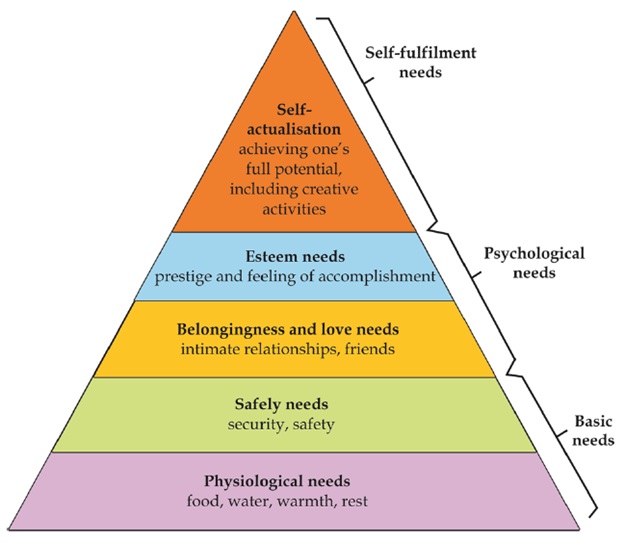
Maslow’s Hierarchy of Needs Theory: This theory was proposed by Abraham Maslow and is based on the assumption that people are motivated by a series of five universal needs. These needs are ranked, according to the order in which they influence human behaviour, in hierarchical fashion.
  • Physiological needs- are deemed to be the lowest - level needs. These needs include the needs such as food and water. As long as physiological needs are unsatisfied, they exist as a driving or motivating force in a person's life. A hungry person has a felt need. This felt need sets up both psychological and physical tensions that manifest themselves in overt behaviours directed at reducing those tensions (getting something to eat). Once the hunger is sated, the tension is reduced, and the need for food ceases to motivate. At this point (assuming that other physiological requirements are also satisfied) the next higher order need becomes the motivating need.
  • Safety needs- the needs for shelter and security - become the motivators of human behaviour. Safety needs include a desire for security, stability, dependency, protection, freedom from fear and anxiety, and a need for structure, order, and law. In the workplace this needs translates into a need for at least a minimal degree of employment security; the knowledge that we cannot be fired on a whim and that appropriate levels of effort and productivity will ensure continued employment.
  • Social needs- include the need for belongingness and love. Generally, as gregarious creatures, human have a need to belong. In the workplace, this need may be satisfied by an ability to interact with one's co-workers and perhaps to be able to work collaboratively with these colleagues.
  • After social needs have been satisfied, ego and esteem needs become the motivating needs. Esteem needs include the desire for self - respect, self - esteem, and the esteem of others. When focused externally, these needs also include the desire for reputation, prestige, status, fame, glory, dominance, recognition, attention, importance, and appreciation.
  • The highest need in Maslow's hierarchy is that of self-actualization; The need for self-realization, continuous self-development, and the process of becoming all that a person is capable of.
View full question & answer
Question 265 Marks
Explain any four entrepreneurial competencies.
Answer
  1. Initiative: One of the most fundamental competencies required for the entrepreneurs is the ability to take initiative. It is rather the first step in the enterprise. An entrepreneur has to be keen observer of the society, the commercial trends, the product types, the change dynamics and the consumer trends. Once he/ she decides to take the initiative, what matters is the speed with which he/ she is going to function.
  2. Creativity and Innovation: Competency in creativity and innovation are sometimes basic traits of certain individuals. He/ she might not have any new ideas. He/ she may use the creative ideas and innovative products and services to meet the challenges of a situation, take advantage of the utility of an idea or a product to create wealth. Example, changes in the packaging of potato chips.
  3. Risk Taking and Risk Management: An entrepreneur ventures into new ideas and new service. He/ she treads into areas of uncertainty. There are several elements such as demand supply in the market, resources availability, acceptability of the product design and service which throw a potential challenge to the entrepreneur. In order to attune oneself in the skill of risk taking and management he should practice in several areas of entrepreneurial functions such as entering into new market. For example, when Dhirubhai Ambani faced cash crunch he took the risk of issuing shares in 1977 to the public when they were not that aware about share market.
  4. Problem Solving: Once an entrepreneur is aware that he has ventured on a new area and has taken certain calculated risks, he/ she should also be aware that many problems are bound to come in the path of progress. He/ she should understand that there is more than one way of solving problems, look for alternative strategies or resources that would help to solve the problem, generate new ideas, products, services etc. For example: When an entrepreneur faces cash crunch he should look for alternative sources for receiving funds. Ratan Tata shifted the manufacturing plant of Nano cars from Singur to Sanand due to unforeseen complexities.
  5. Leadership: An entrepreneur should also be an effective leader who should be able to guide and motivate his/ her entire team. Whenever a company faces problem it is the will power and effective business acumen and communication skills which oversees the success of the corporation.
View full question & answer
Question 275 Marks
"Competencies is a set of defined behaviors." State the types of competencies required by an entrepreneur? Explain.
Answer
Yes, it is a set of defined behaviours as it can be observable and measurable, it also includes knowledge, skills, abilities, teamwork, cooperation and communication contribute to individual success in the organization. It provides a structured guide enabling the identification, evaluation and development of behaviours in an individual. Entrepreneur should also acquire and follow certain basic competencies. They are as follows:
They relate to the type of behaviour exhibited in the performing of various tasks in the discharge of his functions. Some of these competencies are latent in the entrepreneur, which need to be identified, nursed and nurtured. Others are acquired through training and practice.
  1. Initiative: One of the most fundamental competencies required for the entrepreneurs is the ability to take initiative. It is rather the first step in the enterprise. An entrepreneur has to be keen observer of the society, the commercial trends, the product types, the change dynamics and the consumer trends. Once he/ she decides to take the initiative, what matters is the speed with which he/ she is going to function.
  2. Creativity and Innovation: Competency in creativity and innovation are sometimes basic traits of certain individuals. He/she might not have any new ideas. He/ she may use the creative ideas and innovative products and services to meet the challenges of a situation, take advantage of the utility of an idea or a product to create wealth. Example, changes in the packaging of potato chips.
  3. Risk Taking and Risk Management: An entrepreneur ventures into new ideas and new service. He/she treads into areas of uncertainty. There are several elements such as demand supply in the market, resources availability, acceptability of the product design and service which throw a potential challenge to the entrepreneur. In order to attune oneself in the skill of risk taking and management he should practice in several areas of entrepreneurial functions such as entering into new market. For example, when Dhirubhai Ambani faced cash crunch he took the risk of issuing shares in 1977 to the public when they were not that aware about share market.
  4. Problem Solving: Once an entrepreneur is aware that he has ventured on a new area and has taken certain calculated risks, he/she should also be aware that many problems are bound to come in the path of progress. He/ she should understand that there is more than one way of solving problems, look for alternative strategies or resources that would help to solve the problem, generate new ideas, products, services etc. For example: When an entrepreneur faces cash crunch he should look for alternative sources for receiving funds. Ratan Tata shifted the manufacturing plant of Nano cars from Singur to Sanand due to unforeseen complexities.
  5. Leadership: An entrepreneur should also be an effective leader who should be able to guide and motivate his/ her entire team. Whenever a company faces problem it is the will power and effective business acumen and communication skills which oversees the success of the corporation.
  6. Persistence: In most cases, the entrepreneurial pursuits are new and need very close attention. Creating a need in the market for the enterprise is one of the main requirements of the entrepreneur. This calls for intense perseverance on the part of the entrepreneur. Roadblocks to success should not deter the entrepreneur. For example: Mixers when introduced, did not have many customers but today, we find it to be an essential part of kitchen accessories. When Mahima Mehra brought out her product–Haathi Chaap, she had experimented on various other material before using elephant dung to manufacture handmade paper.
  7. Quality Performance: Since entrepreneurs value outstanding performance, one of the behavioural skills necessary is the sensitivity to and concern for the "standards" and "quality of work". One develops the skill of comparing the quality of the product/services with certain standards, which he/ she himself evolves or are set by others. For example: Steve Jobs, the brain behind Apple and I-pod, is known to value quality in all the products introduced by the company.
  8. Information Seeking: Information plays a very crucial role at every stage of enterprise building and management. The quality and extent of information collected and the way these have been used to make various decisions by and large decides the success and failure of any entrepreneurial venture. They can get this information by personally conducting research, using feedback from previous related experience etc.
  9. Systematic Planning: Every entrepreneur has limited resources in terms of time, finance, and manpower. They invest their life’s saving and total energy in creating entrepreneurial ventures and cannot afford to lose or waste these. Before putting the whole enterprise into operation, he is required to develop a detailed blueprint.
  10. Persuasion and Influencing Others: One of the important functions of an entrepreneur is to influence the environment comprising of individuals and institutions, for mobilizing resources, obtaining inputs, organizing production and selling products and services. They have to practice highlighting the strong points of their products and services in the market explaining the technological competencies of their enterprise to produce quality goods and services.
  11. Enterprise Launching Competencies: Opportunities exist, but not all people respond to them. Large groups in society can perceive only the apparent and traditional openings of earning. Similarly, resources are also available to all members of the society, but very few make efforts to ensure best use of these resources. Entrepreneurs should identify and avail the facilities and resources needed to launch their enterprises.
  12. Enterprise Management Competencies: The enterprise may be small or big but it demands management abilities on the part of its owner or manager. Various management functions such as production, marketing, finance etc., are crucial functions to entrepreneurs. These influence the result directly, and therefore, are necessary determinants for the sustenance of an enterprise.
View full question & answer
Question 285 Marks
Explain the types of business entrepreneurs.
Answer
  1. Business Entrepreneur: Business entrepreneurs are those who develop an idea for a new product or service and then establish an enterprise to materialise their idea into reality. Most of the entrepreneurs belong to this category because majority of entrepreneurs are found in the field of small trading and manufacturing concerns.
  2. Trading Entrepreneur: Entrepreneurs who undertake trading activities whether domestic or overseas are Trading Entrepreneurs. They have to identify the potential market for his product in order to stimulate the demand for the same. They push many ideas ahead of others in the form demonstration to promote their businesses.
  3. Industrial Entrepreneur: Industrial entrepreneurs essentially manufacture products and offer services, which have an effective demand in the marketing. They have the ability to convert economic resources and technology into a profitable venture. For example: Enterprises like Hero Motorcorp and Hyundai Corporation.
  4. Corporate Entrepreneur: Corporate Entrepreneurs are those who through their innovative ideas and skill able to organise, manage and control a corporate undertaking very effectively and efficiently. Usually, they are promoters of the undertakings/ corporations, engaged in business, trade or industry.
  5. Agricultural Entrepreneur: Agricultural entrepreneurs are those who undertake agricultural as well as allied activities in the field of agriculture. They engage in raising and marketing of crops, fertilisers and other inputs of agriculture through employment of modern techniques, machines and irrigation.
  6. Use of Technology: The entrepreneurs may be classified into the following categories on the basis of application of new technology in various sectors of the economy.
  1. Technical Entrepreneur: The entrepreneurs who are technical by nature in the sense of having the capability of developing new and improved quality of goods and services out of their own knowledge, skill and specialisation are called a technical entrepreneur. They are essentially compared to craftsmen who concentrate more on production than marketing.
  2. Non-technical Entrepreneur: Non-technical entrepreneurs are those who are mainly concerned with developing alternative marketing and distribution strategies to promote their business. They are not concerned with the technical aspects of the product and services they are dealing with.
  1. Professional Entrepreneurs: Professional entrepreneurs make it their profession to establish business enterprises with a purpose, to sell them once they are established. He/ she is always looking forward to develop alternative projects by selling the running business. He/ she is not interested in managing operations of the business established by him. He/ she is very dynamic.
  2. Motivation: Based on their motivating factors, entrepreneurs can be classified into three types such as spontaneous, induced and motivated entrepreneurs.
  1. Spontaneous Entrepreneurs: Spontaneous Entrepreneurs are otherwise known as pure entrepreneurs, who are motivated by their desire for self-fulfilment and to achieve or prove their excellence in job performance. They undertake entrepreneurial activities for their personal satisfaction in work, ego, or status. Their strength lies in their creative abilities. They are the natural entrepreneurs in any society. They do not need any external motivation.
  2. Induced Entrepreneurs: Induced entrepreneurs enter into entrepreneurship because of various governmental supports provided in terms of financial assistance, incentives, concessions and other facilities to the people who want to set up of their new enterprises. Sometimes prospective entrepreneurs are induced or even forced by their special circumstance, such as loss of job or inability to find a suitable job according to their talent and merit to adapt to entrepreneurship.
  3. Motivated Entrepreneurs: Motivated Entrepreneurs are motivated by their desire to make use of their technical and professional expertise and skill in performing the job or project they have taken up. They have enough confidence in their abilities. They are highly ambitious and are normally not satisfied by the slow progress in their jobs. They enter entrepreneurship because of the possibility of making and marketing of some new products or service for the use of the prospective consumers. If the product or service is developed to a saleable stage and the customers accept the same, the entrepreneur is then further motivated by reward in terms of profit.
View full question & answer
Question 295 Marks
What do you mean by entrepreneurs? Mention the types of entrepreneurs.
Answer
An entrepreneur within a large firm, who uses entrepreneurial skills without incurring the risks associated with those activities. Intrapreneurs are usually employees within a company who are assigned a special idea or project, and are instructed to develop the project like an entrepreneur would. Intrapreneurs usually have the resources and capabilities of the firm at their disposal. The intrapreneur's main job is to turn that special idea or project into a profitable venture for the company.
Types of entrepreneurs:
  1. Business Entrepreneur: Business entrepreneurs are those who develop an idea for a new product or service and then establish an enterprise to materialise their idea into reality. Most of the entrepreneurs belong to this category because majority of entrepreneurs are found in the field of small trading and manufacturing concerns.
  2. Trading Entrepreneur: Entrepreneurs who undertake trading activities whether domestic or overseas are Trading Entrepreneurs. They have to identify the potential market for his product in order to stimulate the demand for the same. They push many ideas ahead of others in the form demonstration to promote their businesses.
  3. Industrial Entrepreneur: Industrial entrepreneurs essentially manufacture products and offer services, which have an effective demand in the marketing. They have the ability to convert economic resources and technology into a profitable venture. For example: Enterprises like Hero Motorcorp and Hyundai Corporation.
  4. Corporate Entrepreneur: Corporate Entrepreneurs are those who through their innovative ideas and skill able to organise, manage and control a corporate undertaking very effectively and efficiently. Usually, they are promoters of the undertakings/ corporations, engaged in business, trade or industry.
  5. Agricultural Entrepreneur: Agricultural entrepreneurs are those who undertake agricultural as well as allied activities in the field of agriculture. They engage in raising and marketing of crops, fertilisers and other inputs of agriculture through employment of modern techniques, machines and irrigation.
  6. Use of Technology: The entrepreneurs may be classified into the following categories on the basis of application of new technology in various sectors of the economy.
  1. Technical Entrepreneur: The entrepreneurs who are technical by nature in the sense of having the capability of developing new and improved quality of goods and services out of their own knowledge, skill and specialisation are called a technical entrepreneur. They are essentially compared to craftsmen who concentrate more on production than marketing.
  2. Non-technical Entrepreneur: Non-technical entrepreneurs are those who are mainly concerned with developing alternative marketing and distribution strategies to promote their business. They are not concerned with the technical aspects of the product and services they are dealing with.
  1. Professional Entrepreneurs: Professional entrepreneurs make it their profession to establish business enterprises with a purpose, to sell them once they are established. He/ she is always looking forward to develop alternative projects by selling the running business. He/ she is not interested in managing operations of the business established by him. He/ she is very dynamic.
View full question & answer
Question 305 Marks
Explain in detail the McClleland Theory of Motivation.
Answer
McClelland’s Need for Achievement Theory is one of content theories of motivation emphasising that human needs and incentives cause human behaviour. McClelland has identified three types of basic motivating needs:
  1. Need for Achievement or Achievement Motive:
  • It refers to one’s desire to accomplish something with own efforts and an intense desire to achieve.
  • This theory has identified four basic characteristics of high achievers:
  1. Moderate risks: Taking moderate risks is the simple most descriptive characteristic of the person possessing high achievement need.
  2. Immediate feedback: Person with high need for achievement desires activities which provide immediate and precise feedback information how he is progressing towards a goal.
  3. Accomplishment: Person with high need for achievement finds accomplishing a task intrinsically satisfying in and of itself, or he does not expect or necessarily want the accompanying material rewards.
  4. Preoccupation with the tasks: Once a high achiever selects a goal, he tends to be totally preoccupied with the task until it is successfully completed. He will not feel satisfied unless he has put his maximum effort in completing the task.
  • The need for achievement is characterized by the wish to take responsibility for finding solutions to problems, master complex tasks, set goals and get feedback on level of success.
  1. Affiliation Motive or Need for Affiliation (N-Affil):
  • This refers to needs to establish interact and maintain friendly relations with others.
  • According to this theory, people with high need for affiliation usually derive pleasure from being loved and tend to avoid the pain of being rejected.
  • They are concerned with maintaining pleasant social relationships, understanding, and enjoy consoling and helping others in trouble.
  • It is characterized by a desire to belong, an enjoyment of teamwork, a concern about interpersonal relationships, and a need to reduce uncertainty.
  1. Need for Power or Power Motive (N-Pwr):
  • The ability to induce or influence behaviour is power.
  • These means the one’s desire to dominate and influence others by using actions.
  • The need for power is characterized by a drive to control and influence others, a need to win arguments, a need to persuade and prevail.
Such individuals are generally seeking positions of leadership; they are forceful, outspoken, hard headed and demanding. According to McClelland, the presence of these motives or drives in an individual indicates a predisposition to behave in certain ways. Therefore, from a manager’s perspective, recognizing which need is dominant in any particular individual affects the way in which that person can be motivated.
People with achievement motives are motivated by standards of excellence, delineated roles and responsibilities and concrete, timely feedback. Those with affiliation motives are motivated when they can accomplish things with people they know and trust. And the power motive is activated when people are allowed to have an impact, impress those in power, or beat competitors.
View full question & answer
5 Marks Question - Entrepreneurship STD 11 Commerce Questions - Vidyadip