Question 14 Marks
Read the following text carefully and answer the questions that follow:
In a street two lamp posts are $600$ feet apart. The light intensity at a distance d from the first $($stronger$)$ lamp post.$\frac{1000}{d^2}$ the light intensity at distance d from the second $($weaker$)$ lamp post is $\frac{125}{d^2} \ ($in both cases the light intensity is inversely proportional to the square of the distance to the light source$)$. The combined light intensity is the sum of the two light intensities coming from both lamp posts.
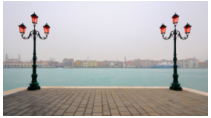
$i$. If $l(x)$ denotes the combined light intensity, then find the value of $x$ so that $I(x)$ is minimum.
$ii$. Find the darkest spot between the two lights.
$iii$. If you are in between the lamp posts, at distance $x$ feet from the stronger light, then write the combined light intensity coming from both lamp posts as function of $x$.
OR
Find the minimum combined light intensity?
In a street two lamp posts are $600$ feet apart. The light intensity at a distance d from the first $($stronger$)$ lamp post.$\frac{1000}{d^2}$ the light intensity at distance d from the second $($weaker$)$ lamp post is $\frac{125}{d^2} \ ($in both cases the light intensity is inversely proportional to the square of the distance to the light source$)$. The combined light intensity is the sum of the two light intensities coming from both lamp posts.
$i$. If $l(x)$ denotes the combined light intensity, then find the value of $x$ so that $I(x)$ is minimum.
$ii$. Find the darkest spot between the two lights.
$iii$. If you are in between the lamp posts, at distance $x$ feet from the stronger light, then write the combined light intensity coming from both lamp posts as function of $x$.
OR
Find the minimum combined light intensity?
Answer
View full question & answer→$i$. We have, $I ( x )=\frac{1000}{x^2}+\frac{125}{(600-x)^2}$
$\Rightarrow I ^{\prime}( x )=\frac{-2000}{x^3}+\frac{250}{(600-x)^3}$ and
$\Rightarrow I ^{\prime \prime}( x )=\frac{6000}{x^4}+\frac{750}{(600-x)^4}$
For maxima/minima, $I ^{\prime}( x )-0$
$\Rightarrow \frac{2000}{x^3}=\frac{250}{(600-x)^3}$
$ \Rightarrow 8(600-x)^3=x^3$
Taking cube root on both sides, we get
$2(600-x)=x $
$\Rightarrow 1200=3 x$
$ \Rightarrow x=400$
Thus, $I(x)$ is minimum when you are at $400$ feet from the strong intensity lamp post.
$ii$. At a distance of $200$ feet from the weaker lamp post.
Since $I(x) $is minimum when $x = 400$ feet,
therefore the darkest spot between the two light is at a distance of $400$ feet from a stronger lamp post,
i.e., at a distance of $600-400200$ feet from the weaker lamp post.
$iii. \frac{1000}{x^2}+\frac{125}{(600-x)^2}$
Since, the distance is $x$ feet from the stronger light,
therefore the distance from the weaker light will be $600 - x$
So, the combined light intensity from both lamp posts is given by
$\frac{1000}{x^2}+\frac{125}{(600-x)^2}$
OR
We know that $l ( x )=\frac{1000}{x^2}+\frac{125}{(600-x)^2}$
When $x=400$
$ l(x)=\frac{1000}{160000}+\frac{125}{(600-400)^2}$
$=\frac{1}{160}+\frac{125}{40000}$
$=\frac{1}{160}+\frac{1}{320}=\frac{3}{320} $ units
$\Rightarrow I ^{\prime}( x )=\frac{-2000}{x^3}+\frac{250}{(600-x)^3}$ and
$\Rightarrow I ^{\prime \prime}( x )=\frac{6000}{x^4}+\frac{750}{(600-x)^4}$
For maxima/minima, $I ^{\prime}( x )-0$
$\Rightarrow \frac{2000}{x^3}=\frac{250}{(600-x)^3}$
$ \Rightarrow 8(600-x)^3=x^3$
Taking cube root on both sides, we get
$2(600-x)=x $
$\Rightarrow 1200=3 x$
$ \Rightarrow x=400$
Thus, $I(x)$ is minimum when you are at $400$ feet from the strong intensity lamp post.
$ii$. At a distance of $200$ feet from the weaker lamp post.
Since $I(x) $is minimum when $x = 400$ feet,
therefore the darkest spot between the two light is at a distance of $400$ feet from a stronger lamp post,
i.e., at a distance of $600-400200$ feet from the weaker lamp post.
$iii. \frac{1000}{x^2}+\frac{125}{(600-x)^2}$
Since, the distance is $x$ feet from the stronger light,
therefore the distance from the weaker light will be $600 - x$
So, the combined light intensity from both lamp posts is given by
$\frac{1000}{x^2}+\frac{125}{(600-x)^2}$
OR
We know that $l ( x )=\frac{1000}{x^2}+\frac{125}{(600-x)^2}$
When $x=400$
$ l(x)=\frac{1000}{160000}+\frac{125}{(600-400)^2}$
$=\frac{1}{160}+\frac{125}{40000}$
$=\frac{1}{160}+\frac{1}{320}=\frac{3}{320} $ units