Question 14 Marks
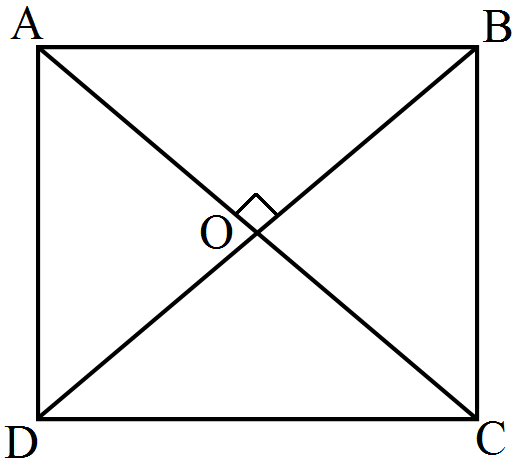
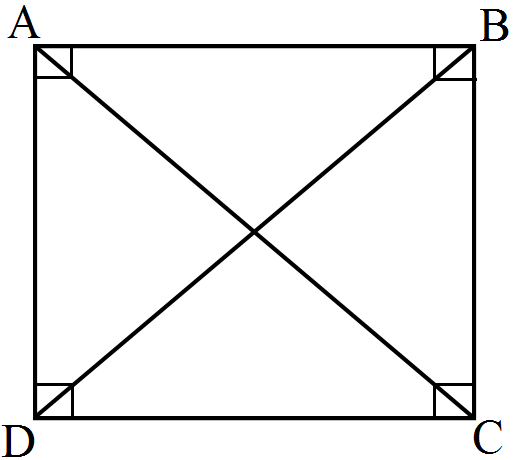
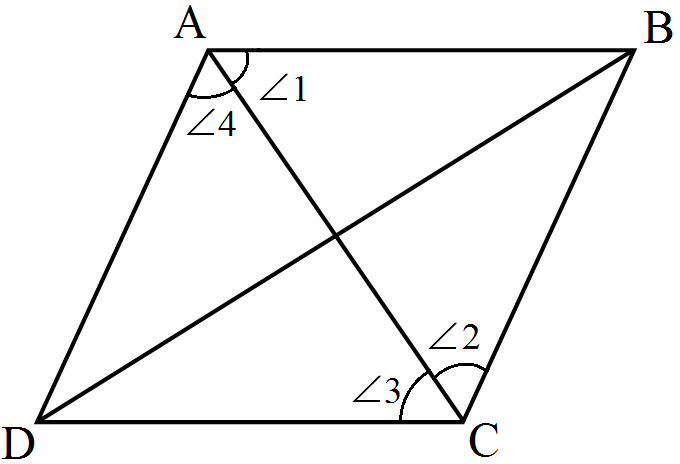
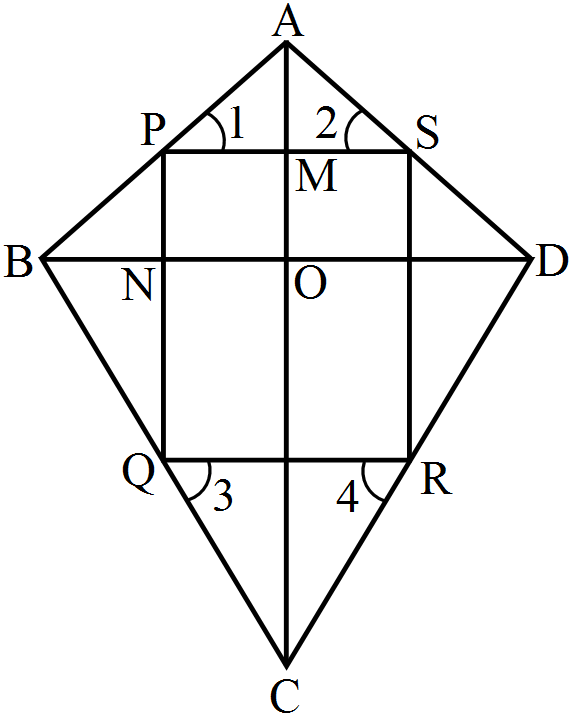
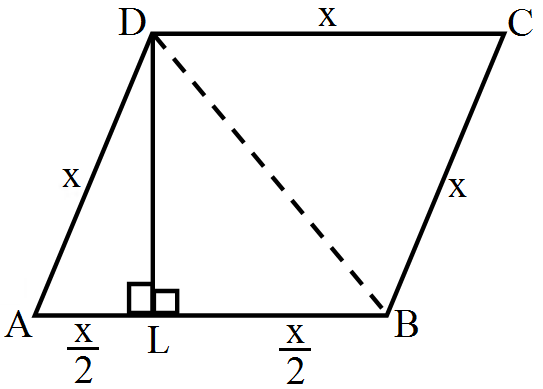
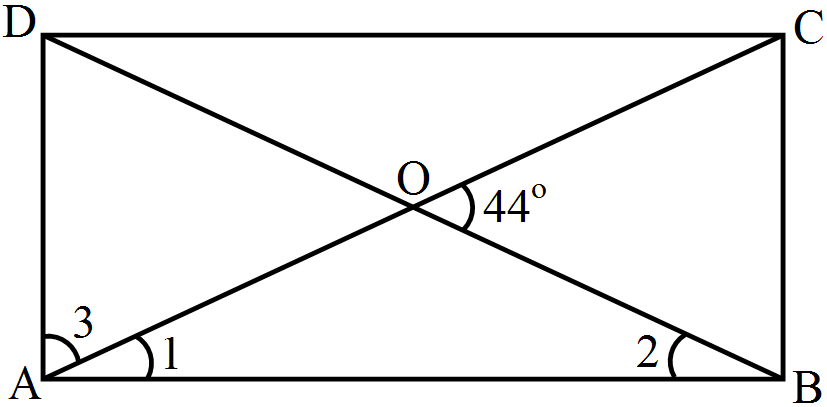
Show that if the diagonals of a quadrilateral are equal and bisect each other at right angles, then it is a square.
50 questions · timed · auto-graded
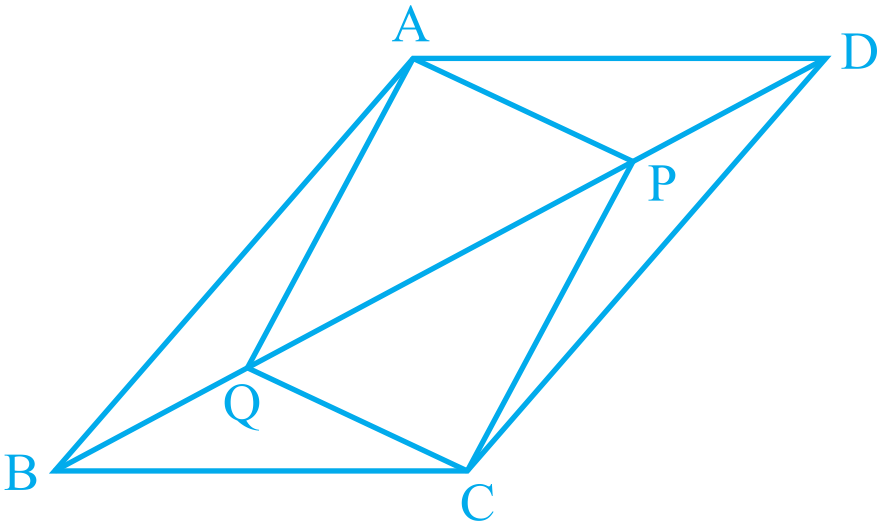
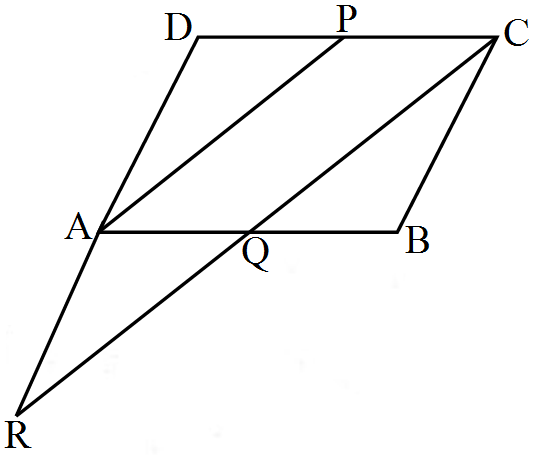
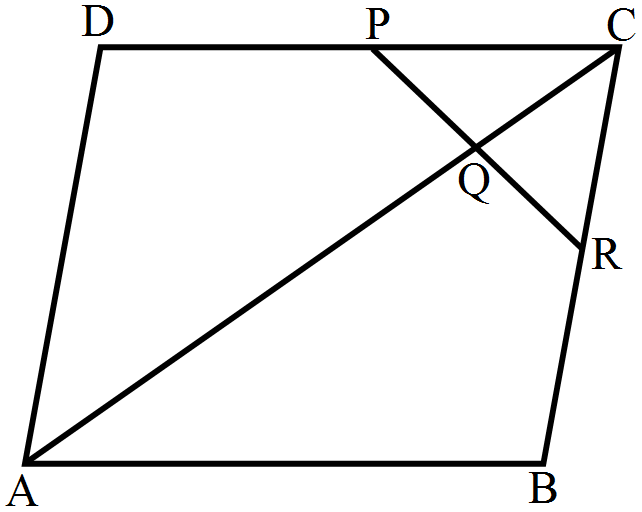
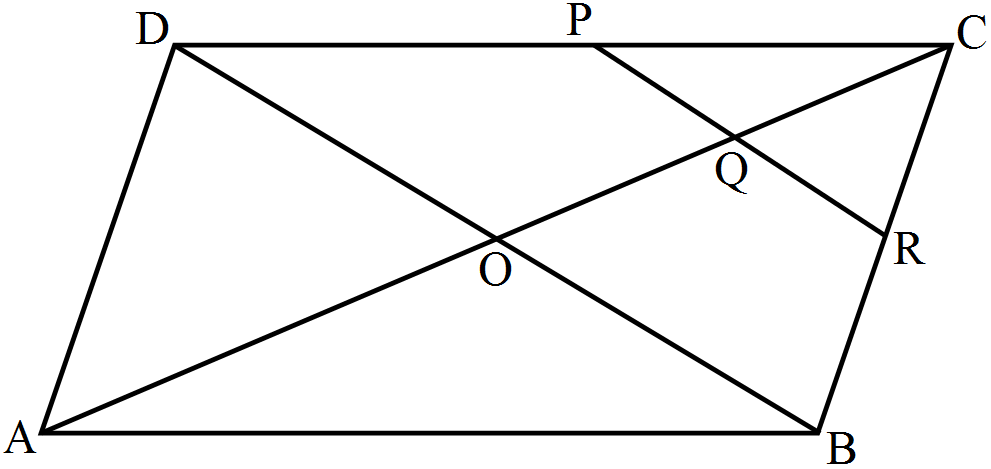
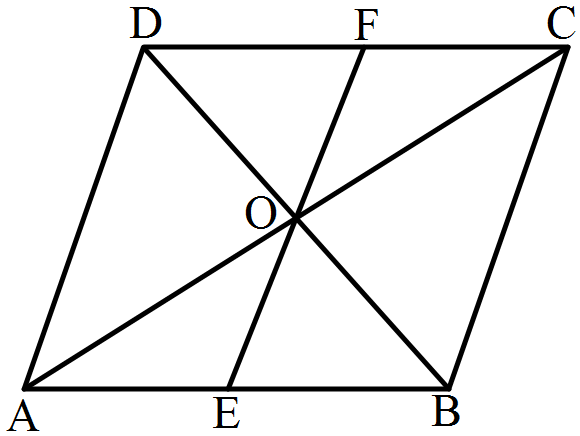
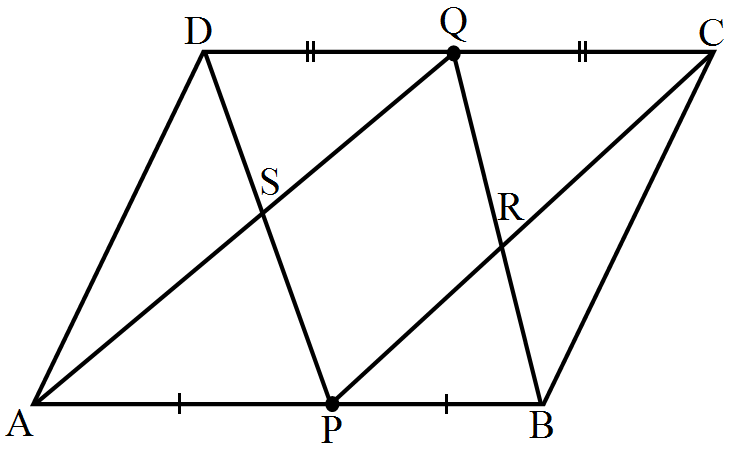
$\angle\text{ADP}=\angle\text{CBQ}$ (Alternate interior angles for BC || AD)
AD = CB (Opposite sides of parallelogram ABCD)
DP = BQ (Given)
$\Rightarrow \triangle\text{APQ}\cong\triangle\text{CQB}$ (Using SAS congruence rule)
AP = CQ (CPCT)
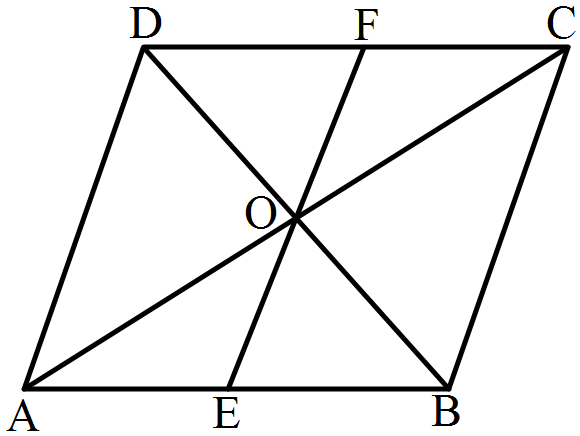
$\angle\text{ABQ}=\angle\text{CPD}$ (Alternate interior angles for AB || CD)
AB = CD (Opposite sides of parallelogram ABCD)
BQ = DP (Given)
$\Rightarrow \triangle\text{APQ}\cong\triangle\text{CQB}$ (Using SAS congruence rule)
AQ = CP (CPCT)
AQ = CP and
AP = CQ
Since opposite sides in quadrilateral APCQ are equal to each other, APCQ is a parallelogram.
If two opposite sides of a quadrilateral are equal and parallel to each other, then it will be a parallelogram.
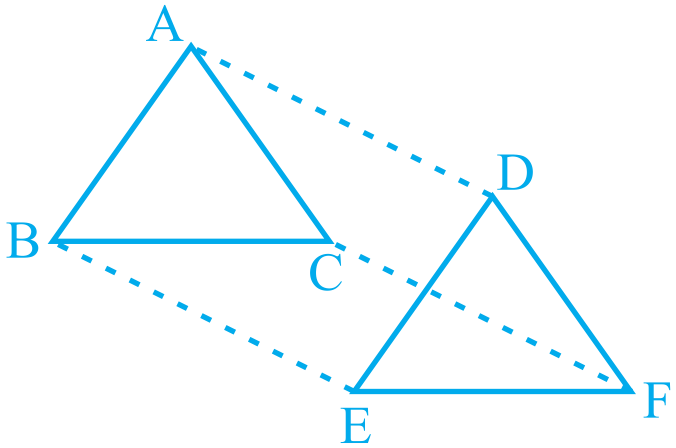
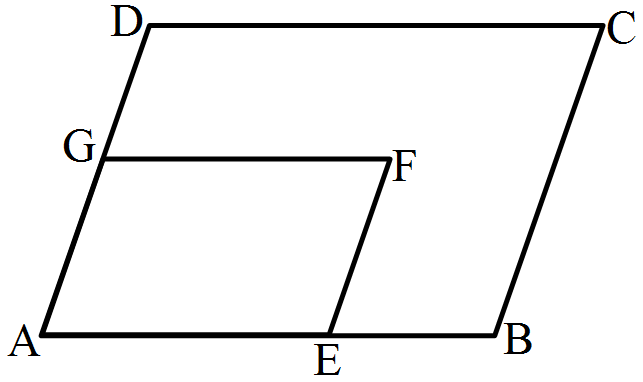
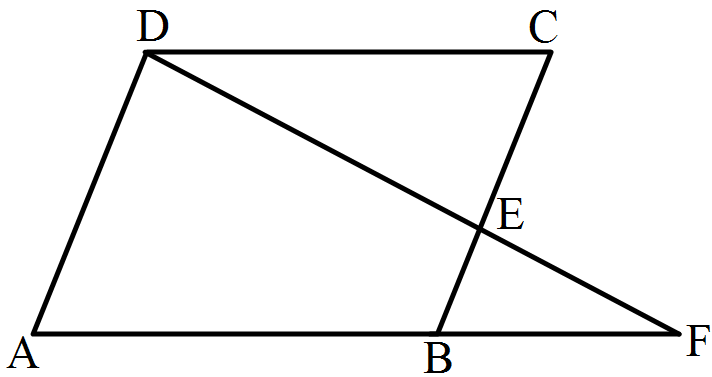
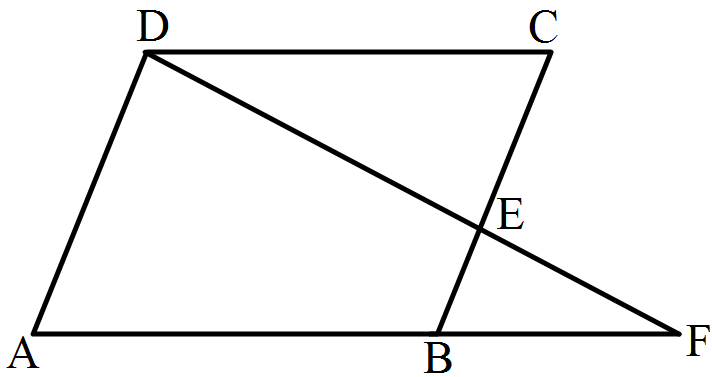
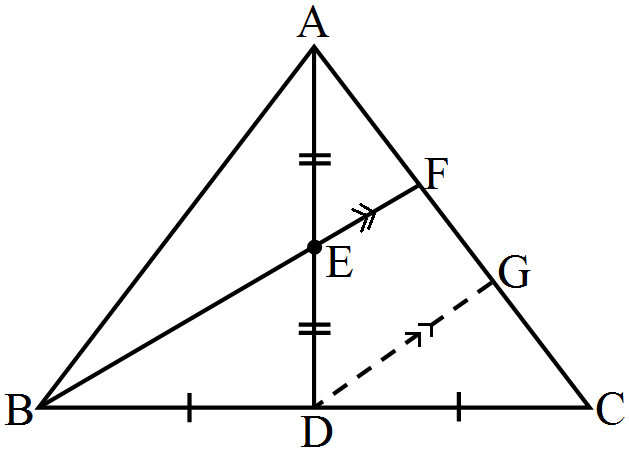
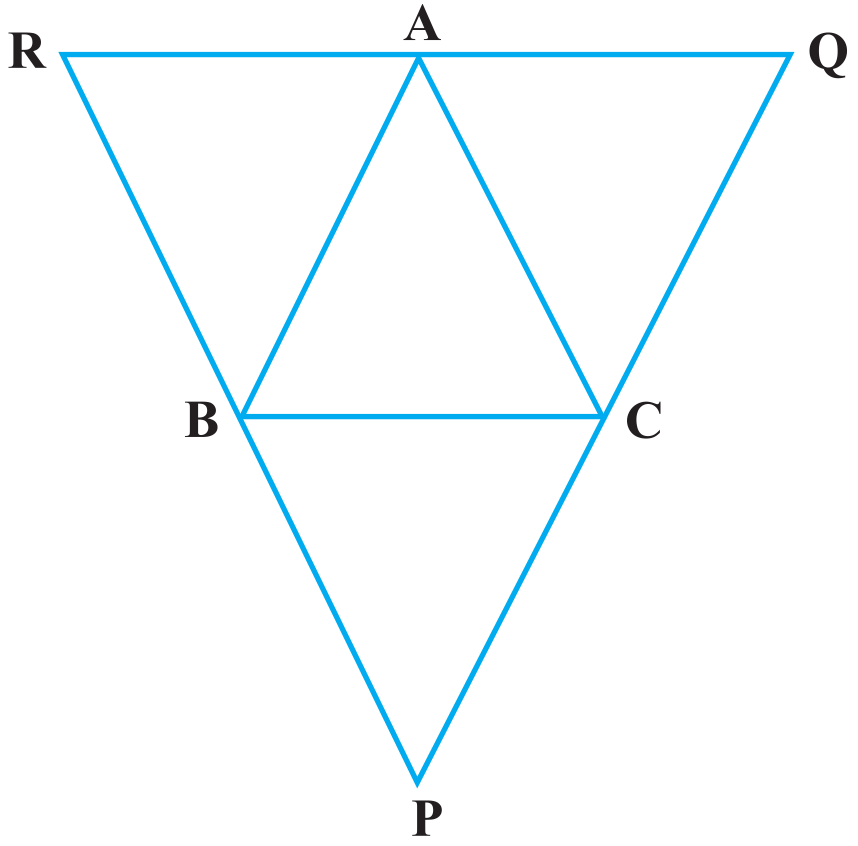
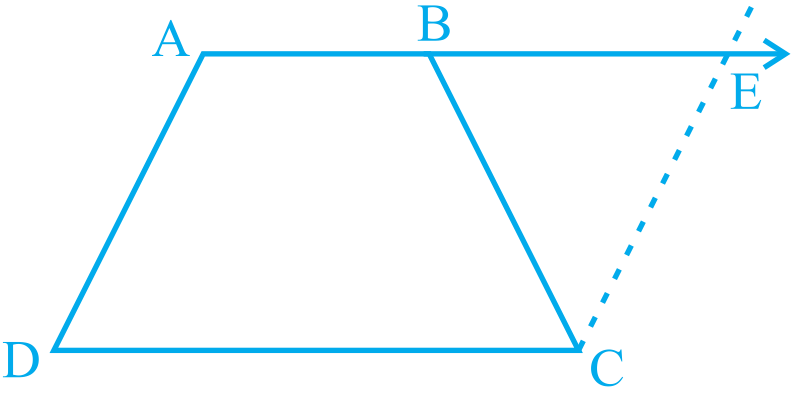
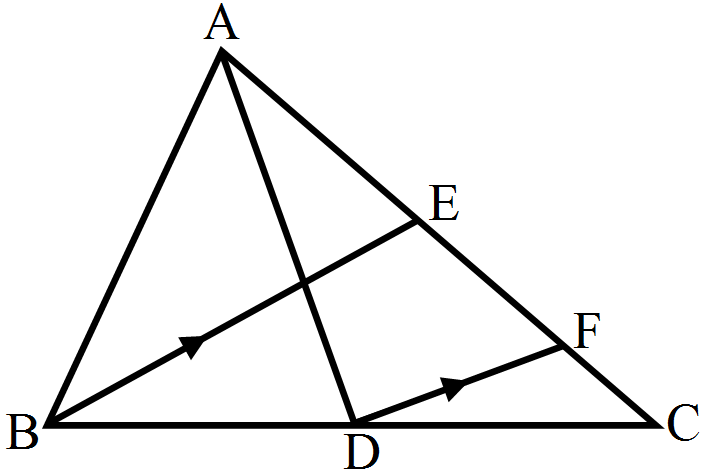
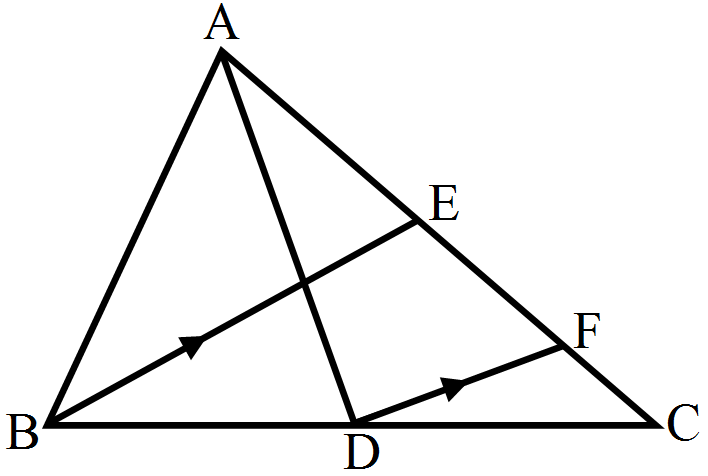
Therefore, quadrilateral ABED is a parallelogram.
Therefore, quadrilateral BCEF is a parallelogram.
AD = BE and AD || BE
(Opposite sides of a parallelogram are equal and parallel)
And, BE = CF and BE || CF
(Opposite sides of a parallelogram are equal and parallel)
AD = CF and AD || CF
As we had observed that one pair of opposite sides (AD and CF) of quadrilateral ACFD are equal and parallel to each other, therefore, it is a parallelogram.
As ACFD is a parallelogram, therefore, the pair of opposite sides will be equal and parallel to each other.
AC || DF and AC = DF
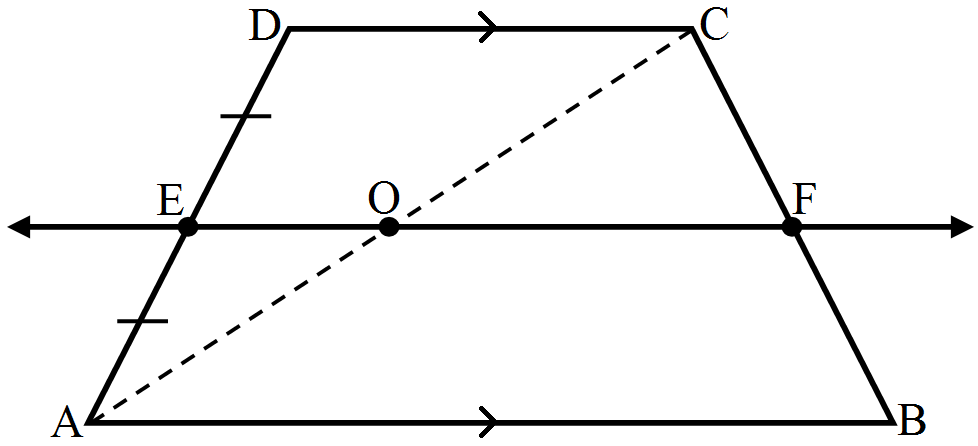
AB = DE (Given)
BC = EF (Given)
AC = DF (ACFD is a parallelogram)
$\therefore \triangle\text{ABC}\cong\triangle\text{DEF}$ (By SSS congruence rule).
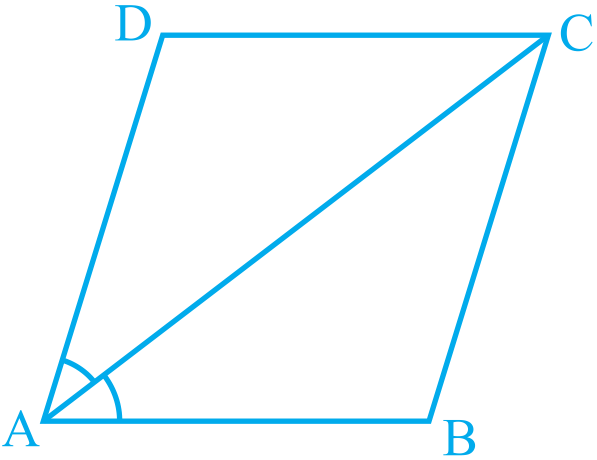
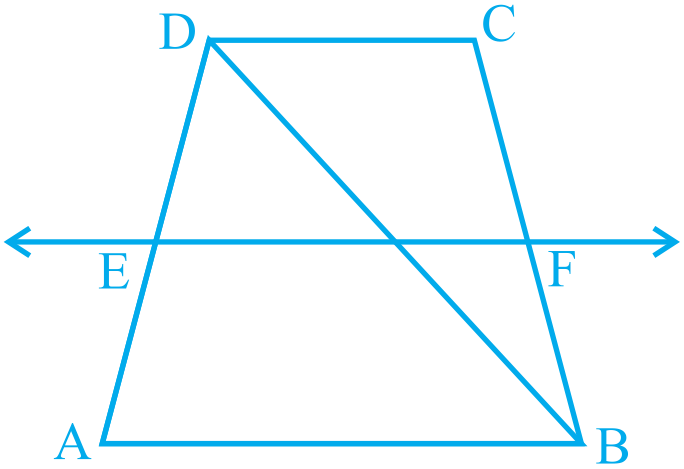
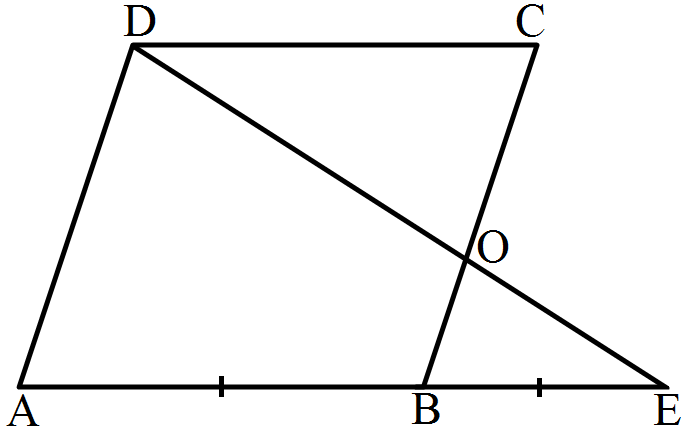
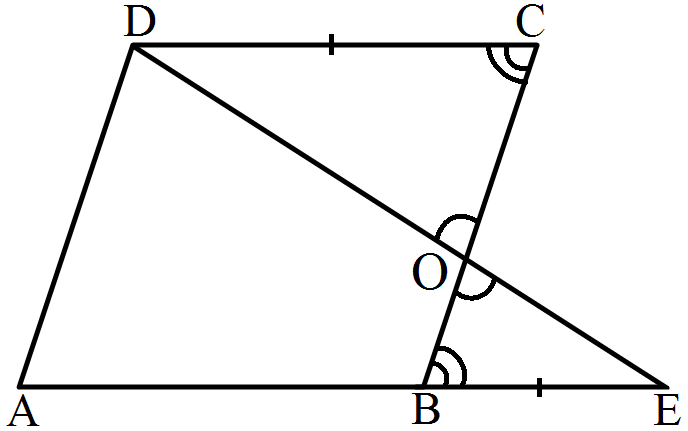
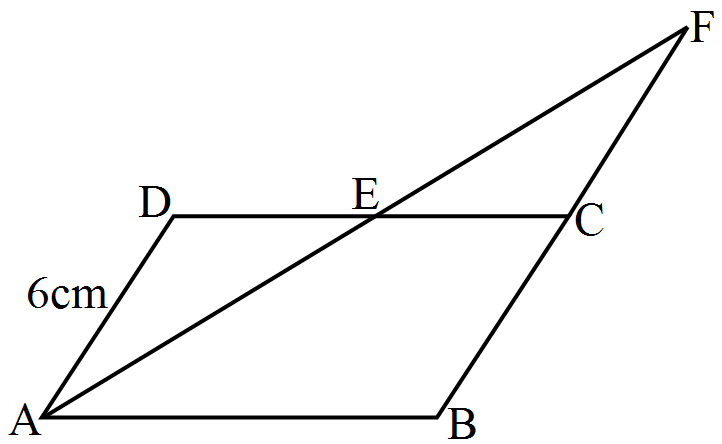
AD = BC (Given)
Therefor, BC = CE
also,
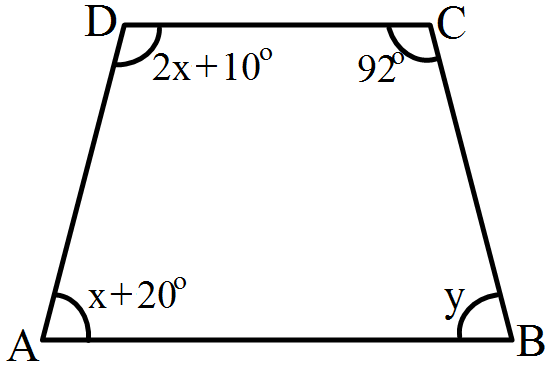
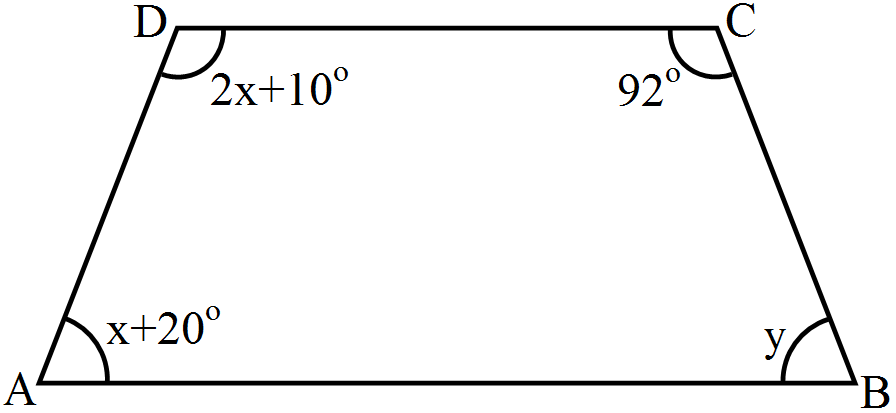
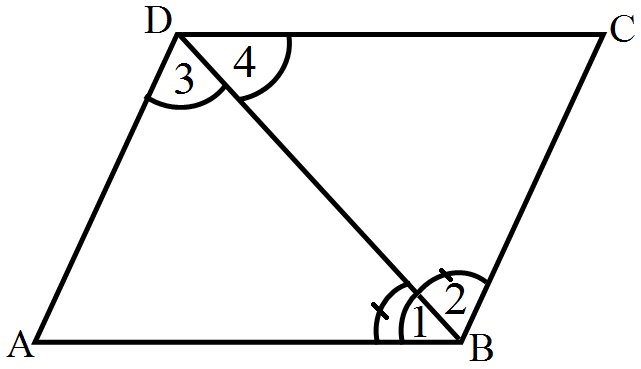
$\angle\text{A}+\angle\text{CBE}=180^{0}$ (Angles on the same side of transversal and ∠CBE = ∠CEB)
$\angle\text{B}+\angle\text{CBE}=180^{0}$ (Linear pair)
$\angle\text{A}=\angle\text{B}$
$\angle\text{A}+\angle\text{D}=\angle\text{B}+\angle\text{C}$
$\angle\text{D}=\angle\text{C}$
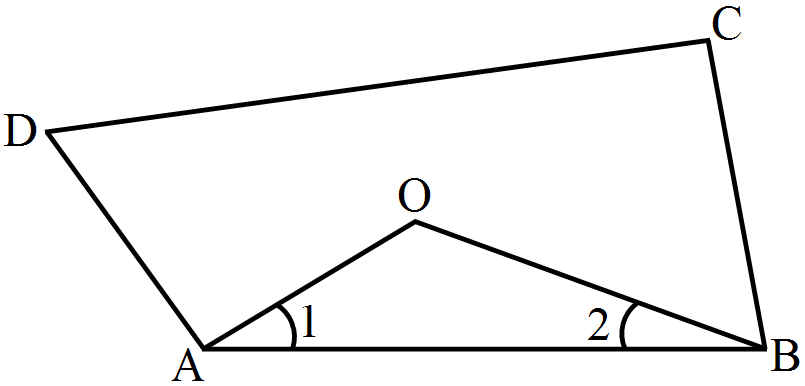
AB = AB (Common)
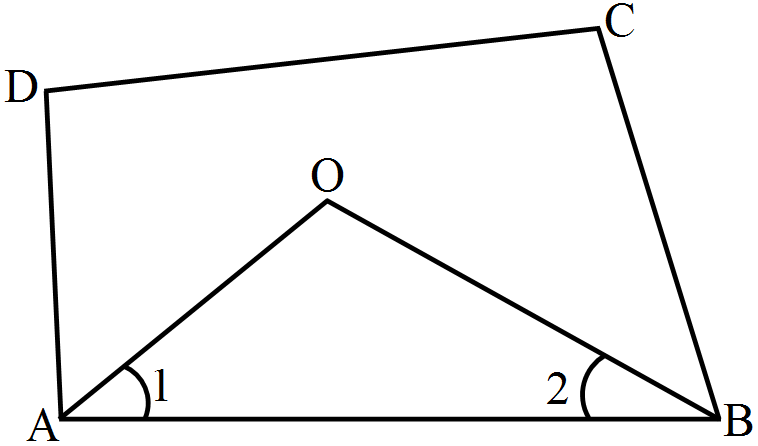
$\angle\text{DBA}=\angle\text{CBA}$
AD = BC (Given)
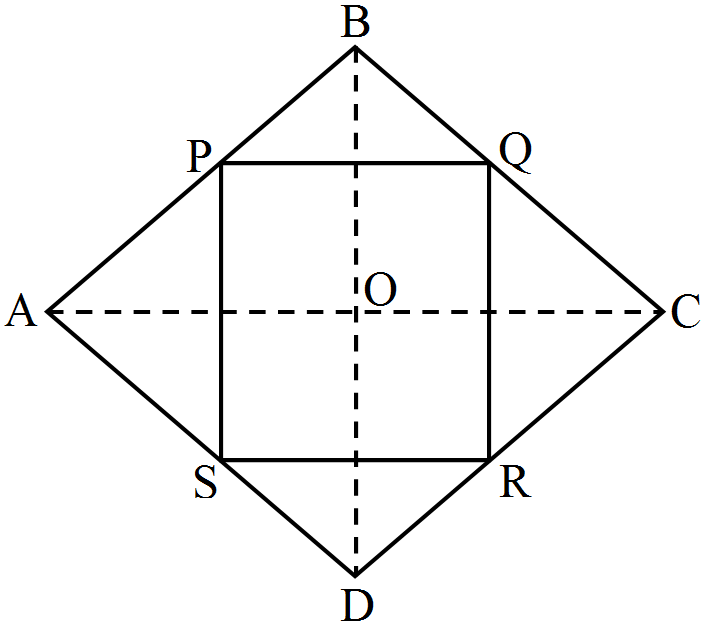
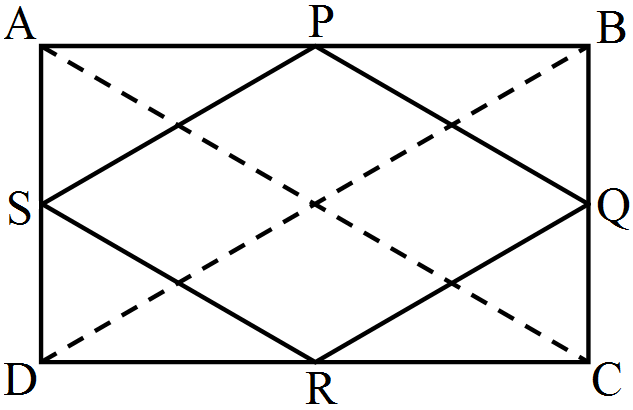
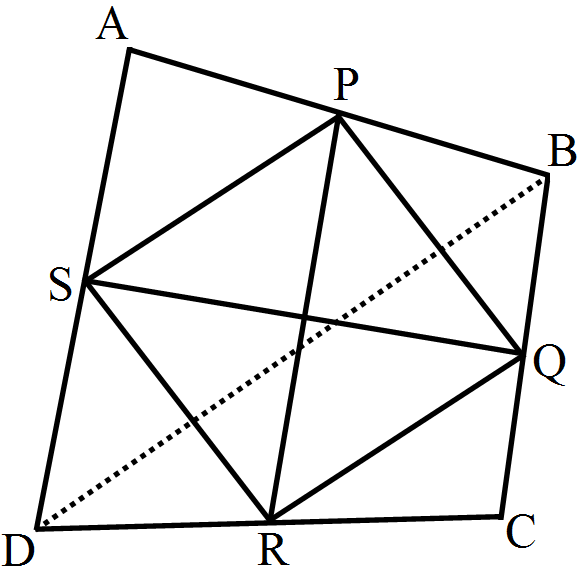
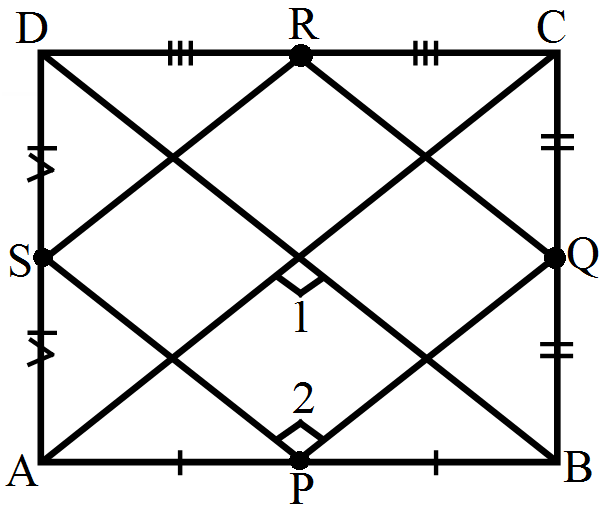
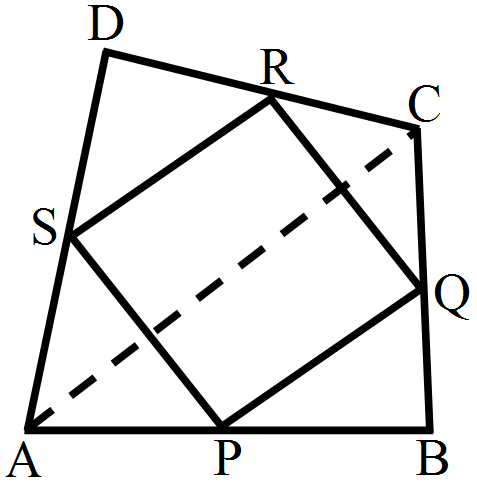
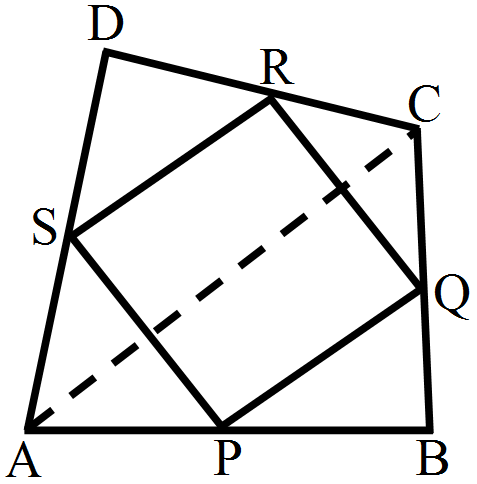
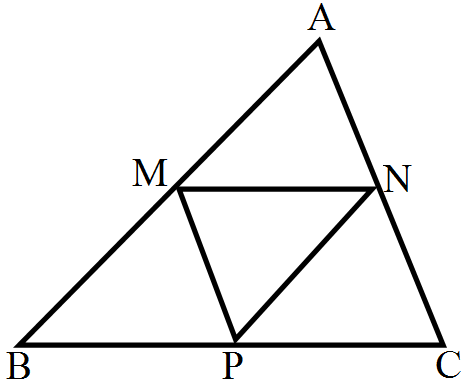
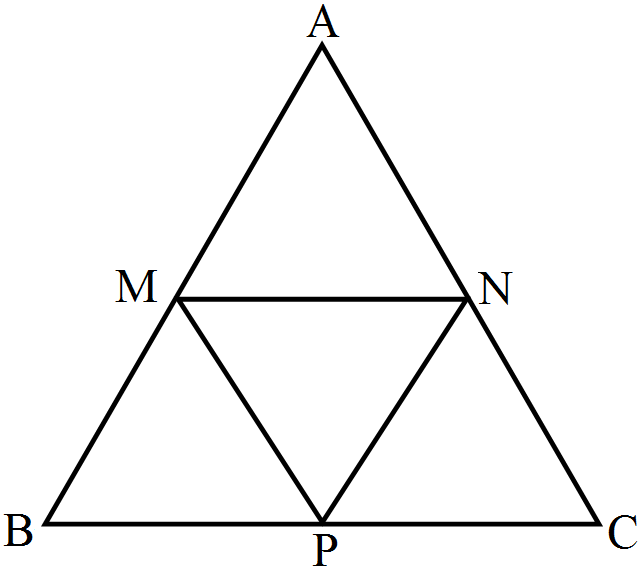
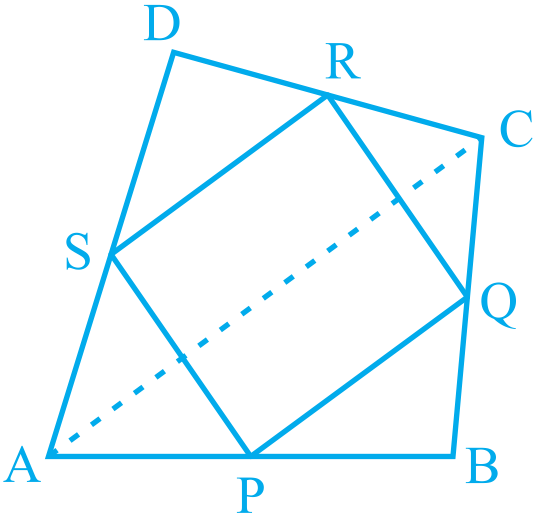
In a triangle, the line segment joining the mid-points of any two sides of the triangle is parallel to the third side and is half of it.
SR || AC and SR $=\frac{1}{2}\text{AC}\ ...(\text{i})$
PQ || AC and PQ $=\frac{1}{2}\text{AC}\ ...(\text{ii})$
Using equations (i) and (ii), we obtain
PQ || SR and PQ = SR ...(iii)
⇒ PQ = SR
PQ || SR and PQ = SR
Clearly, one pair of opposite sides of quadrilateral PQRS is parallel and equal.
Hence, PQRS is a parallelogram.