Questions

3 Marks Question

🎯

Test yourself on this topic

7 questions · timed · auto-graded

Question 13 Marks
Prove that $\frac{1}{{\sqrt 2 }}$ is irrational.
Answer
We can prove $\frac{1}{{\sqrt 2 }}$ irrational by contradiction.
Let us suppose that $\frac{1}{{\sqrt 2 }}$is rational.
It means we have some co-prime integers $a$ and $b (b ≠ 0)$
Such that
$\frac{1}{{\sqrt 2 }}$= $\frac ab$
$\Rightarrow \sqrt 2 = \frac{b}{a}..........(1)$
$R.H.S$ of $(1)$ is rational but we know that is$\sqrt 2 $ irrational.
It is not possible which means our supposition is wrong.
Therefore,$\frac{1}{{\sqrt 2 }}$can not be rational.
Hence, it is irrational.
View full question & answer
Question 23 Marks
Prove that $3+2\sqrt { 5 }$ is irrational.
Answer
Let us assume, to the contrary, that is $3 + 2 \sqrt { 5 }$ rational.
That is, we can find coprime integers $a$ and $b ( b \neq 0 )$ such that
$3 + 2 \sqrt { 5 } = \frac { a } { b } \text { Therefore, } \frac { a } { b } - 3 = 2 \sqrt { 5 }$
$\Rightarrow \frac { a - 3 b } { b } = 2 \sqrt { 5 }$
$\Rightarrow \frac { a - 3 b } { 2 b } = \sqrt { 5 } \Rightarrow \frac { a } { 2 b } - \frac { 3 } { 2 }$
Since a and b are integers,
We get $\frac { a } { 2 b } - \frac { 3 } { 2 }$ is rational, also so $\sqrt { 5 }$ is rational.
But this contradicts the fact that $\sqrt { 5 }$ is irrational.
This contradiction arose because of our incorrect
assumption that $3 + 2 \sqrt { 5 }$ is rational.
So, we conclude that $3 + 2 \sqrt { 5 }$ is irrational.
View full question & answer
Question 33 Marks
Prove that $\sqrt 5 $ is irrational.
Answer
Let us prove $\sqrt 5 $ irrational by contradiction.
Let us suppose that $\sqrt 5 $ is rational. It means that we have co-prime integers a and b $(b ≠ 0)$
Such that $\sqrt 5 = \frac{a}{b}$
$\Rightarrow $ b $\sqrt 5 $=a
Squaring both sides, we get
$\Rightarrow 5 b^2=a^2 \ldots(1)$
It means that $5$ is factor of $a^2$
Hence, $5$ is also factor of a by Theorem. $... (2)$
If, $5$ is factor of $a ,$ it means that we can write $a = 5c$ for some integer $c .$
Substituting value of $a$ in $(1) ,$
$5b^2= 25c^2$
$⇒ b^2=5c^2$
It means that $5$ is factor of $b^2$ .
Hence, $5$ is also factor of b by Theorem. $... (3)$
From $(2)$ and $(3) $, we can say that $5$ is factor of both $a$ and $b .$
But, $a$ and $b$ are co-prime .
Therefore, our assumption was wrong. $\sqrt 5 $ cannot be rational. Hence, it is irrational.
View full question & answer
Question 43 Marks
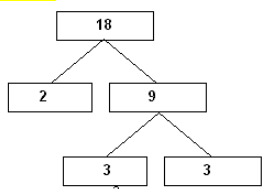
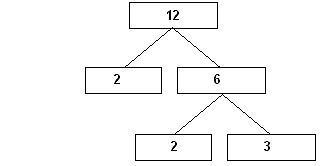
There is a circular path around a sports field. Sonia takes $18$ minutes to drive one round of the field, while Ravi takes $12$ minutes for the same. Suppose they both start at the same point and at the same time and go in the same direction. After how many minutes will they meet again at the starting point?
Answer
By taking $LCM$ of time taken $($in minutes$)$ by Sonia and Ravi, We can get the actual number of minutes after which they meet again at the starting point after both start at the same point and at the same time, and go in the same direction.
$18 = 2 \times 3 \times 3 = 2 \times 3 ^ { 2 }$

$12 = 2 \times 2 \times 3 = 2^2 \times 3$

$LCM ( 18,12 ) = 2 ^ { 2 } \times 3 ^ { 2 } = 36$
Therefore, both Sonia and Ravi will meet again at the starting point after $36$ minutes.
View full question & answer
Question 53 Marks
Explain why $7 \times 11 \times 13 + 13$ and $7 \times 6 \times 5 \times 4 \times 3 \times 2 \times 1 + 5$ are composite numbers.
Answer
Numbers are of two types $-$ prime and composite.
Prime numbers can be divided by $1$ and only itself, whereas composite numbers have factors other than $1$ and itself.
It can be observed that
$7 × 11 × 13 + 13 = 13 × (7 × 11 + 1)$
$= 13 × (77 + 1)= 13 × 78= 13 ×13 × 6$
The given expression has $6$ and $13$ as its factors.
Therefore, it is a composite number.
$7 × 6 × 5 × 4 × 3 × 2 × 1 + 5$
$= 5 ×(7 × 6 × 4 × 3 × 2 × 1 + 1)$
$= 5 × (1008 + 1)= 5 ×1009$
$1009$ cannot be factorized further
Therefore, the given expression has $5$ and $1009$ as its factors.
Hence, it is a composite number.
View full question & answer
Question 63 Marks
Show that $5-\sqrt{3}$ is irrational.
Answer
Let us assume, to the contrary, that $5-\sqrt{3}$ is rational.
That is, we can find coprime numbers $a$ and $b\ (b ≠ 0)$ such that $5-\sqrt{3}=\frac{a}{b}$
Therefore, $5-\frac{a}{b}=\sqrt{3}$
Rearranging this equation, we get $\sqrt{3}=5-\frac{a}{b}=\frac{5 b-a}{b}$
Since $a$ and $b$ are integers, we get $5-\frac{a}{b}$ is rational, and so $\sqrt{3}$ is rational.
But this contradicts the fact that $\sqrt{3}$ is irrational
This contradiction has arisen because of our incorrect assumption that $5-\sqrt{3}$ is rational.
So, we conclude that $5-\sqrt{3}$ is irrational.
View full question & answer
Question 73 Marks
Prove that $\sqrt { 3 }$ is irrational.
Answer
Let us assume $\sqrt3$ be a rational, then as every rational can be represented in the form $p/q$ where $q\neq 0$
Let $\sqrt3=p/q$ where $p,q$ have no common factor.
Now squaring on both sides we get $3=p^2 / q^2 \Rightarrow 3 \times q^2=p^2$
Which means $3$ divides $p^2$ which implies $3$ divides $p$
Hence we can write $p=3\times k,$ where $k$ is some constant.
This gives $3 \times q^2=9 \times k^2 q^2=3 \times k^2$
Which means $3$ divides $q^2$ which implies $3$ divides $q.$
$3$ divides $p$ and $q$ which means $3$ is a common factor for $p$ and $q.$
And this is a contradiction for our assumption that $p$ and $q$ have no common factor…
Hence we can say our assumption that $\sqrt3$ is rational is wrong… And
therefore $\sqrt3$ is an irrational…
View full question & answer
3 Marks Question - Maths STD 10 Questions - Vidyadip