Questions

[3 Mark Question Answer]

🎯

Test yourself on this topic

33 questions · timed · auto-graded

Question 13 Marks
How will you decide whether a given piece of glass is a concave lens, convex lens, or a plane glass plate?
Answer
Hold the given piece of glass over some printed number:
(i) If the letter appears magnified, the given piece is a convex lens.
(ii) If the letters appear diminished, the given piece is a concave lens.
(iii) If the letters appear to be of the same size, then it is a plane glass mirror.
View full question & answer
Question 23 Marks
Do we expect any change in the position, nature, and size of the image
(i) formed by a concave lens,
(ii) with a change in the position of the object?
Answer
No, the image formed by a concave lens.
(i) Is always formed between the optical centre and the focus of the lens.
(ii) Is always virtual, erect and diminished in size. This is true for all positions of the object on the principal axis.
View full question & answer
Question 33 Marks
Point out the difference between a convex lens and a concave lens.
Answer
  Convex Lens   Concave Lens
1. It is thicker at the centre and thin at the ends. 1. It is thinner at the centre and thick at the ends.
2. It converges rays of light. 2. It diverges rays of light.
3. It has a real focus. 3. It has a virtual focus.
View full question & answer
Question 43 Marks
Define the term magnifying power of a simple microscope. How does it depend on the focal length of the lens used?
Answer
The magnifying power of a simple microscope is defined as the ratio of the angle subtended by the image at the eye to the angle subtended by the object at the eye if it is assumed to be placed at the least distance of distinct vision.
Shorter the focal length of the lens used, larger is its magnifying power.
View full question & answer
Question 53 Marks
In sunglasses, both of its surfaces are curved, yet their behaviour is neither like a convex lens nor like a concave lens. State the reason.
Answer
In sunglasses, the outer surface is convex and the inner surface is concave, hence the power of one surface is positive and that of the other is negative. By making both these powers equal, the effective power of the lens becomes zero. Hence, these lenses are simply like a thin glass having no power, plus or minus.
View full question & answer
Question 63 Marks
Ranbir claims to have obtained an image twice the size of the object with a concave lens. Is he correct? Give a reason for your answer.
Answer
No, he is not correct.
Reason: Magnified image of an object cannot be formed by a concave lens ever. Because, no matter where the object is placed in front of a concave lens, it always forms a virtual, erect, and diminished image of the object.
View full question & answer
Question 73 Marks
What is the difference between a double convex and a bi-convex lens?
Answer
In both cases, the two surfaces are convex towards the air. In the case of a double convex lens, the two surfaces may have any values for the two radii of curvature of the two surfaces while in the bi-convex lens the radii of curvature of the two surfaces, has the same value. Thus, every bi-convex lens is a double convex lens about every double convex may not be bi-convex.
View full question & answer
Question 83 Marks
Do we expect any change in the position, nature, and size of the image
(i) formed by a concave lens,
(ii) with a change in the position of the object?
Answer
No, the image formed by a concave lens.
(i) Is always formed between the optical centre and the focus of the lens.
(ii) Is always virtual, erect and diminished in size. This is true for all positions of the object on the principal axis.
View full question & answer
Question 93 Marks
A concave mirror and convex lens are held in water. What changes, if any, do you expect in their focal length?
Answer
The focal lengths of a mirror does not depend upon the nature of the medium in which it is placed whereas the focal length of a lens depends upon the medium in which it is placed. Thus there will be no change in the focal length of the concave mirror whereas the focal length of the convex lens will change.
View full question & answer
Question 103 Marks
Write the three characteristics of the image formed by a convex lens of focal length 20 cm for the object at distance (i) 10 cm, (ii) 30 cm, (iii) 40 cm, (iv) 60 cm from the lens.
Answer
(i) For the object at distance 10 cm, the image is virtual, upright, and enlarged.
(ii) For the object at distance 30 cm, the image is real, inverted, and enlarged.
(iii) For the object at distance 40 cm, the image is real, inverted, and the same size.
(iv) For the object at distance 60 cm, the image is real, inverted, and diminished.
View full question & answer
Question 113 Marks
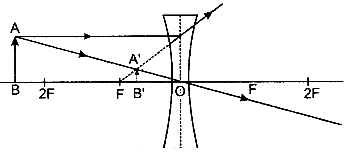
A lens forms an upright and diminished image of an object, irrespective of its position. What kind of lens is this? Draw an outline ray diagram to show the formation of the image. State the position and one more characteristic of the image.
Answer
A concave (or diverging) lens forms an upright and diminished image of an object irrespective of its position.

The outline ray diagram showing the formation of the image is given in figure. For the object AB, the image is A’B’.
The image is formed between optical centre O and focus F, in front of the lens.
The image is virtual.
View full question & answer
Question 123 Marks
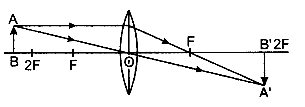
Draw a ray diagram to show the formation of an inverted and diminished image of an object by a lens. Name the lens used. State the position of the object with respect to the lens used. State one more characteristic of the image.
Answer

The ray diagram to show the formation of an inverted and diminished image of an object by a lens is shown alongside. In figure A’B’ is the image for the object AB. The lens used is convex (or converging). The object lies beyond 2F in front of the lens. The image is real.
View full question & answer
Question 133 Marks
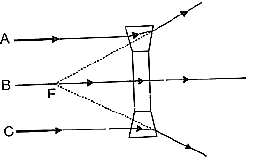
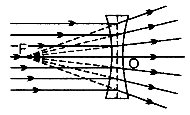
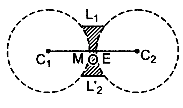
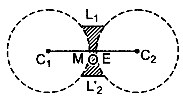
Show by a diagram, the refraction of two light rays incident parallel to the principal axis on a concave lens by treating it as a combination of a glass block and two triangular glass prisms.
Answer

As shown in the figure the concave lens has two glass prisms and one glass block. One of the glass prisms is situated above the glass block and one below the block.
View full question & answer
Question 143 Marks
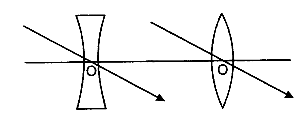
What is optical centre of a thin lens? Draw diagram/diagrams to illustrate it.
Answer

The optical centre of a thin lens is a point O on the principal axis of the lens such that a ray of light directed towards it, passes undeviated and undisplaced from the lens. The diagram illustrating it in a convex and a concave lens are shown alongside.
View full question & answer
Question 153 Marks
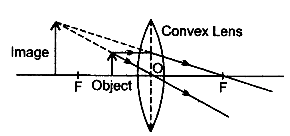
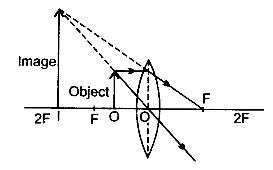
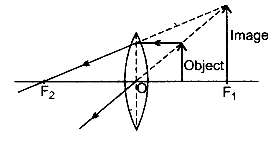
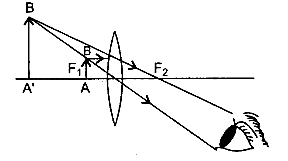
What is a simple microscope or a magnifying glass? Draw a ray diagram to show its function.
Answer

A convex lens works as a simple microscope or a magnifying glass when an object is kept between its optical centre and the focus. The image of the object so obtained is virtual, upright, and magnified.
View full question & answer
Question 163 Marks
Write down the characteristic of the image formed when the object is between F and the lens?
Answer

The object is between F and the lens.
Nature: Virtual and upright.
Size: Magnified.
Position: Towards the object side.
View full question & answer
Question 173 Marks
Write down the characteristic of the image formed when the object is between F and 2F?
Answer

Object is between F and 2F.
Nature: Real and inverted.
Size: Magnified.
Position: Beyond 2F.
View full question & answer
Question 183 Marks
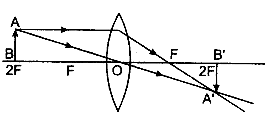
Draw the ray diagrams of a converging lens, when the object is placed at 2F on the principal axis. Write down the nature, position, and size of the image in both cases. Use only two rays in the diagrams.
Answer

Object placed at 2F.
Image Nature: Real and inverted.
Size: Same (equal).
Position: At 2F.
View full question & answer
Question 193 Marks
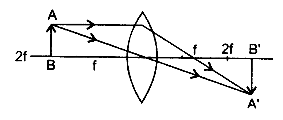
Draw the ray diagrams of a converging lens, when the object is placed at a distance greater than twice the focal length of the lens.
Answer

The object placed beyond 2F.
Image Nature: Real and inverted.
Size: Diminished.
Position: Between F and 2F.
View full question & answer
Question 203 Marks
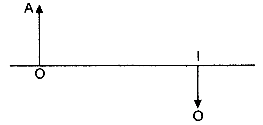
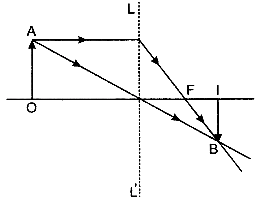
The following diagram shows the object O and the image I formed by a lens. Copy the diagram and on it mark the positions of the lens LL’ and focus (F). Name the lens.
Answer
The complete diagram is shown in the figure in which the position of the lens has been marked by the letter LL’ and the focus as F. The lens is convex (or converging).
View full question & answer
Question 213 Marks
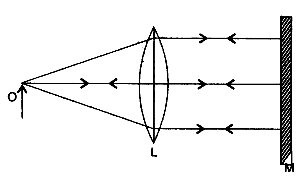
The given ray diagram illustrates the experimental set up for the determination of the focal length of a converging lens using a plane mirror.

(i) State the magnification of the image formed.
(ii) Write two characteristics of the image formed.
(iii) What is the name given to the distance between the object and optical centre of the lens in the above diagram?
Answer
(i) The image is highly enlarged.
(ii) (a) Real. (b) Formed at infinity on the other side of the lens.
(iii) The focal length of the lens.
View full question & answer
Question 223 Marks
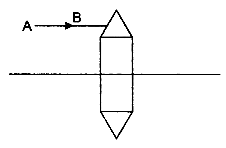
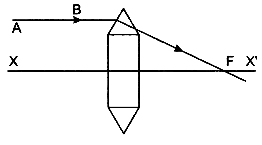
The diagram showed a lens as a combination of one glass block and two prisms. Complete the ray diagram and show the part of the incident ray AB after passing through the lens.
(i) Name of the lens formed by the combination.
(ii) What is the line XX’ called?
(iii) Mark the focus F.
Answer
The completed ray diagram is shown.

(i) The lens formed by the combination is the convex lens.
(ii) The line XX’ is called the principal axis.
(iii) The focus has been marked by the letter F in the diagram.
View full question & answer
Question 233 Marks
Define the principal focus of a concave lens.
Answer
For a concave lens, the principal focus is a point on its principal axis at which the rays of light originally parallel to the principal axis, appear to come from it after refraction by the lens.
View full question & answer
Question 243 Marks
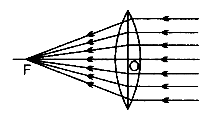
Define the principal focus of a convex lens.
Answer
For a convex lens, the principal focus is a point on the principal axis of a convex lens at which the rays of light originally parallel and close to the principal axis of the lens pass through it after refraction by the lens.
View full question & answer
Question 253 Marks
(i) Draw a ray diagram to show how the lens can be used as a ‘magnifying glass’? State the nature of the lens.
(ii) In what respect does the image in (i) above different from the image formed by a concave lens?
Answer
(i) The nature of the lens used is convex. The image formed is magnified, virtual, and upright. In this case, a convex lens is said to be used as a ‘magnifying glass.’

(ii) Image formed by a concave lens differs from the image in size. It is much smaller in size.
View full question & answer
Question 263 Marks
What is a magnifying glass (or a simple microscope)? Draw a ray diagram to show how a convex lens may be used as a magnifying glass. Where should the object be placed? State three characteristics of the image formed.
Answer
A magnifying glass is a convex (or converging) lens of B short focal length mounted in a plastic or wooden frame provided with a handle. It is used to see small objects or to read small letters.

The ray diagram showing the use of a convex lens as a magnifying glass is given in the figure.
The object should be placed in front of the lens between its optical centre and focus.
View full question & answer
Question 273 Marks
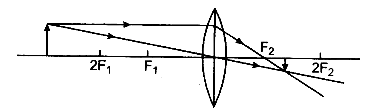
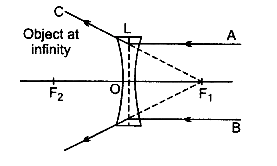
Draw images in case of a concave lens when the object is at infinity.
Answer
When the object is at infinity, the incident ray is taken parallel to the principal axis. As shown in the figure, the image is virtual and is formed at the focus $F_1$ It is diminished (small) in size.
View full question & answer
Question 283 Marks
Define the optical centre of a lens.
Answer
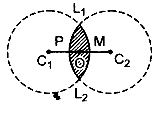
It is the centre of the lens through which the principal axis passes. Any ray of light passes through it undeviated, provided the lens is thin.

View full question & answer
Question 293 Marks
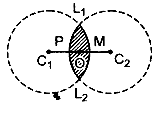
Define the principal axis.
Answer
It is the straight line passing through both the centres of curvatures, C1 and C2, and also through its optical centre O.

View full question & answer
Question 303 Marks
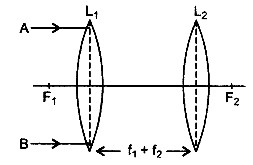
QUESIION In the following diagram, $L_1$ and $L_2$ are the two convex lense placed at separation equal to the sum of focal lengths of the two lenses. $A$ and $B$ are the two rays of light incident on the lens $L_1$. Complete the path of rays till they emerge out of the lens $L_2$.

What principles have you used in completing the diagram?
Answer
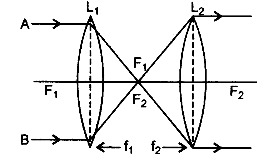
The complete ray diagram is shown below.

The following two principles have been used in completing the diagram:
(i) A ray of light incident parallels to the principal axis after refraction from the convey lens passes through the focus.
(ii) A ray of light incident on the convex lens through its focus after refraction becomes parallel to the principal axis of the lens.
View full question & answer
Question 313 Marks
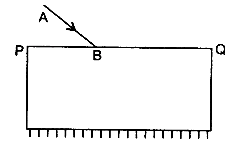
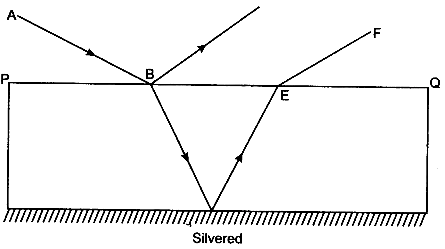
The diagram on right shows a ray of white light AB incident on a rectangular glass block, which is silvered at the lower surface. This ray is partly reflected and partly refracted.

(i) Copy the diagram and trace the path of the refracted and reflected ray. Show at least two rays emerging from the surface ‘PQ’
(ii) How many images are formed in the above case? Which image is the brightest?
Answer
(i)
(ii) Two images formed are:
(a) on account of reflection from the upper surface, and
(b) due to reflection from the lower surface. The second image is brighter.
View full question & answer
Question 323 Marks
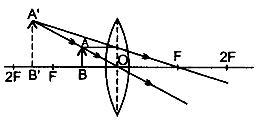
Draw a ray diagram to illustrate the formation of an enlarged and upright image of an object by a lens. Name the lens used. Where should the object be placed relative to the lens? Will the image be real or virtual? Name a device where this action of lens is used.
Answer
The ray diagram showing the formation of an enlarged and upright image of an object by a lens is shown in the figure alongside. For the object AB, the image is A’B’. The lens used is convex (converging).
The object should be placed between optical centre O and focus F of the lens, in front of it.
The image is virtual.
This action of lens is used in a simple magnifier (or a reading glass).
View full question & answer
Question 333 Marks
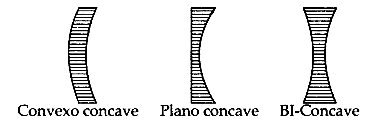
Name the types of lenses.
Answer
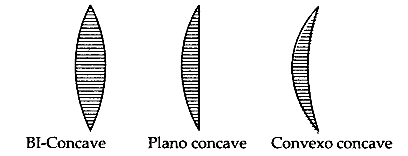
There are two types of lenses: (i) A concave or diverging lens which may be either double-concave, piano-concave or convexo-concave.

(ii) A convex or converging lens which may be either double convex, piano-convex, or concavo-convex.
View full question & answer
[3 Mark Question Answer] - Physics STD 10 Questions - Vidyadip