MCQ 11 Mark
A parallel beam of light travelling in water is incident obliquely on a glass surface. After refraction, its width
MCQ 21 Mark
When a ray of light enters into water from air.
MCQ 31 Mark
Huygens' principle is used to
- ✓
obtain the new position of wavefront geometrically
- B
explain the principle of superposition of waves
- C
explain the phenomenon of interference
- D
explain the phenomenon of polarization.
AnswerCorrect option: A. obtain the new position of wavefront geometrically
obtain the new position of wavefront geometrically
View full question & answer→MCQ 41 Mark
Using a monochromatic light of wavelength 2 in Young's double-slit experiment, the eleventh dark fringe is obtained on the screen for a phase difference of
- A
$\frac{11}{2} \pi rad$
- B
$\frac{21}{2} \pi rad$
- C
$13 \pi rad$
- ✓
$21 rrad$
AnswerCorrect option: D. $21 rrad$
$21 \pi rad$
View full question & answer→MCQ 51 Mark
If $a$ is the aperture of a telescope and 2 is the wavelength of light then the resolving power of the telescope is
- A
$\frac{\lambda}{1.22 a}$
- B
$\frac{1.22 a}{\lambda}$
- C
$\frac{1.22 \lambda}{a}$
- ✓
$\frac{a}{1.22 \lambda}$
AnswerCorrect option: D. $\frac{a}{1.22 \lambda}$
$\frac{a}{1.22 \lambda}$
View full question & answer→MCQ 61 Mark
Wavenormals to spherical wavefronts can be
MCQ 71 Mark
The resolving power of a telescope depends upon the
- A
- B
focal length of the objective
- ✓
diameter of the objective
- D
focal length of the eyepiece.
AnswerCorrect option: C. diameter of the objective
diameter of the objective
View full question & answer→MCQ 81 Mark
The resolving power of a telescope of aperture $100 cm$, for light of wavelength $5.5 \times 10^{-7} m$, is
- ✓
$0.149 \times 10^7$
- B
$1.49 \times 10^7$
- C
$149 \times 10^7$
- D
$149 \times 10^7$
AnswerCorrect option: A. $0.149 \times 10^7$
$0.149 \times 10^7$
View full question & answer→MCQ 91 Mark
The resolving power of a refracting telescope is increased by'
AnswerCorrect option: D. increasing $D$ and using smaller $\lambda$
increasing $D$ and using smaller $\lambda$.
View full question & answer→MCQ 101 Mark
The numerical aperture of the objective of a microscope is 0.12 . The limit of resolution, when light of wavelength $6000 A$ is used to view an object, is
- A
$0.25 \times 10^{-7} m$
- B
$2.5 \times 10^{-7} m$
- ✓
$25 \times 10^{-7} m$
- D
$250 \times 10^{-7} m$
AnswerCorrect option: C. $25 \times 10^{-7} m$
$25 \times 10^{-7} m$
View full question & answer→MCQ 111 Mark
If the numerical aperture of a microscope is increased, then its
- A
resolving power decreases
- ✓
limit of resolution decreases
- C
resolving power remains constant
- D
limit of resolution increases
AnswerCorrect option: B. limit of resolution decreases
limit of resolution decreases
View full question & answer→MCQ 121 Mark
High magnifying power microscopes have oil-immersion objectives
- A
to increase the fringe width
- ✓
to increase the numerical aperture of the objective
- C
to decrease the wavelength of light
- D
because oil does not damage the observed sample.
AnswerCorrect option: B. to increase the numerical aperture of the objective
to increase the numerical aperture of the objective
View full question & answer→MCQ 131 Mark
Two closely-spaced distant stars are just resolved when seen through a telescope with an objective lens of diameter $D$ and focal length $f$. The separation between their images is given by.
- A
$\frac{D}{1.22 \lambda f}$
- B
$\frac{f D }{1.22 \lambda}$
- ✓
$\frac{1.22 \lambda f}{D}$
- D
$\frac{1.22 D \lambda}{f}$
AnswerCorrect option: C. $\frac{1.22 \lambda f}{D}$
$\frac{1.22 \lambda f}{D}$
View full question & answer→MCQ 141 Mark
The objective lens of a telescope has a diameter D. The angular limit of resolution of the telescope for light of wavelength $\lambda$ is
- A
$\frac{D}{1.22 \lambda}$
- ✓
$\frac{1.22 \lambda}{D}$
- C
$\frac{D}{0.61 \lambda}$
- D
$\frac{0.61 \lambda}{D}$
AnswerCorrect option: B. $\frac{1.22 \lambda}{D}$
$\frac{1.22 \lambda}{D}$
View full question & answer→MCQ 151 Mark
A microscope with numerical aperture 0.122 is used with light of wavelength $6000 A$. The limit of resolution is
- A
$3.33 \times 10^6 m$
- B
$3.33 mm$
- ✓
$3 \times 10^{-6} m$
- D
$3 \times 10^{-7} m$.
AnswerCorrect option: C. $3 \times 10^{-6} m$
$3 \times 10^{-6} m$
View full question & answer→MCQ 161 Mark
If NA is the numerical aperture of a microscope objective, then its resolving power with an illumination of wavelength $\lambda$ is
- ✓
$\frac{0.5 \lambda}{ NA }$
- B
$\frac{0.61 \lambda}{ NA }$
- C
$\frac{1.22 NA }{\lambda}$
- D
$\frac{2 NA }{\lambda}$
AnswerCorrect option: A. $\frac{0.5 \lambda}{ NA }$
$\frac{0.5 \lambda}{ NA }$
View full question & answer→MCQ 171 Mark
Two points, equidistant from a point source of light, are situated at diametrically opposite positions in an isotropic medium. The phase difference between the light waves passing through the two points is
- ✓
- B
$\pi / 2 rad$
- C
$\pi rad$
- D
View full question & answer→MCQ 181 Mark
A plane wave of wavelength $5500 A$ is incident normally on a slit of width $2 \times 10^2 cm$. The width of the central maximum on a screen $50 cm$ away is
- A
$2.50 \times 10^{-3} cm$
- B
$2.75 \times 10^{-3} cm$
- C
$2.75 \times 10^{-3} m$
- ✓
$5.50 \times 10^{-3} m$
AnswerCorrect option: D. $5.50 \times 10^{-3} m$
$5.50 \times 10^{-3} m$
View full question & answer→MCQ 191 Mark
A parallel beam of light $(\lambda=5000 A )$ is incident normally on a narrow slit of width $0.2 mm$. The Fraunhofer diffraction pattern is observed on a screen placed at the focal plane of a convex lens $(f=20 cm )$. The first two minima are separated by
- A
$0.005 cm$
- ✓
$0.05 cm$
- C
$2.5 mm$
- D
$5 mm$.
AnswerCorrect option: B. $0.05 cm$
$0.05 cm$
View full question & answer→MCQ 201 Mark
A parallel beam of light $(\lambda=5000 A )$ is incident normally on a narrow slit of width $0.2 mm$. The angular separation between the first two minima is
AnswerCorrect option: B. $2.5 \times 10^{-3} rad$
$2.5 \times 10^{-3} rad$
View full question & answer→MCQ 211 Mark
Fraunhofer diffraction pattern of a parallel beam of light (wavelength $\lambda$ ) passing through a narrow slit (width $a$ ) is observed on a screen using a convex lens (focal length $f$ ). The angular half-width of the central fringe is
- A
$\frac{2 \lambda f}{a}$
- B
$\frac{\lambda f}{a}$
- C
$\frac{2 \lambda}{a}$
- ✓
$\frac{\lambda}{a}$
AnswerCorrect option: D. $\frac{\lambda}{a}$
$\frac{\lambda}{a}$
View full question & answer→MCQ 221 Mark
For a single slit of width a, the first diffraction maximum with light of wavelength $\lambda$ subtends an angle $\theta$ such that $\sin \theta$ is equal to
- A
$\frac{\lambda}{2 a}$
- B
$\frac{\lambda}{a}$
- ✓
$\frac{1.5 \lambda}{a}$
- D
$\frac{2 \lambda}{a}$.
AnswerCorrect option: C. $\frac{1.5 \lambda}{a}$
$\frac{1.5 \lambda}{\pi}$
View full question & answer→MCQ 231 Mark
The fringes produced in a diffraction pattern are of
- A
equal width with the same intensity
- ✓
unequal width with varying intensity
- C
- D
equal width with varying intensity.
AnswerCorrect option: B. unequal width with varying intensity
unequal width with varying intensity
View full question & answer→MCQ 241 Mark
In a diffraction pattern due to a single slit of width a with incident light of wavelength $\lambda$ at an angle of diffraction $\theta$, the condition for the first minimum is
- A
$\lambda \sin \theta=a$
- B
$a \cos \theta=\lambda$
- ✓
$a \sin \theta=\lambda$
- D
$\lambda \cos \theta=a$.
AnswerCorrect option: C. $a \sin \theta=\lambda$
$a \sin \theta=\lambda$
View full question & answer→MCQ 251 Mark
For a single slit of width a, the diffraction pattern minima are located at angles $\theta_m$, where $m$ is a positive, non-zero integer. Which of the following expressions is most correct?
- ✓
$a \sin \theta_m=m \lambda$
- B
$a \sin \theta_m=\frac{m \lambda}{2}$
- C
$a \sin \theta_m=(2 m+1) \frac{\lambda}{2}$
- D
$a \sin \theta_m=(2 m-1) \frac{\lambda}{2}$
AnswerCorrect option: A. $a \sin \theta_m=m \lambda$
$a \sin \theta_m=m \lambda$
View full question & answer→MCQ 261 Mark
In single slit diffraction (at a narrow slit of width a), the intensity of the central maximum is
- A
- B
- C
proportional to $a^2$
- ✓
inversely proportional to a.
AnswerCorrect option: D. inversely proportional to a.
inversely proportional to a.
View full question & answer→MCQ 271 Mark
In single-slit diffraction, which of the following are equal ?
- A
Widths of all bright and dark fringes
- B
Intensities of non-central bright fringes
- ✓
Widths of non-central bright fringes
- D
Both widths and intensities of noncentral bright fringes.
AnswerCorrect option: C. Widths of non-central bright fringes
Widths of non-central bright fringe:
View full question & answer→MCQ 281 Mark
Consider a medium through which light is propagating with a speed v. Given a wavefront, in order to determine the wavefront after a time interval $\Delta t$ the secondary wavelets are drawn with a radius.
- A
- ✓
$v \Delta t$
- C
$\frac{\Delta t}{v}$
- D
$\frac{y}{\Delta t}$
AnswerCorrect option: B. $v \Delta t$
$v \Delta t$
View full question & answer→MCQ 291 Mark
To obtain pronounced diffraction with a single slit illuminated by light of wavelength $\lambda$ the slit width should be
- A
of the same order as $\lambda$
- ✓
considerably larger than $\lambda$
- C
considerably smaller than $\lambda$
- D
exactly equal to $\lambda / 2$.
AnswerCorrect option: B. considerably larger than $\lambda$
considerably larger than $\lambda$
View full question & answer→MCQ 301 Mark
Using a light of wavelength 4800 \& in Fresnel's biprism experiment, 21 fringes are obtained in a given region. If light of wavelength $5600 A$ is used, the number of fringes in the same region will be
View full question & answer→MCQ 311 Mark
In finding the distance between the two coherent sources in Fresnel's biprism experiment by the conjugate foci method, one uses
- A
a long focus convex lens that forms real images of the virtual sources
- B
a short focus concave lens that forms real images of the virtual sources
- C
a short focus convex lens that forms virtual images of the virtual sources
- ✓
a short focus convex lens that forms real images of the virtual sources.
AnswerCorrect option: D. a short focus convex lens that forms real images of the virtual sources.
a short focus convex lens that forms real images of the virtual sources.
View full question & answer→MCQ 321 Mark
In a biprism experiment, keeping the experimental setup unchanged, the fringe width
- ✓
increases with increase in wavelength
- B
decreases with increase in wavelength
- C
increases with decrease in wavelength
- D
remains unchanged with change in wavelength.
AnswerCorrect option: A. increases with increase in wavelength
increases with increase in wavelength
View full question & answer→MCQ 331 Mark
In Fresnel's biprism experiment, with the eyepiece $1 m$ from the two coherent sources, the fringe width obtained is $0.4 mm$. If just the eyepiece is moved towards the biprism by $25 cm$. then the fringe width
- A
decreases by $0.01 mm$
- ✓
decreases by $0.1 mm$
- C
increases by $0.01 mm$
- D
increases by $0.1 mm$
AnswerCorrect option: B. decreases by $0.1 mm$
decreases by $0.1 mm$
View full question & answer→MCQ 341 Mark
In a biprism experiment two interfering waves are produced by division of
- A
- ✓
- C
- D
neither wavefront nor amplitude.
View full question & answer→MCQ 351 Mark
In a two-slit intereference experiment, if a thin transparent sheet of thickness $f$ and refractive index $n_m$ covers both the slits, the optical path difference between the two interfering waves
- A
increases by $\left(n_{m}-1\right)$ t
- B
decreases by $\left(n_m-1\right) t$
- C
changes by $\frac{D}{d}\left(n_m-1\right) t$
- ✓
View full question & answer→MCQ 361 Mark
In Young's double-slit experiment, if a thin mica sheet of thickness $t$ and refractive index $n_m$ covers one of the slits, the optical path of the wave from that slit
- ✓
increases by $\left(n_m-1\right) t$
- B
decreases by $\left(n_m-1\right) t$
- C
changes by $\frac{D}{d}\left(n_m-1\right) t$
- D
AnswerCorrect option: A. increases by $\left(n_m-1\right) t$
increases by $\left(n_m-1\right) t$
View full question & answer→MCQ 371 Mark
In Young's double-slit experiment, if a thin transparent sheet covers one of the slits, the optical path of the wave from that slit
MCQ 381 Mark
A pair of slits $1.5 mm$ apart is illuminated with monochromatic light of wavelength $5500 A$ and the interference pattern is obtained on a screen $1.5 m$ from the slits. The least distance of a point from the central maximum where the intensity is minimum is
- ✓
$0.275 mm$
- B
$0.55 mm$
- C
$2.75 mm$
- D
$5.5 mm$.
AnswerCorrect option: A. $0.275 mm$
$0.275 mm$
View full question & answer→MCQ 391 Mark
In an isotropic medium, the secondary wavelets centred on every point of a given wavefront are all
MCQ 401 Mark
In Young's double-slit experiment, the slit separation is reduced to half while the distance of the screen from the slits is increased by $50 \%$. In terms of the initial fringe width, W, the new fringe width is,
- A
$\frac{1}{4} W$
- B
$\frac{3}{4} W$
- C
$\frac{3}{2} W$
- ✓
$3 W$.
AnswerCorrect option: D. $3 W$.
$3 W$.
View full question & answer→MCQ 411 Mark
In two separate setups of Young's double-slit experiment, the wavelengths of the lights used are in the ratio $1: 2$ while the separation between the slits are in the ratio $2: 1$. If the fringe widths are equal, the ratio of the distances between the slit and the screen is
- A
$1: 4$
- B
$1: 2$
- C
$2: 1$
- ✓
$4: 1$.
AnswerCorrect option: D. $4: 1$.
$4: 1$.
View full question & answer→MCQ 421 Mark
Two slits, $2 mm$ apart, are placed $300 cm$ from a screen. When light of wavelength $6000 A$ is used, the separation (in mm) between the successive bright lines of the interference pattern is
View full question & answer→MCQ 431 Mark
In an interference pattern using two coherent sources of light, the fringe width is
- ✓
directly proportional to the wavelength
- B
inversely proportional to the square of the wavelength
- C
inversely proportional to the wavelength
- D
directly proportional to the square of the wavelength.
AnswerCorrect option: A. directly proportional to the wavelength
directly proportional to the wavelength
View full question & answer→MCQ 441 Mark
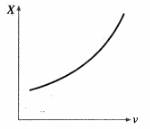
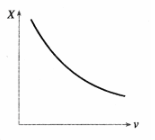
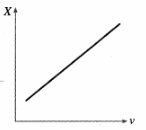
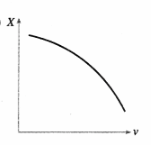
Which of the following graphs shows the variation of the fringe width with the frequency of light in a two-source interference pattern ?
MCQ 451 Mark
The fringe width in an interference pattern is W. The distance between the 6th dark fringe and the 4 th bright fringe on the same side of the central bright fringe is
- ✓
$1.5 W$
- B
$2 W$
- C
$25 W$
- D
$10.5 W$.
AnswerCorrect option: A. $1.5 W$
$1.5 W$
View full question & answer→MCQ 461 Mark
If $\lambda$ is the wavelength of light used in Young's double-slit experiment, the path difference for a phase difference of $11 \pi$ rad is
- A
$23 \lambda$
- B
$11 \lambda$
- ✓
$11 \frac{\lambda}{2}$
- D
$23 \frac{\lambda}{2}$
AnswerCorrect option: C. $11 \frac{\lambda}{2}$
$11 \frac{\lambda}{2}$
View full question & answer→MCQ 471 Mark
For constructive interference, the phase difference (in radian) between the two waves should be
AnswerCorrect option: B. $0,2 \pi, 4 \pi$,
$0,2 \pi, 4 \pi, \ldots$
View full question & answer→MCQ 481 Mark
For destructive interference, the phase difference (in radian) between the two waves should be
- A
$0,2 \pi, \pi$
- B
$0,2 \pi, 4 \pi$
- ✓
$\pi, 3 \pi, 5 \pi, \ldots$
- D
$\frac{\pi}{2}, \frac{3 \pi}{2}, \frac{5 \pi}{2}$
AnswerCorrect option: C. $\pi, 3 \pi, 5 \pi, \ldots$
$\pi, 3 \pi, 5 \pi, \ldots$
View full question & answer→MCQ 491 Mark
In a two-source interference pattern, the phase difference between the waves reaching a dark point in radian is $( m =1,2,3, \ldots)$
- A
- B
$m \pi$
- C
$(2 m-1) \frac{\pi}{2}$
- ✓
$(2 m-1) \pi$
AnswerCorrect option: D. $(2 m-1) \pi$
$(2 m-1) \pi$
View full question & answer→MCQ 501 Mark
The wavefront originating from a point source of light at finite distance is a wavefront.