Questions · Page 1 of 4

M.C.Q (1 Marks)

🎯

Test yourself on this topic

50 questions · timed · auto-graded

MCQ 11 Mark
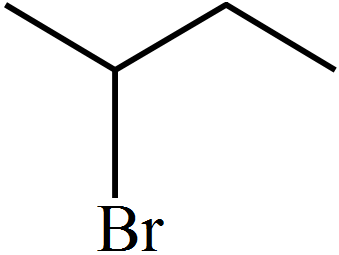
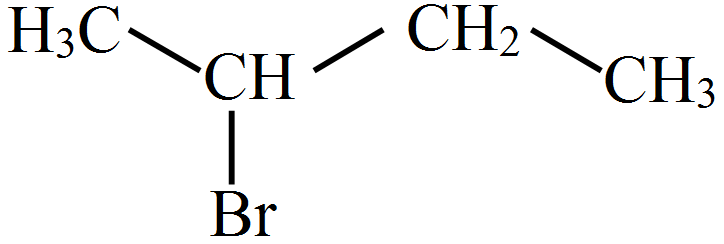
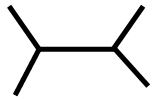
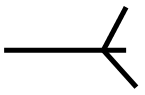
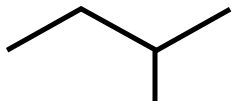
The correct way(s) of representing 2-bromobutane is/ are:
  • A
    CH3CHBrCH2CH3
  • B


  • C

  • D
    All of the above
Answer
  1. All of the above
View full question & answer
MCQ 21 Mark
HCHO and HCOOH are detected by:
  • A
    NaHCO3​
  • B
    CuSO4​/NaOH
  • C
    AgNO3​/NH4​OH
  • D
    All of these
Answer
  1. NaHCO3

Explanation:

Both HCHO and HCOOH react with AgNO3​/NH4​OH

CuSO4​/NaOH solution. But HCOOH gives effervescences of CO2​ when reacts with NaHCO3​, whereas HCHO does not give any effervescence of CO2​ when reacts with NaHCO3​.

HCOOH + NaHCO$\rightarrow$ HCOONa + H2​O + CO$\uparrow$

View full question & answer
MCQ 31 Mark
$\sigma_{\text{C}-\text{C}} :4 ;\ \sigma_{\text{C}-\text{H}}:6;\ \pi_{\text{C}=\text{C}}:1; \ \pi_{\text{C}\equiv\text{C}}:2$  These number of $\sigma$ and $\pi$-bonds are present in which of the following molecule?
  • A
    $\text{CH}\equiv\text{C} -\text{CH}=\text{CH}-\text{CH}_{3}$
  • B
    $\text{CH}_{2}=\text{C}=\text{CH}-\text{CH}_{3}$
  • C
    $\text{CH}_{2}=\text{CH}-\text{CH}=\text{CH}_{3}$
  • D
    None of the above.
Answer
  1. $\text{CH}\equiv\text{C} -\text{CH}=\text{CH}-\text{CH}_{3}$
View full question & answer
MCQ 41 Mark
In homlogous series, successive members differ by:
  • A
    CH3​−
  • B
    CH3​−CH2​−
  • C
    −CH2​
  • D
    −H
Answer
  1. −CH2​−

Explanation:

A homologous series is a series of compounds in which each member differs from the next/previous by −CH2​− or 14 mass units.

Physical properties change in members of homologous series but chemical properties remain almost the same because the functional group remains the same.

View full question & answer
MCQ 51 Mark
Which of the following statements is incorrect regarding the naming of complex compounds?
  • A
    NH2−, will be named as 'amido'
  • B
    'en' will be named as 'ethylenediamine'
  • C
    ​ $\text{C}_2\text{O}_2\text{S}_2^{2-}$will be named as 'dithio oxalato'
  • D
    CH3​− will be named as 'methyl'
Answer
  1. NH2−, will be named as 'amido'

Explanation:

$\ \ \ \ \ \ \ \ \ \ \ \ \text{O}\\\ \ \ \ \ \ \ \ \ \ \ \ \ ||\\ \text{NH}_2-\text{C}-\text{named as amido}$ 

NH2− will be named as amido is incorrect regarding the naming of complex.

View full question & answer
Question 61 Mark
On complete combustion, 0.246g of an organic compound gave 0.198g of carbon dioxide and 0.1014g of water. The percentage composition of carbon and hydrogen in the compound respectively are:
 
%C
(a)
21.95
4.58
(b)
21.95
5.58
(c)
11.95
5.58
(d)
11.95
4.58
Answer
 
%C
(a)
21.95
4.58

Explanation:

Given mass of CO2 = 0.198g and mass of H2O = 0.1014g

As we know % of $\text{C} = \frac{12}{44} \times\frac{\text{m}_{\text{CO}_{2}}}{\text{w}}\times 100$

Percentage of carbon $= \frac{12 \times 0.198\times 100}{44 \times 0.246} = 21.95\%$

Also, $\% \text{ of H} = \frac{2}{18} \times \frac{\text{m}_{\text{H}_{2}\text{O}}}{\text{w}}\times 100$

Percentage of hydrogen $= \frac{2\times 0.1014 \times100}{18 \times 0.246}= 4.58\%$

View full question & answer
MCQ 71 Mark
Amongest the following, the acceptable name as per IUPAC nomenclature is:
  • A
    pent-4-en-1-yne
  • B
    pent-1-en-4-yne
  • C
    2, 2-dimethyl-4-ethylpentane
  • D
    3-hydroxybutan-1-ol
Answer
  1. pent-1-en-4-yne

Explanation:

In naming hydrocarbons, alkenes gets position first priority as compared to alkynes so the correct name is pent-1-en-4-yne. But in numbering carbons, alkynes gets higher priority than alkenes.

View full question & answer
MCQ 81 Mark
Which techniques is based on the difference in the solubilities of the compound and the impurities in a suitable solvent?
  • A
    Sublimation.
  • B
    Crystallisation.
  • C
    Distillation.
  • D
    None of these.
Answer
  1. Crystallisation.

Explanation:

Crystallisation process is based on the difference in the solubilities of the compound and the impurities in a suitable solvent. The impure compound is dissolved in a solvent in which it is sparingly soluble at room temperature but appreciably soluble at higher temperature.

View full question & answer
MCQ 91 Mark
Ethanol is also known as:
  • A
    Ethyl alcohol
  • B
    Ethane
  • C
    Acetaldehyde
  • D
    Formic acid
Answer
  1. Ethyl alcohol

Explanation:

The common name of ethanol is ethyl alcohol.
View full question & answer
MCQ 101 Mark
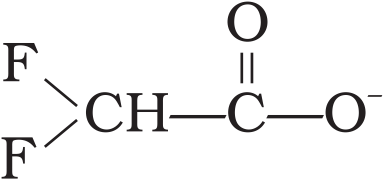
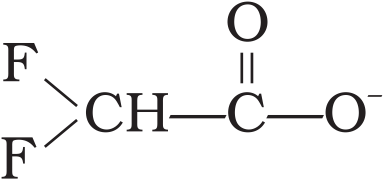
Ionic species are stabilised by the dispersal of charge. Which of the following carboxylate ion is the most stable?
  • A
    $\ \ \ \ \ \ \ \ \ \ \ \ \text{O}\\\ \ \ \ \ \ \ \ \ \ \ \ ||\\\text{CH}_3-\text{C}-\text{O}^-$
  • B
    $\ \ \ \ \ \ \ \ \ \ \ \ \ \ \ \ \ \ \ \ \ \text{O}\\\ \ \ \ \ \ \ \ \ \ \ \ \ \ \ \ \ \ \ \ \ \ ||\\\text{CI}-\text{CH}_2-\text{C}-\text{O}^-$
  • C
    $\ \ \ \ \ \ \ \ \ \ \ \ \ \ \ \ \ \ \ \ \text{O}\\\ \ \ \ \ \ \ \ \ \ \ \ \ \ \ \ \ \ \ \ ||\\\text{F}-\text{CH}_2-\text{C}-\text{O}^-$
  • D
     

Answer
  1.  

Explanation:

The stabilsation of carboxylate ion depends on dispersal of negative charge. The negative charge is dispersed by two factors, i.e., + R effect of the carboxylate ion and Inductive effect of the halogens. In all the above structures, R effect is common but halogen atoms are different. Therefore, dispersal of negative charge depends upon halogen atoms. F is most electronegative, in structure (iv) two Fatoms are present and more dispersal of negative charge is there.

View full question & answer
MCQ 111 Mark
Group showing strongest +M effect:
  • A
    −NH2​
  • B
    −N(CH3​)2​
  • C
    −NHCH3
  • D
    −O-
Answer
  1. −O-

Explanation:

(-) charge is a stronger donor than lone pairs hence the strongest +M effect is shown by −O-.

Also, the other species does not contain any negative charge thus option D is correct.

View full question & answer
MCQ 121 Mark
The colour of bromine solution is:
  • A
    Red
  • B
    Purple
  • C
    Green
  • D
    Blue
Answer
  1. Red

Explanation:

Bromine is a chemical element with symbol Br and atomic number 35.

It is the third-lightest halogen, and is a fuming red-brown liquid at room temperature that evaporates readily to form a similarly coloured gas.

View full question & answer
MCQ 131 Mark
The trends in physical properties of compounds within a homologous series are due to:
  • A
    Change in size
  • B
    Change in weight
  • C
    Functional group
  • D
    Both a and b
Answer
  1. Both a and b

Explanation:

The trends in physical properties of compounds within a homologous series are primarily due to the progression of sizes and therefore, weights of the molecules that form the homologous series.

View full question & answer
MCQ 141 Mark
'I.U.P.A.C.', stands for?
  • A
    Iodine Under Packing.
  • B
    International Union of Pure and Applied Chemistry.
  • C
    International Units of Protein and Carbohydrates.
  • D
    International Understanding on Physical Aspects of Chemistry.
Answer
  1. International Union of Pure and Applied Chemistry.

Explanation:

A chemical nomenclature is a set of rules to generate systematic names for chemical compounds.

The nomenclature used most frequently worldwide is the one created and developed by the International Union of Pure and Applied Chemistry.

The full form of IUPAC is International Union for Pure and Applied Chemistry.
View full question & answer
MCQ 151 Mark
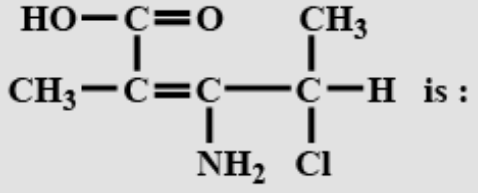
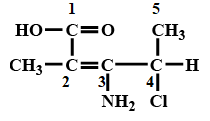
The IUPAC name of the compound is:

  • A
    2 - Amino - 3 - chloro - 2 - methylpent - 2 - enoic acid
  • B
    3 - Amino - 4 - chloro - 2 - methylpent - 2 - enoic acid
  • C
    4- Amino -3 - chloro - 2 - methylpent - 2 - enoic acid
  • D
    All of the above
Answer
  1. 3 - Amino - 4 - chloro - 2 - methylpent - 2 - enoic acid

Explanation:

3-amino-4-chloro-2-methylpent-2-enoic acid.

In IUPAC nomenclature carboxylic acid gets first priority, then -ene, -amino group, -chloro group and -methyl group.
View full question & answer
MCQ 161 Mark
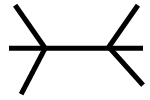
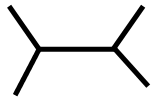
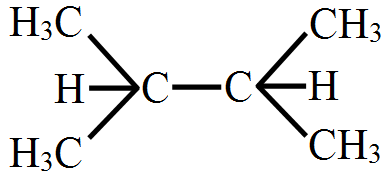
Choose the correct bond-line formula for

  • A
     

    1. B
       

      1. C
         

        1. D
           

        Answer
        1.  

        Explanation:

        The correct bond-line formula for
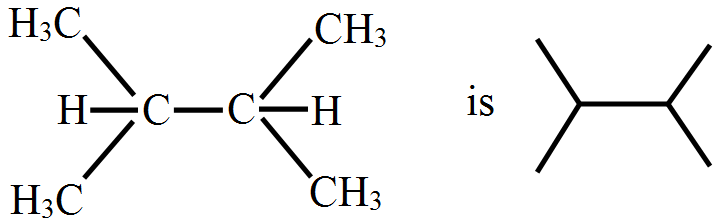
         

        View full question & answer
        MCQ 171 Mark
        Nitrene is a/an:
        • A
          Nucleophile
        • B
          Electrophile
        • C
          Charged species
        • D
          Free atom
        Answer
        1. Nucleophile

        Explanation:

        Nucleophiles are the electron rich species.

        Nitrene is a nucleophile due to the lone pair electrons of Nitrogen.

        View full question & answer
        MCQ 181 Mark
        The carbocation stability is:
        $\stackrel{{+}}{\hbox{ CH }_3}<\text{CH}_{3}\stackrel{{+}}{\hbox{ CH}_2}< (\text{CH}_{3})_{2}\stackrel{{+}}{\hbox{ CH }}<(\text{CH}_{3})_{3}\stackrel{{+}}{\hbox{C}}$
        and alkyl radical stability is:
        • A
          $\stackrel{{\bullet}}{\hbox{ CH}}(\text{CH}_{3})_{2} < \stackrel{{\bullet}}{\hbox{ CH}}_{3}<\stackrel{{\bullet}}{\hbox{ CH}}_{2}\text{CH}_{3}<\stackrel{{\bullet}}{\hbox{C}}(\text{CH}_{3})_3$
        • B
          $\stackrel{{\bullet}}{\hbox{ CH}}(\text{CH}_{3})_{3} < \stackrel{{\bullet}}{\hbox{ CH}}_{}(\text{CH}_{3})_{2}<\stackrel{{\bullet}}{\hbox{ CH}}_{3}<\stackrel{{\bullet}}{\hbox{CH}}_{2}\text{CH}_{3}$
        • C
          $\stackrel{{\bullet}}{\hbox{ CH}}(\text{CH}_{3})_{3} < \stackrel{{\bullet}}{\hbox{ CH}}_{}(\text{CH}_{3})_{2}<\stackrel{{\bullet}}{\hbox{ CH}}_{2}\text{CH}_{3}<\stackrel{{\bullet}}{\hbox{CH}}_{3}$
        • D
          $\stackrel{{\bullet}}{\hbox{ CH}}_{3}<\stackrel{{\bullet}}{\hbox{ CH}}_{2}\text{CH}_{3}<\stackrel{{\bullet}}{\hbox{ CH}} (\text{CH}_{3})_{2}<\stackrel{{\bullet}}{\hbox{C}}(\text{CH}_{3})_{3}$
        Answer
        1. $\stackrel{{\bullet}}{\hbox{ CH}}_{3}<\stackrel{{\bullet}}{\hbox{ CH}}_{2}\text{CH}_{3}<\stackrel{{\bullet}}{\hbox{ CH}} (\text{CH}_{3})_{2}<\stackrel{{\bullet}}{\hbox{C}}(\text{CH}_{3})_{3}$
        View full question & answer
        MCQ 191 Mark
        Which is not the characteristic of $\pi$−bond?
        • A
          $\pi$ bond is formed when a sigma bond already exists.
        • B
          $\pi$ bonds are formed from hybrid orbitals.
        • C
          $\pi$ bond may be formed by the overlapping of p orbitals.
        • D
          $\pi$ bond results from lateral overlap of atomic orbitals.
        Answer
        1. $\pi$ bonds are formed from hybrid orbitals.

        Explanation:

        $\pi$ bond is formed between two atoms if a sigma bond already exists between them.

        $\pi$ bonds are formed only by pure orbitals (p−orbitals), not from hybrid orbitals.

        They formed by lateral or sideways overlapping.

        View full question & answer
        MCQ 201 Mark
        The technique in which extraction of compound takes place on the basis of more solubility of one compound in another solvent, is:
        • A
          Differential extraction.
        • B
          Chromatography.
        • C
          Sublimation.
        • D
          Crystallisation.
        Answer
        1. Differential extraction.
        View full question & answer
        MCQ 211 Mark
        In Lassaigne's test, a blue colour is obtained if the organic compound contains nitrogen. The blue colour is due to the formation of:
        • A
          K4[Fe(CN)6]
        • B
          Fe4[Fe(CN)6]3
        • C
          Na3[Fe(CN)6]
        • D
          Cu2[Fe(CN)6]
        Answer
        1. Fe4[Fe(CN)6]3

        Explanation:

        If nitrogen is present in the organic compound then sodium extract contains NaCN.

        $\text{Na}+\text{C}+\text{N}\xrightarrow{\text{Fuse}}\text{NaCN}$

        $\text{FeSO}_4+6\text{NaCN}\rightarrow\text{Na}_4[\text{Fe(CN)}_6]+\text{Na}_2\text{SO}_4$

        It changes to prussian blue Fe4[Fe(CN)6]3 on reaction with FeCl3.

        $4\text{FeCl}_3+3\text{Na}_4[\text{Fe(CN)}_6]\rightarrow\text{Fe}_4[\text{Fe(CN)}_6]_3+12\text{NaCl}$

        View full question & answer
        MCQ 221 Mark
        Which one of the following is least stable?
        • A
          $\stackrel{{\ominus}}{\hbox{C}}\text{H}_3$
        • B
          $\text{HC}\equiv\stackrel{{\ominus}}{\hbox{C}}$
        • C
          $(\text{C}_6\text{H}_5)_3\stackrel{{\ominus}}{\hbox{C}}$
        • D
          $(\text{CH}_3)_3\stackrel{{\ominus}}{\hbox{C}}$
        Answer
        1. $(\text{CH}_3)_3\stackrel{{\ominus}}{\hbox{C}}$

        Explanation:

        It is least stable because $\text{C}^\ominus$ is attached to three electron releasing CH3 groups.  

        View full question & answer
        MCQ 231 Mark
        The order of priority in IUPAC system:
        • A
          $-\text{CONH}_2,-\text{CHO},-\text{SO}_3\text{H},-\text{COOH}$
        • B
          $-\text{COOH},-\text{SO}_3\text{H},-\text{CONH}_2,-\text{CHO}$
        • C
          $-\text{SO}_3\text{H},-\text{COON},-\text{CONH}_2,-\text{CHO}$
        • D
          $-\text{CHO},-\text{COOH},-\text{SO}_3\text{H},-\text{CONH}_2$
        Answer
        1. $-\text{SO}_3\text{H},-\text{COON},-\text{CONH}_2,-\text{CHO}$
        View full question & answer
        MCQ 241 Mark
        Which of the following method is used to purify liquids having very high boiling points and those which decompose at or below their boiling points?
        • A
          Simple distillation.
        • B
          Fractional distillation.
        • C
          Distillation under reduced pressure.
        • D
          None of the above.
        Answer
        1. Distillation under reduced pressure.

        Explanation:

        Distillation under reduced pressure method is used to purify liquids having very high boiling points and those, which decompose at or below their boiling points. Such liquids are made to boil at a temperature lower than their normal boiling points by reducing the pressure on their surface. A liquid boils at a temperature at which its vapour pressure is equal to the external pressure. The pressure is reduced with the help of a water pump or vacuum pump.

        View full question & answer
        MCQ 251 Mark
        The indicator which is used to find the strength of caustic soda solution with the help of oxalic acid is:
        • A
          Methyl orange
        • B
          Phenolphthalein
        • C
          Potassium permanganate
        • D
          None of the above
        Answer
        1. Phenolphthalein

        Explanation:

        An indicator is a chemical substance that undergoes a colour change at the endpoint. The endpoint of an acid-base titration can be determined using acid-base indicators.

        Acid Base indicators are either weak organic acids or weak organic bases. The colour change of an indicator depends on the pH of the medium.

        The un-ionized form of an indicator has one colour, but its ionized form has a different colour.

        Phenolphthalein is used to find the strength of caustic soda solution with the help of oxalic acid.

        View full question & answer
        MCQ 261 Mark
        Passing H2​S gas into a mixture of Mn2+,Ni2+,Cu2+,Hg2+ ions in acidified aqueous solution precipitates:
        • A
          CuS and HgS
        • B
          MnS and CuS
        • C
          MnS and NiS
        • D
          NiS and HgS
        Answer
        1. CuS and HgS

        Explanation:

        Cu2+ and Hg2+ lie in IInd group of qualitative analysis H2​S in acid medium is reagent for it.
        HCl $\rightarrow$ H+ Cl
        H2​S $\leftrightharpoons$ 2H+ S2−

        View full question & answer
        MCQ 271 Mark
        Which of the following does not belong to homologous series of alkanes?
        • A
          C2​H6​
        • B
          C3​H4
        • C
          C4​H10​
        • D
          C5​H12​
        Answer
        1. C3​H4

        Explanation:

        Alkanes have the general formula Cn​H2n+2​

        Thus, C3​H4​ does not belong to homologous series of alkanes.
        View full question & answer
        MCQ 281 Mark
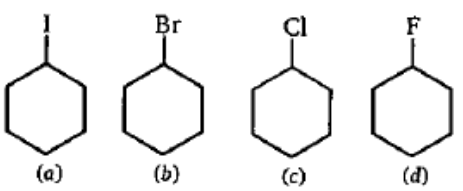
        identify the rate of reaction of given compounds in E2​ reaction:

        • A
          a > b > c > d
        • B
          a > c > b > d
        • C
          b > a > c > d
        • D
          b > d > a > c
        Answer
        1. a > b > c > d

        Explanation:

        The rate of reaction depends on the leaving ability of halide ions.

        Leaving Ability: I− > Br− > Cl− > F (Acidic nature).

        Strong acids act as a strong leaving groups.
        View full question & answer
        MCQ 291 Mark
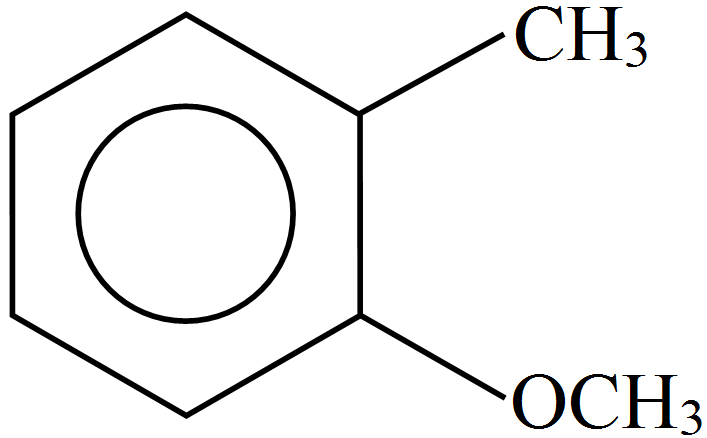
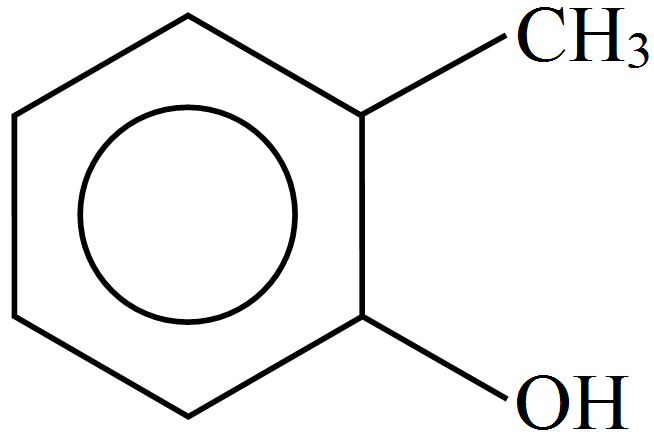
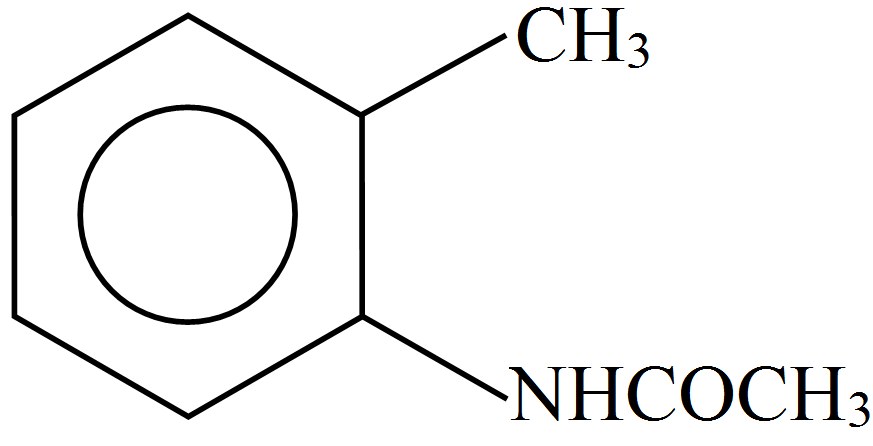
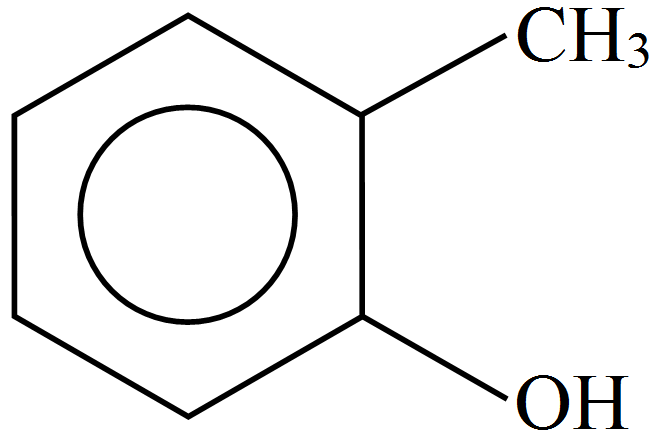
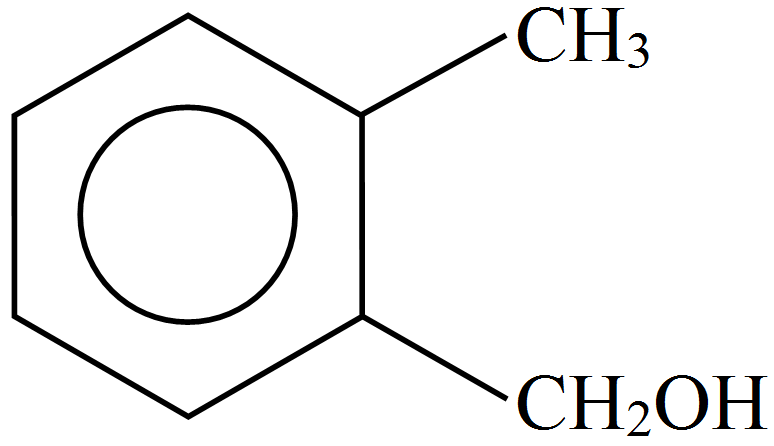
        Which of the following is the most reactive towards electrophilic reagent?
        • A
           

          1. B
             

            1. C
               

              1. D
                 

              Answer
              1.  

              Explanation:

              +R-effect of OH > -CH3

              Hence, 2-methyl phenol is more reattive towards electrophilic reagent.

              View full question & answer
              MCQ 301 Mark
              The IUPAC name of the molecule:
              $\ \ \ \ \ \ \ \ \ \ \ \ \ \text{O}\ \ \ \ \ \ \ \ \ \ \ \ \ \ \ \ \ \ \ \ \text{O}\\\ \ \ \ \ \ \ \ \ \ \ \ \ ||\ \ \ \ \ \ \ \ \ \ \ \ \ \ \ \ \ \ \ \ \ ||\\\text{CH}_3-\text{C}-\text{C}=\text{C}-\text{C}-\text{OH}\ \text{is }\\ \ \ \ \ \ \ \ \ \ \ \ \ \ \ \ \ \ \ \ \ \ |\ \ \ \ \ \ \ |\\ \ \ \ \ \ \ \ \ \ \ \ \ \ \ \ \ \ \ \ \ \text{CH}_3 \ \text{CH}_3$
              • A
                4-oxo-2,3-dimethyl pent-2-en-1-oic acid.
              • B
                2-carboxy-3-methyl pent-2-en -3-one.
              • C
                4-carboxy-3-methyl pent-3-en-2-one.
              • D
                2,3-Dimethyl-4-oxo-pent-2-en-1-oic acid.
              Answer
              1. 2,3-Dimethyl-4-oxo-pent-2-en-1-oic acid.

              Explanation:

              -COOH is given more preference over keto, prefix for ketone group is oxo.

              View full question & answer
              MCQ 311 Mark
              Which of the following is a correct representation of condensed formula for$\text{HOCH}_2\text{CH}_2\text{CH}_2\text{CH(CH}_3)\text{CH(CH}_3)\text{CH(CH}_3)\text{CH}_3$?
              Answer
              1. $\text{HO(CH}_2)_2\text{CH(CH}_3)\text{CH(CH}_3)_2$

              Explanation:

              The correct condensed formula for$\text{HOCH}_2\text{CH}_2\text{CH}_2\text{CH(CH}_3)\text{CH(CH}_3)\text{CH(CH}_3)\text{CH}_3$

              is $\text{HO(CH}_2)_3\text{CHCH}_3\text{CH(CH}_3)_2$

              View full question & answer
              MCQ 321 Mark
              In which of the following inductive effect is possible:
              • A
                Butane
              • B
                Benzene
              • C
                Cyclohexane
              • D
                Butanal
              Answer
              1. Butanal

              Explanation:

              To show inductive effect compound must contain electronegative element/eletropositive element attatched to C-atom.

              So that movement of electrons away from chain/towards chain would occur. This is possible only in case of Butanal among given options.

              View full question & answer
              MCQ 331 Mark
              Sodium nitroprusside reacts with sodium sulphide formed in lassaigne's test to detect presence of sulphur gives violet colour due to:
              • A
                $\text{Na}_2\big[\text{Fe}(\text{CN})_5\text{NO}\big]$
              • B
                $\text{Na}_4\big[\text{Fe}(\text{CN})_5\text{NOS}\big]$
              • C
                $\text{Na}_2\big[\text{Fe}(\text{CN})_5\text{COS}\big]$
              • D
                None of these.
              Answer
              1. $\text{Na}_4\big[\text{Fe}(\text{CN})_5\text{NOS}\big]$

              Explanation:

              $\text{Na}_2\text{S}+\text{Na}_2\big[\text{Fe}(\text{CN})_5\text{NO}\big]\xrightarrow{\ \ \ \ }\text{Na}_4\big[\text{Fe}(\text{CN})_5\text{NOS}\big]\\\ \ \ \ \ \ \ \ \ \ \ \ \ \ \ \ \ \ \ \ \ \ \ \ \ \ \ \ \ \ \ \ \ \ \ \ \ \ \ \ \ \ \ \ \ \ \ \ \ \ \ \ \ \ \ \ \ \ \ \ \text{Violet coloour}$
              View full question & answer
              MCQ 341 Mark
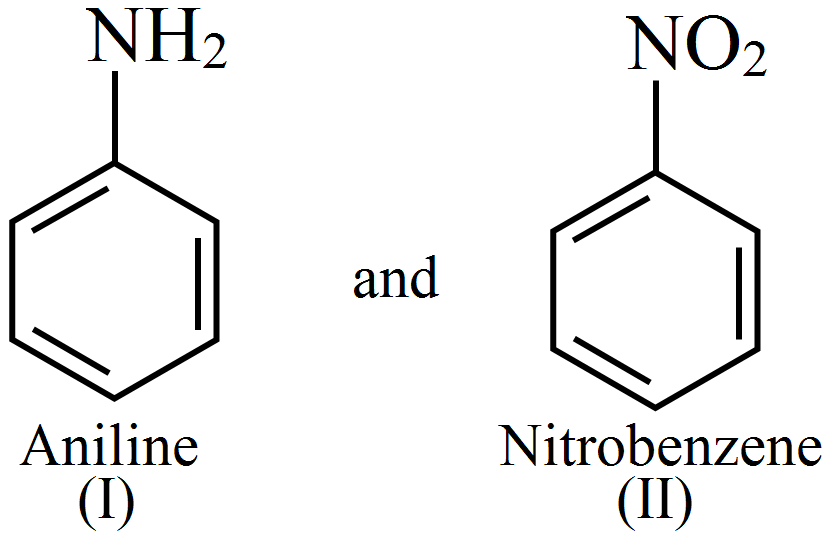
              Consider the following compounds,

              Which of the following statements is/ are true regarding I and II?
              • A
                I shows +R-effect, whereas II shows -R-effect.
              • B
                I shows -R-effect, whereas II shows +R-effect.
              • C
                Both I and II show +R-effect.
              • D
                Both I and II show -R-effect.
              Answer
              1. I shows +R-effect, whereas II shows -R-effect.
              View full question & answer
              MCQ 351 Mark
              The principle involved in paper chromatography is:
              • A
                Adsorption
              • B
                Partition
              • C
                Solubility
              • D
                Volatility
              Answer
              1. Partition

              Explanation:

              In paper chromatography, separation of the components of a mixture depends upon their partitioning between water held in the stationary phase (i.e. adsorbent paper) and the liquid present in the mobile phase.

              View full question & answer
              MCQ 361 Mark
              Successive members of homologous series differ from one another in their mass by:
              • A
                10 units
              • B
                15 units
              • C
                20 units
              • D
                14 units
              Answer
              1. 14 units

              Explanation:

              A series of organic compounds with the same general formula but differ from adjacent members by "−CH2​−" group are referred to as homologous series of compounds. Successive members of homologous series differ from one another in their mass by 14 units.

              For example: CH4​ and C2​H6​ are homologous series. Its molar mass is 16 and 30gm/mole respectively.

              Hence, it is differed by unit 14.

              View full question & answer
              MCQ 371 Mark
              Electronegativity of carbon atoms depends upon their state of hybridisation. In which of the following compounds, the carbon marked with asterisk is most electronegative?
              • A
                CH3 – CH2 – *CH2 –CH3
              • B
                CH3 – *CH = CH – CH3
              • C
                CH3 – CH2 – C ≡ *CH
              • D
                CH3 – CH2 – CH = *CH2
              Answer
              1. CH3 – CH2 – C ≡ *CH

              Explanation:

              Electronegativity increases as the state of hybridization changes from sp3 to spand sp2 to sp. Thus, sp hybridized carbon has the highest electronegativity.

              View full question & answer
              MCQ 381 Mark
              Which of the following pairs are members of a homologous series?
              • A
                CH3​OCH3​; CH3​CH2​OH
              • B
                CH3​CHO; CH3​CH2​CHO
              • C
                CH3​CH2​COOH; CH3​COOCH3​
              • D
                (CH3​)2​CHOH; CH3​CH2​OH
              Answer
              1. CH3​CHO; CH3​CH2​CHO

              Explanation:

              Acetaldehyde i.e CH3​CHO and propionaldehyde i.e CH3​CH2​CHO belong from the aldehyde family hence they are homologous series.

              View full question & answer
              MCQ 391 Mark
              The bond that consist of an upper and a lower sharing of electron orbitals is called as:
              • A
                A pi bond
              • B
                A sigma bond
              • C
                A hydrogen bond
              • D
                An ionic bond
              Answer
              1. A pi bond

              Explanation:

              The bond that consist of an upper and a lower sharing of electron orbitals is called as a pi bond.

              A pi bond is formed by lateral (side ways) overlap.

              For example, two 2pz​ orbitals of two C atoms laterally overlap to for pi bond in ethene CH2 ​= CH2​

              View full question & answer
              MCQ 401 Mark
              In Kjeldahl's method for estimation of nitrogen, CuSO4 acts as:
              • A
                Oxidising agent.
              • B
                Reducing agent.
              • C
                Catalytic agent.
              • D
                Hydrolysis agent.
              Answer
              1. Hydrolysis agent.

              Explanation:

              In Kjeldahl's method (used for the estimation of nitrogen) the organic compound is heated with conc. H2SO4 in the presence of K2SO4 (used to elevate boiling point of H2SO4) and CusO4 (used as catalyst) to convert all the nitrogen into (NH4)2SO4

              View full question & answer
              MCQ 411 Mark
              In the detection test of carbon and hydrogen with cupric oxide, carbon is oxidized to:
              • A
                Carbon monoxide
              • B
                Carbon dioxide
              • C
                Carbonic acid
              • D
                Copper sulphate
              Answer
              1. Carbon dioxide

              Explanation:

              The given organic compound is mixed with dry copper oxide (CuO) and heated in a hard glass tube. The products of the reaction are passed over (white) anhydrous copper sulphate and then bubbled through lime water.

              If copper sulphate turns blue due to the formation of CuSO4​.5H2​O (by water vapor) then the compound contains hydrogen.

              If lime water is turned milky by CO2​, then the compound contains carbon.So, the carbon is oxidized to CO2​.

              View full question & answer
              MCQ 421 Mark
              Which term is the best match for the color of a chemical substance students make note of:
              • A
                Qualitative data
              • B
                Inference
              • C
                Observation
              • D
                Hypothesis
              Answer
              1. Qualitative data

              Explanation:

              Color of the substance is the qualitative property. Qualitative properties are the properties which can be observed without making any measurements or calculations.

              View full question & answer
              MCQ 431 Mark
              Yellow ammonium sulphide can separate:
              • A
                CdS and As2​S3​
              • B
                Bi2​S3​ and CuS
              • C
                PbS and Bi2S3​
              • D
                HgS and PbS
              Answer
              1. CdS and As2​S3​

              Explanation:

              Since CdS belongs to IIA group and As2​S3​ belongs to IIB group, they can be separated with yellow ammonium sulphide as only IIB group sulphides dissolve in yellow ammoium sulphide.

              View full question & answer
              MCQ 441 Mark
              In Dumas method, 0.25g of organic compound gave 40ml of N, at 300k and 725mm pressure. If aqueous tension at 300k is 25mm, the percentage of nitrogen in compound is:
              • A
                16.76%
              • B
                15.76%
              • C
                17.36%
              • D
                18.20%
              Answer
              1. 16.76%

              Explanation:

              $\frac{\text{P}_1\text{V}_1}{\text{T}_1}=\frac{\text{P}_2\text{V}_2}{\text{T}_2}\Rightarrow \frac{40\times760}{300}=\frac{\text{V}_2\times760}{273}$

              $\Rightarrow\text{V}_2=\frac{28\times273}{76\times3}$ $[\text{P}=725-25=700\text{mm}]$​​​​​​​

              $\text{V}_2=\frac{7644}{228}=33.53\text{mL}$

              $\%\text{ of }\text{N}=\frac{\text{V}_2}{8\text{w}}=\frac{33.53}{8\times0.25}=16.76\%$

              View full question & answer
              MCQ 451 Mark
              Name the two types of chromatography techniques based on the principle of differential adsorption.
              • A
                Column chromatography and thick layer chromatography.
              • B
                Non-column chromatography and thin layer chromatography.
              • C
                Column chromatography and thin layer chromatography.
              • D
                Paper chromatography and thick layer chromatography.
              Answer
              1. Column chromatography and thin layer chromatography.

              Explanation:

              Two types of adsorption chromatography techniques are column chromatography and thin layer chromatography.

              View full question & answer
              MCQ 461 Mark
              Which of the following compounds contain all the carbon atoms in the same hybridisation state?
              • A
                H—C ≡ C—C ≡ C—H
              • B
                CH3—C ≡ C—CH3
              • C
                CH2 = C = CH2
              • D
                CH2 = CH—CH = CH2
              Answer
              1. H—C ≡ C—C ≡ C—H
              1.  CH2 = CH—CH = CH2

              Explanation:

              1. $\ \ \ \ \ \ \ \ \text{sp}\ \ \ \ \text{sp}\ \ \ \ \text{sp}\ \ \ \ \text{sp}\\\text{H}-\text{C}\equiv\text{C}-\text{C}\equiv\text{C}-\text{H}$

              2. $\text{sp}^3\ \ \ \ \ \ \ \text{sp}\ \ \ \ \text{sp}\ \ \ \ \text{sp}^3\\\text{CH}_3-\text{C}\equiv\text{C}-\text{CH}_3$

              3. $\text{sp}^2\ \ \ \ \ \ \ \text{sp}\ \ \ \ \ \text{sp}^2\\\text{CH}_2=\text{C}=\text{CH}_2$

              4. $\text{sp}^2\ \ \ \ \ \ \ \text{sp}^2\ \ \ \ \ \ \text{sp}^2\ \ \ \ \ \text{sp}^2\\\text{CH}_2=\text{CH}-\text{CH}=\text{CH}_2$

              View full question & answer
              MCQ 471 Mark
              Homologous series is____________.
              • A
                A series of compounds in which the same functional group substitutes for hydrogen in a carbon chain.
              • B
                A series of compounds in which different functional group substitutes for hydrogen in a carbon chain.
              • C
                A series of compounds with same molecular formula and different structural formulae.
              • D
                A series of compounds with same molecular formula but different functional groups.
              Answer
              1. A series of compounds in which the same functional group substitutes for hydrogen in a carbon chain.

              Explanation:

              Homologous series is a series of compounds in which the same functional group substitutes for hydrogen in a carbon chain. The chemical properties of the compounds are very similar.

              Example of a homologous series: CH3​OH,C2​H5​OH,C3​H7​OH,C4​H9​OH.

              View full question & answer
              MCQ 481 Mark
              Pi bond is formed:
              • A
                By the overlapping of atomic orbitals on the axis of nuclei.
              • B
                By mutual sharing of p - electrons.
              • C
                By sideways overlapping of half filled p - orbitals.
              • D
                By overlapping of s-orbitals with p - orbital.
              Answer
              1. By sideways overlapping of half filled p - orbitals.

              Explanation:

              If a bond between two atoms is broken when one atom is rotated around the bond axis, that bond is called a pi bond.

              Pi bonds are formed by the sideways overlap of parallel half filled p−orbitals on adjacent atoms as shown in the figure.

              They are not formed from hybrid orbitals.

              View full question & answer
              MCQ 491 Mark
              Which general formula represents the homologous series of hydrocarbons that includes the compound 1-heptyne?
              • A
                Cn​H2n−6​
              • B
                Cn​H2n
              • C
                Cn​H2n−2
              • D
                Cn​H2n+2​
              Answer
              1. Cn​H2n−2

              Explanation:

              1-heptyne is alkyne. The general formula for alkyne is Cn​H2n−2.

              View full question & answer
              MCQ 501 Mark
              Sodium extract gives blood red colour when treated with FeCl3​. Formation of blood red colour confirms the presence of:
              • A
                Only nitrogen
              • B
                Only sulphur
              • C
                Only halogens
              • D
                Both nitrogen and sulphur
              Answer
              1. Both nitrogen and sulphur

              Explanation:

              Na + N + C + S → NaSCN (Sodium thiocyanate)

              SCN− + Fe3→ [Fe(SCN)]2+ (Ferric thiocyanate) (Blood-red colour)

              It confirms the presence of both N and S.

              View full question & answer
              M.C.Q (1 Marks) - Chemistry STD 11 Science Questions - Vidyadip