MCQ
$\,$

- A

- ✓
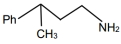
- C
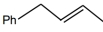
- D
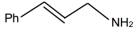
In the above reaction, the reactant undergoes $1,4$ Michael addition first then the formed intermediate undergoes reduction in the presence of $NaBH _{4}$ to form the desired product.
Generate a complete, print-ready paper with questions like this in minutes — across 16+ boards, with answer keys.
The time taken for $A$ to become $1 / 4^{\text {th }}$ of its inital concentration is twice the time taken to become $1 / 2$ of the same. Also, when the change of concentration of $B$ is plotted against time, the resulting graph gives a straight line with a negative slope and a positive intercept on the concentration axis. The overall order of the reaction is . . . . .
$(a)$ Number of $S-S$ bonds in $H_2S_nO_6$ are $(n +1)$
$(b)$ When $F_2$ reacts with $H_2O$ it forms $HF,$ $O_2$ & $O_3.$
$(c)$ $XeF_6$ on hydrolysis shows disproportionation reaction
$(d)$ $Al$ metal on reacting with dilute $NaOH$ gives a white precipitate of $Al (OH)_3$ as a final product
