MCQ
A body under the action of several forces will have zero acceleration
  • A
    When the body is very light
  • B
    When the body is very heavy
  • C
    When the body is a point body
  • When the vector sum of all the forces acting on it is zero

Answer

Correct option: D.
When the vector sum of all the forces acting on it is zero
d
(d) $\vec a = \frac{{\vec F}}{m}$.

If $\vec F = 0$ then $\vec a = 0$.

Need a full question paper?

Generate a complete, print-ready paper with questions like this in minutes — across 16+ boards, with answer keys.
Start Generating Free

Similar questions

In the relation $n = \frac{{PV}}{{RT}},n = $
The energy required to break one bond in $DNA$ is $10^{-20}\, J.$ This value in $eV$ is nearly
A particle of mass $m$ in a unidirectional potential field have potential energy $U(x)=\alpha+2 \beta x^2$, where $\alpha$ and $\beta$ are positive constants. Find its time period of oscillation.
Which relation is correct for isometric process
A vessel of volume V contains a mixture of 1 mole of hydrogen and 1 mole of oxygen (both considered as ideal). Let f1(v)dv denotes the fraction of molecules with speed between v and (v + dv) with f2(v)dv, similarly for oxygen. Then,
  1. f1(v) + f2(v) = f (v) obeys the Maxwell’s distribution law.
  2. f1(v), f2(v) will obey the Maxwell’s distribution law separately.
  3. Neither f1(v)nor f2(v)will obey the Maxwell’s distribution law.
  4. f2(v) and f1(v)will be the same.
For a projectile the ratio of maximum height reached to the square of flight time is
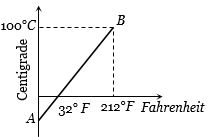
The graph $AB$ shown in figure is a plot of temperature of a body in degree celsius and degree Fahrenheit. Then
A reference frame attached to the earth:
  1. Is an inertial frame by definition.
  2. Cannot be an inertial frame because the earth is revolving around the sun.
  3. Is an inertial frame because Newton's laws are applicable in this frame.
  4. Cannot be an inertial frame because the earth is rotating about its axis.
A particle is moving in a circle of radius $50 \mathrm{~cm}$ in such a way that at any instant the normal and tangential components of its acceleration are equal. If its speed at $t=0$ is $4 \mathrm{~m} / \mathrm{s}$, the time taken to complete the first revolution will be $\frac{1}{\alpha}\left[1-\mathrm{e}^{-2 \pi}\right] \mathrm{s}$, where $\alpha=$_______________.
A fixed volume of iron is drawn into a wire of length $L.$ The extension $x$ produced in this wire by a constant force $F$ is proportional to