MCQ
A projectile projected at an angle ${30^o}$ from the horizontal has a range $2\upsilon ,\,\sqrt 2 \upsilon \,\,{\rm{ and}}\,{\rm{zero}}$. If the angle of projection at the same initial velocity be ${60^o}$, then the range will be
  • $R$
  • B
    $2R$
  • C
    $R/2$
  • D
    ${R^2}$

Answer

Correct option: A.
$R$
a
(a) For complementary angles of projection horizontal range is same.

Need a full question paper?

Generate a complete, print-ready paper with questions like this in minutes — across 16+ boards, with answer keys.

Start Generating Free

Similar questions

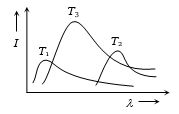
The plots of intensity versus wavelength for three black bodies at temperatures $T_1, T_2$ and $T_3$ respectively are as shown. Their temperature are such that
A body with mass $5\ kg$ is acted upon by a force $\text{F}=(-3\hat{\text{i}}+4\hat{\text{j}})\text{N.}$ If its initial velocity at $t = 0$ is $\text{v}=(6\hat{\text{i}}-12\hat{\text{j}})\text{m s}^{-1},$ the time at which it will just have a velocity along the $y-$axis is:
What is the angle between $\vec A\,\,$ and  $\vec B\,\,$ if $\vec A\,\,$ and  $\vec B\,\,$ are the adjacent sides of a parallelogran drawn from a common point and the area of the parallelogram is $\frac {AB}{2}$
Two paper screens $A$ and $B$ are separated by a distance of $100\,m$. A bullet pierces $A$ and then $B$. The hole in $B$ is $10\,cm$ below the hole in $A$. If the bullet is travelling horizontally at the time of hitting $A$, then the velocity of the bullet at $A$ is $.......\,m / s$
One likes to sit under sunshine in winter season, because
A small spherical ball of radius $0.1 \,mm$ and density $10^{4} \,kg m ^{-3}$ falls freely under gravity through a a distance $h$ before entering a tank of water. If after entering the water the velocity of ball does not change and it continue to fall with same constant velocity inside water, then the value of $h$ wil be $m$. (Given $g =10 \,ms ^{-2}$, viscosity of water $=1.0 \times 10^{-5} \,N - sm ^{-2}$ )
The position of a particle as a function of time $t$, is given by $x\left( t \right) = at+ b{t^2} - c{t^3}$ where $a, b$ and $c$ are constants. When the particle attains zero acceleration, then its velocity will be
A body is moving according to the equation $x = at + b{t^2} - c{t^3}$ where $x = $ displacement and $a,\;b$ and $c$ are constants. The acceleration of the body is
The net resistance of an ammeter should be small to ensure that:
First law thermodynamics states that