MCQ
A student is performing an experiment using a resonance column and a tuning fork of frequency $244 s ^{-1}$. He is told that the air in the tube has been replaced by another gas (assume that the column remains filled with the gas). If the minimum height at which resonance occurs is $(0.350 \pm 0.005) m$, the gas in the tube is

(Useful information) : $\sqrt{167 R T}=640 j^{1 / 2} mole ^{-1 / 2} ; \sqrt{140 RT }=590 j ^{1 / 2} mole ^{-1 / 2}$. The molar masses $M$ in grams are given in the options. Take the value of $\sqrt{\frac{10}{ M }}$ for each gas as given there.)

  • A
    Neon $\left(M=20, \sqrt{\frac{10}{20}}=\frac{7}{10}\right)$
  • B
    Nitrogen $\left(M=28, \sqrt{\frac{10}{28}}=\frac{3}{5}\right)$
  • C
    Oxygen $\left(M=32, \sqrt{\frac{10}{32}}=\frac{9}{16}\right)$
  • Argon (M=36, $\left.\sqrt{\frac{10}{36}}=\frac{17}{32}\right)$
Answer

Correct option: D.
Argon (M=36, $\left.\sqrt{\frac{10}{36}}=\frac{17}{32}\right)$
d
$f =\frac{1}{4 \ell} \sqrt{\frac{\gamma RT }{ M }} \& \frac{\Delta f }{ f }=\frac{\Delta \ell}{\ell}$

(A) $M=20 \times 10^{-3} \quad f =320 Hz$ $\quad\quad$$\Delta f = \pm 4.5 Hz$ Not possible

(B) $M=20 \times 10^{-3} \quad f =253 Hz$ $\quad\quad$$\Delta f = \pm 3.6 Hz$ Not possible

(C) $M=32 \times 10^{-3} \quad f =237 Hz$ $\quad\quad$$\Delta f = \pm 3.4 Hz$ Not possible

(D) $M =36 \times 10^{-3}$ $\quad$$f =242.8 Hz$ $\quad\quad$$\Delta f = \pm 3.5 Hz$ possible 

Need a full question paper?

Generate a complete, print-ready paper with questions like this in minutes — across 16+ boards, with answer keys.

Start Generating Free

Similar questions

Two cars $A$ and $B$ are moving in same direction with velocities $30 \,m / s$ and $20 \,m / s$. When car $A$ is at a distance $d$ behind the car $B$, the driver of the car $A$ applies brakes producing uniform retardation of $2 \,m / s ^2$. There will be no collision when ......... $m$
The area of a square is $5.29\, cm^2$. The area of $7$ such squares taking into account the significant figures is  ........... $cm^2$
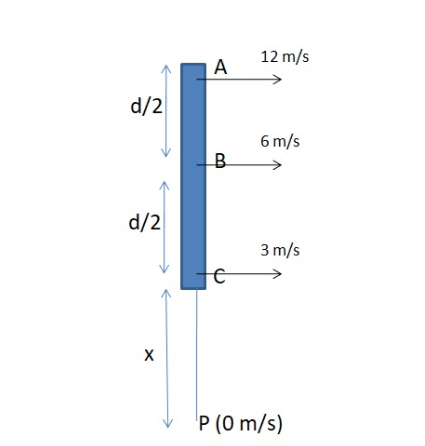
In the image shown. $AC$ is a rigid rod of length $12\ cms$ rotating about point $P,$ whose velocities are shown in the figure. Find the distance $PC = x$
For adiabatic processes $\left( {\gamma = \frac{{{C_p}}}{{{C_v}}}} \right)$
The temperature at which the $r.m.s.$ speed of hydrogen molecules is equal to escape velocity on earth surface, will be ...... $K$
For an ideal gas the instantaneous change in pressure $'{p} '$ with volume $'v'$ is given by the equation $\frac{{dp}}{{dv}}=-{ap} .$ If ${p}={p}_{0}$ at ${v}=0$ is the given boundary condition, then the maximum temperature one mole of gas can attain is :

(Here ${R}$ is the gas constant)

Two wires of same length and radius are joined end to end and loaded. The Young's modulii of the materials of the two wires are $Y_{1}$ and $Y_{2}$. The combination behaves as a single wire then its Young's modulus is:
A medium can carry a longitudinal wave because it has the property of
Consider a rubber ball freely falling from a height $h = 4.9\, m$ on a horizontal elastic plate. Assume that the duration of collision is negligible and the collision with the plate is totally elastic. Which one of the following graph represents the velocity as a function of time and the height as a function of time ?
The Doppler effect is applicable for