MCQ
An electric dipole placed in a non-uniform electric field can experience
- Aalways a force and a torque.
- Bneither a force nor a torque.
- Ca force but not a torque.
- Da torque but not a force.
Generate a complete, print-ready paper with questions like this in minutes — across 16+ boards, with answer keys.
A convex lens has a focal length f. It is cut into two parts along the dotted line as shown in the figure. The focal length of each part will be

|
(a) |
(b) f |
(c) |
(d) 2f |
A point charge +q is placed at the centre of a cube of side L. The electric flux emerging from the cube is
|
(a) |
(b) Zero |
(c) |
(d) |
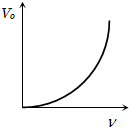
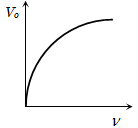
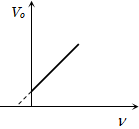
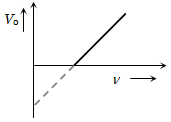
For a photoelectric cell the graph showing the variation of cut of voltage (Vo) with frequency (n) of incident light is best represented by
|
(a)
|
(b)
|
(c)
|
(d)
|
The velocity of light in a medium is half its velocity in air. If ray of light emerges from such a medium into air, the angle of incidence, at which it will be totally internally reflected, is
|
(a) 15o |
(b) 30 o |
(c) 45 o |
(d) 60 o |
The minimum energy required to excite a hydrogen atom from its ground state is
|
(a) 13.6 eV |
(b) -13.6 eV |
(c) 3.4 eV |
(d) 10.2 eV |
A flat circular disc has a charge +Q uniformly distributed on the disc. A charge +q is thrown with kinetic energy E towards the disc along its normal axis. The charge q will
|
(a) Hit the disc at the centre |
|
(b) Return back along its path after touching the disc |
|
(c) Return back along its path without touching the disc |
|
(d) Any of the above three situations is possible depending on the magnitude of E |