Question
Distinguish between: Homologous organs and Analogous organs.
| Homologous organs | Analogous organs |
| 1. Homologous organs are structurally similar to one another. | 1. Analogous organs are structurally dissimilar to one another. |
| 2. Homologous organs are functionally dissimilar from one another. | 2. Analogous organs are functionally similar to one another. |
| 3. Homologous organs help in tracing the evolutionary relationships. | 3. Analogous organs do not help in tracing the evolutionary relationships. |
| 4. Homologous organs lead to divergent evolution. | 4. Analogous organs lead to convergent evolution. |
| 5. Animals residing in different habitats but having closer evolutionary relationship show homologous organs.E.g. Forelimbs of frog, lizard, bird, bat, whale, man, etc. | 5. Diverse animals residing in the similar habitat show analogous organs.E.g. Wing of a bird and wing of an insect. |
Generate a complete, print-ready paper with questions like this in minutes — across 16+ boards, with answer keys.
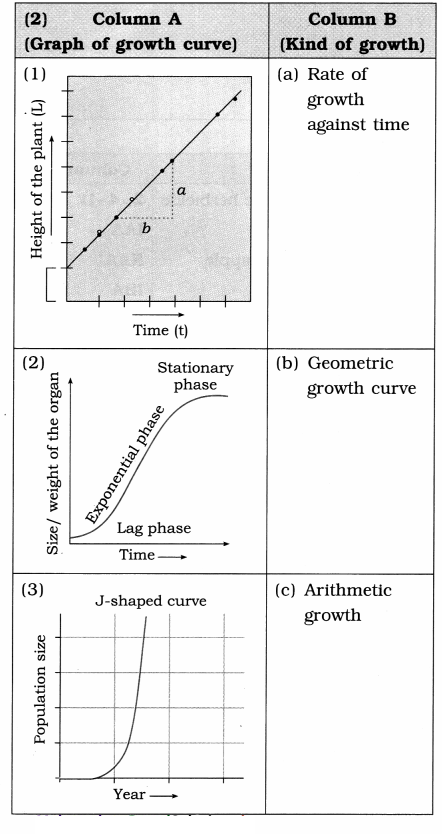
| Column A (Disorder) | Column B (Associated Gland) |
| (1) Addison’s disease | (A) Hypothalamus |
| (2) Grave’s disease | (B) Pituitary |
| (3) Diabetes insipidus | (C) Thyroid |
| (4) Acromegaly | (D) Adrenal |
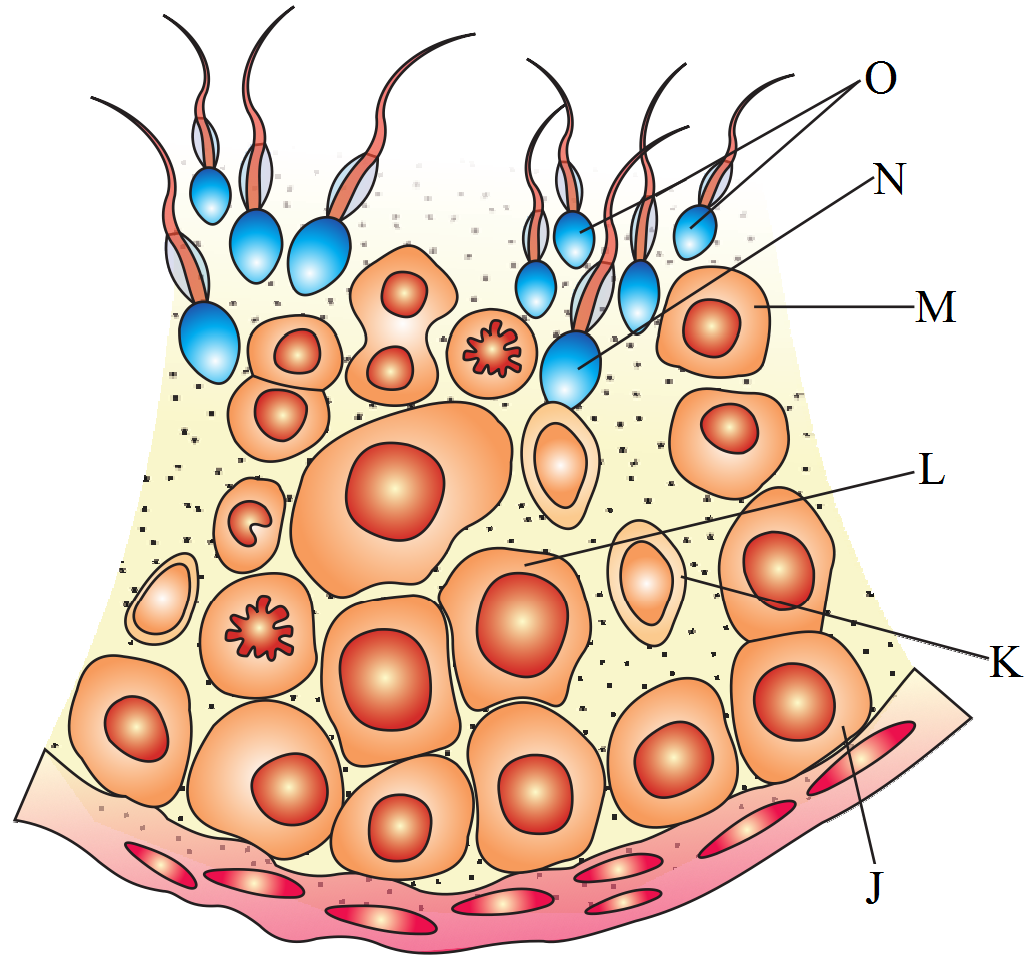
| Column A | Column B |
| (1) Neurons | (a) Earthworm |
| (2) Ladder type | (b) Hydra |
| (3) Ganglion | (c) Flatworm |
| (4) Nerve net | (d) Human |
|
Amino acid
|
mRNA triplet
|
|
Phenylalanine
|
UUU
|
|
Lysine
|
AAG
|
|
Arginine
|
CGA
|
|
Alanine
|
GCA
|
|
Synthetic mRNA used
|
Polypeptide produced
|
|
UUUAAAUUUAAA
|
Phenylalanine-Iysine-phenylalanine-Iysine
|
|
S.no
|
Phenylalanine
|
Lysine
|
|
(a)
|
AAA
|
TTT
|
|
(b)
|
AAA
|
UUU
|
|
(c)
|
GGG
|
CCC
|
|
(d)
|
TTT
|
GGG
|