Human immune system is made up of the following structures :
(1) Lymphoid organs
(2) Cells
(3) Tissues
(4) Soluble molecules like antibodies
The immune system recognizes, responds to, and remembers foreign antigens. The immune system plays an important role in allergic reactions, auto-immune diseases and organ transplantation.
Lymphoid Organs : These are the organs in which the generation or maturation and proliferation of lymphocytes takes place. There are two types of lymphoid organs :
(i) Primary Lymphoid Organs : Organs in which immature lymphocytes differentiate into antigen sensitive lymphocytes are called primary lymphoid organs.
Example : Bone marrow and thymus.
 (ii) Secondary Lymphoid Organs :
 After maturation, lymphocytes move to secondary lymphoid organs. Where lymphocytes interact with antigen, which then proliferate in large numbers and become effector cells.
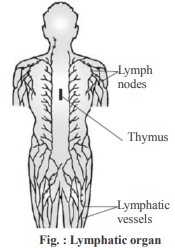
Example : Spleen, lymph nodes, tonsils, paired screw of small intestine and appendix. See the picture for the location of lymphoid organs in the human body.
Bonemarrow is a major lymphoid organ in which lymphocytes and all blood cells are produced.
Thymus is a lobed organ located below the sternum near the heart. The thymus is quite large at birth but as age increases, its size decreases and by puberty it remains very small. Both bone marrow and thymus provide microenvironment for the growth and maturation of Tlymphocytes.
The shape of the spleen is like a bean seed and is large in size. Mainly lymphocytes and phagocytes are found in it. It acts as a blood filter by trapping the micro-organisms produced in the blood. The spleen is a storehouse of red blood cells (RBCs). Lymph nodes are located at different places on the lymphatic system. These lymph nodes are small and solid in size. Lymph glands trap microorganisms or other antigens that enter lymph and tissue fluid. Antigens trapped in lymph nodes are responsible for the activation of lymphocytes present there and the immune response.
Mucosal Associated Lymphoid Tissue : Lymphoid tissue is located within the linings of major pathways such as the respiratory, digestive and genitourinary tracts.
It constitutes approximately fifty percent of the lymphoid tissue of the human body