Question
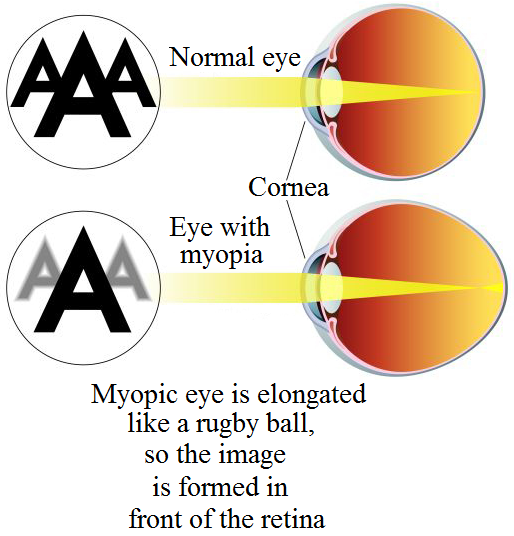
Draw a diagram to show why distant objects cannot be seen distinctly by a myopic eye. List two reasons due to which this defect of vision may be caused. A person with a myopic eye
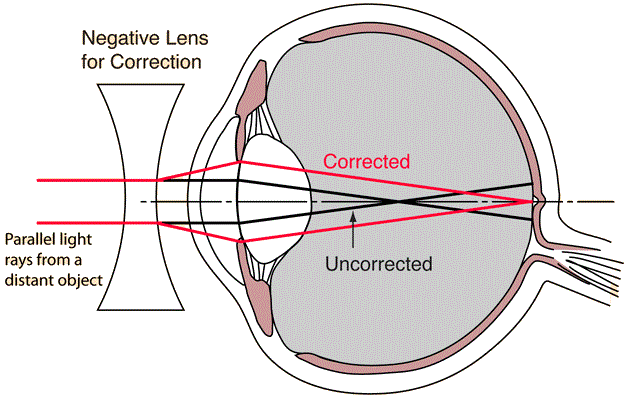
cannot see objects clearly beyond a distance of 2 m. Name the type of corrective lens that would be needed to correct the defect of vision and draw a ray diagram to show how the defect
gets corrected.
Answer

In order to see objects by the eye the image of the object should form on the retina, exactly on the retina. When a person is suffering from Myopia or near sightedness, the near point
of distinct vision gets Increases and an object placed at a distance less than this new near point has its image formed in front of retina.

If a person can’t see the object clearly beyond 2m then he should use concave or diverging lens in order to correct his defect.

Need a full question paper?

Generate a complete, print-ready paper with questions like this in minutes — across 16+ boards, with answer keys.

Start Generating Free

Similar questions

The organisms A, B and C can obtain their food in three different ways. Organism A derives its food from the body of another living organism which is called its D, without killing it. The organism B takes in the solid food by the process of ingestion, digests a part of this food and throws out undigested food in the process called E. The organism C obtains its food from dead and decaying plants.
  1. What is the mode of nutrition of (i) organism A (ii) organism B, and (iii) organism C?
  2. What is the organism like D called?
  3. Name the process E.
  4. Give one example each of organisms like A, B and C.
  5. What is the general name of three modes of nutrition exhibited by organisms A, B and C?
What is ten per cent law? Explain with an example.
Image
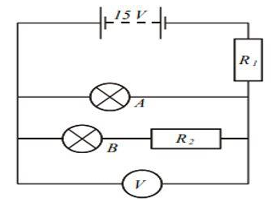
As shown in the figure above $A$ and $B$ are two lamps. Lamp $A$ is rated at $12\  V, 24\ W.$ Lamp $B$ is rated at $6.0 \ V.$ When lamp $B$ operates at its rated voltage, the current in it is $3.0 \ A$. The values of $R_1$ and $R_2$ are chosen so that both lamps operate at their rated voltages.
Based on the information given, answer the following.
$(i)$ Calculate the current in Lamp $A$.
$(ii)$ State and give reason for the reading of the Voltmeter.
$(iii)$ Calculate the resistance of $R_2$.
$(iv)$ Find the value of the resistance $R_1$.
Does geographical isolation of individuals of a species lead to formation of a new species? Provide a suitable explanation.
A metal X forms a salt $XSO _4$. The salt $XSO _4$ forms a clear solution in water which reacts with sodium hydroxide solution to form a blue precipitate Y .
Metal X is used in making electric wire and alloys like brass.
a. What do you think metal $X$ could be?
b. Write the name, formula and colour of salt $XSO _4$.
c. What is the blue precipitate Y ?
d. Write a chemical equation of the reaction which takes place when salt $XSO _4$ reacts with sodium hydroxide solution. Give the state symbols of all the reactants and products which occur in the above equation.
In the following crosses write the characteristics of the progeny.
 
Cross
Progeny
a.
RRYY × RRYY
Round, yellow Round, yellow
..............
b.
RrYy × RrYy
Round, yellow Round, yellow
..............
c.
rryy × rryy
wrinkled, green wrinkled, green
..............
d.
RRYY × rryy
Round, yellow wrinkled green
..............
Describe some experiment to show that the magnetic field is associated with an electric current.
$i.$ One half of a convex lens of focal length $10 \ cm$ is covered with a black paper. Can such a lens produce an image
of a complete object placed at a distance of $30 \ cm$ from the lens? Draw a ray diagram to justify your answer.
$ii.$ A $4 \ cm$ tall object is placed perpendicular to principal axis of a convex lens of focal length $20 \ cm.$ The distance of
the object from the lens is $15 \ cm.$ Find the nature, position and the size of the image.
A camera fitted with a lens of focal length 50mm is being used to photograph a flower that is 5cm in diameter. The flower is placed 20cm in front of the camera lens.
  1. At what distance from the film should the lens be adjusted to obtain a sharp image of the flower?
  2. What would be the diameter of the image of the flower on the film?
  3. What is the nature of camera lens?
The gland A is attached to the wind pipe in the human body. The gland A makes and secretes a hormone B which controls the metabolism of carbohydrates, fats and proteins in the body. The non-metal element C is necessary for the formation of hormone B. The deficiency of C in the diet can cause a deficiency of hormone B in the body leading to a disease D in which the neck of a person appears to be swollen. People are advised to use salt E in cooking food so as to avoid disease D.
  1. Name (i) gland A, and (ii) hormone B.
  2. What is the element C?
  3. Name one type of food which can provide sufficient C in the diet of a person.
  4. Name (i) disease D, and (ii) salt E.