Question
Explain the general methods of preparation of amines.

Answer

SELF

Need a full question paper?

Generate a complete, print-ready paper with questions like this in minutes — across 16+ boards, with answer keys.

Start Generating Free

Similar questions

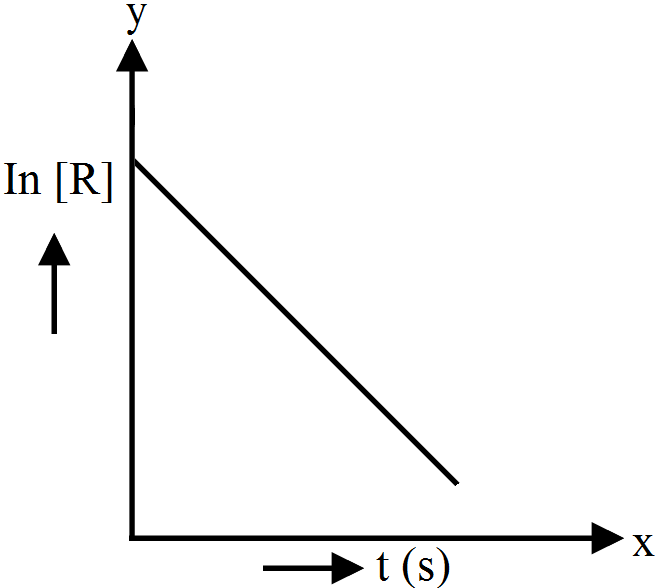
For a certain chemical reaction variation in the concentration ln [R] vs. time plot is given alongside.

For this reaction:

  1. What is the order of the reaction?
  2. What are the units of rate constant k?
  3. Give the relationship between k and t1/2 (half-life period).
  4. What is the slope of the curve?
  5. Draw the plot log [R]0 /[R] vs time t(s).

 Match the complex species given in Column I with the possible isomerism given in Column II and assign the correct code:

 
Column I (Complex species)
 
Column II (Isomerism)
a.
[Co(NH3)4Cl2]+
1.
Optical
b.
cis-[Co(en)2Cl2]+
2.
Ionisation
c.
[Co(NH3)5 (NO2)]Cl2
3.
Coordination
d.
[Co(NH3)6][Cr(CN)6]
4.
Geometrical
 
 
5.
Linkage

Code:

  1. A (1), B (2), C (4), D (5).
  2. A (4), B (3), C (2), D (1).
  3. A (4), B (1), C (5), D (3).
  4. A (4), B (1), C (2), D (3).
(a) What is reverse osmosis? How is water purified through it? Explain.
(b) Write the applications of osmosis.
  1. Give reasons for the following:
  1. Mn3+ is a good oxidizing agent.
  2. Eo m2+/M values are not regular for first row transition metals. (3d series)
  3. Although ‘F’ is more electronegative then ‘O’, the highest Mn fluoride is Mnf4, whereas the highest oxide is Mn2O7.
  1. Complete the following equations:

$\text{2CrO}_{4}^{2}+\text{2H}^{+}\rightarrow$

$\text{KMnO}_{4}\xrightarrow{heat}$

Match the laws given in Column I with expresions given in Column II.
  Column I
  Column II
i. Raoult’s law
a. $\Delta\text{T}_\text{f}=\text{K}_\text{f}\text{m}$
ii. Henry’s law
b. $\pi=\text{CRT}$
iii. Elevation of boiling point
c. $\text{p}=\text{x}_1\text{p}^0_1+\text{x}_2\text{p}^0_2$
iv. Depression in freezing point
d. $\Delta\text{T}_\text{b}=\text{K}_\text{b}\text{m}$
v. Osmotic pressure
e. $\text{p}=\text{K}_\text{H}\cdot\text{x}$
Match the items of Column I and Column II.
 
Column I
 
Column II
i.
Lechlanche cell
a.
Cell reaction 2H2 + O2 ⎯→ 2H2O
ii.
Ni–Cd cell
b.
Does not involve any ion in solution and is used in hearing aids.
iii.
Fuel cell
c.
Rechargeable.
iv.
Mercury cell
d.
Reaction at anode, Zn ⎯→ Zn2+ + 2e-
 
 
e.
Converts energy of combustion into electrical energy.
Write the chemical reactions of $C _2 H _5 OH$ with following compounds :
(i) $CH _2 N_2$ (diazomethane) (ii) ketone, (iii) $HC \equiv$ $C H$ (iv) $C H _3 N C O$ (Methyl-isocyanate) (v) $C H _3 C H O$ (ethanol) (vi) conc. $H _2 SO _4$ at $0^{\circ} C$.
Describe the mechanism of replication of DNA.
  1. 30 g of urea (M = 60 g mol-1) is dissolved in 846 g of water. Calculate the vapour pressure of water for this solution if vapour pressure of pure water at 298 K is 23.8 mm Hg.
  2. Write two differences between ideal solutions and non-ideal solutions.
Explain the open chain structure of glucose.