Question
Explain the various methods of determining the order of a reaction.

Answer

self

Need a full question paper?

Generate a complete, print-ready paper with questions like this in minutes — across 16+ boards, with answer keys.

Start Generating Free

Similar questions

  1. How are lipids classified? Give an example of each class.
  2. Explain the following terms:
  1. Mutarotation.
  2. Avitaminosis.
Give the electronic configuration of the following complexes on the basis of Crystal Field Splitting theory. $[CoF_6]^{3-}, [Fe(CN)_6]^{4-}$ and $[Cu(NH_3)_6]^{2+}​​​​​​​$​​​​​​​
Explain oxidation and reduction reactions of carbonyl compounds.
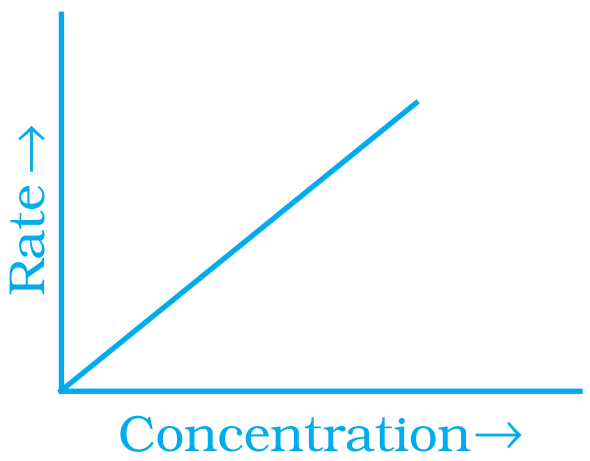
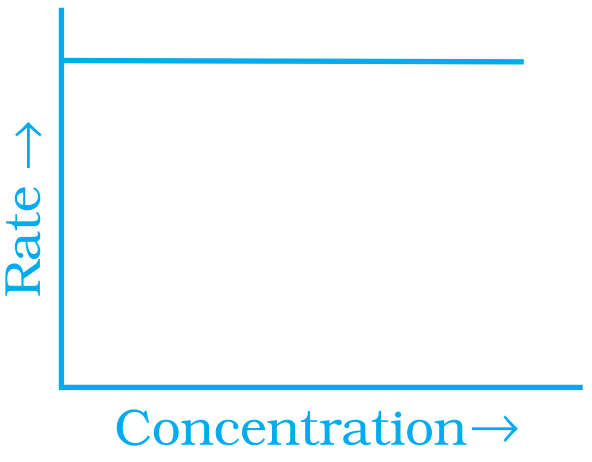
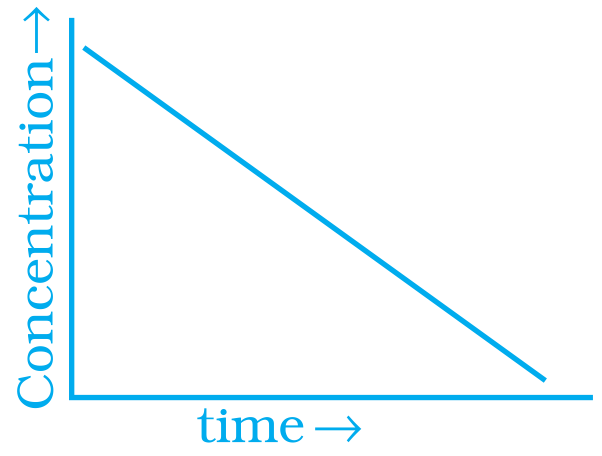
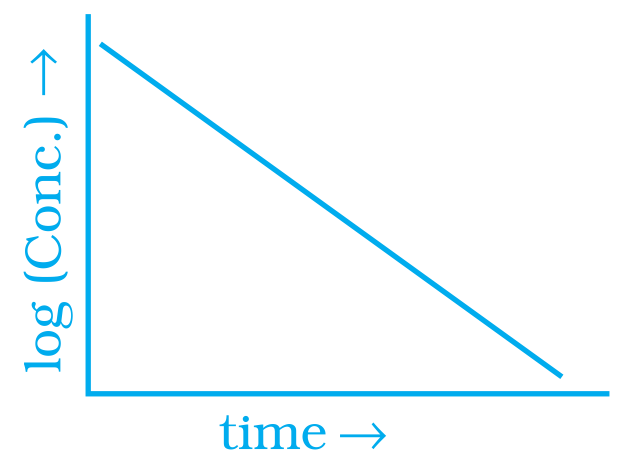
Match the graph given in Column I with the order of reaction given in Column II. More than one item in Column I may link to the same item of Column II.
 
Column I
 
Column II
(i)
 
 
(ii)
(a)
$I^{st}$ order
(iii)
(b)
Zero order
(iv)
   
After watching a programme on TV about the presence of carcinogens (cancer causing agents) Potassium bromate and Potassium iodate in bread and other bakery products, Veena, a class XII student, decided to make others aware about the adverse effects of these carcinogens in foods. She consulted the school principal and requested him to instruct the canteen contractor to stop selling sandwiches, pizzas, burgers and other bakery products to the students. The principal took an immediate action and instructed the canteen contractor to replace the bakery products with some proteins and vitamins-rich food like fruits, salads, sprouts, etc. The decision was welcomed by the parents and students.
After reading the above passage, answer the following questions:
  1. What are the values (at least two) displayed by Veena?
  2. Which polysaccharide component of carbohydrates is commonly present in bread?
  3. Write the two types of secondary structures of proteins.
  4. Give two examples of water soluble vitamins.
Indicate the types of isomerism exhibited by the following complexes and draw the structures for these isomers$:$
$i. k \left[ Cr \left( H _2 O \right)_2\left( C _2 O _4\right)_2\right]$
$ii. \left[ Co ( en )_3\right] Cl _3$
$iii. \left[ Co \left( NH _3\right)_5\left( NO _2\right)\left( NO _3\right)_2\right]$
$iv. \left[ Pt \left( NH _3\left( H _2 O \right) Cl _2\right.\right.$
Explain the IUPAC method of nomenclature coordination compounds with examples.
(i). Write the structures of main products when benzene diazonium chloride $\left( C _6 H _5 N_2^{+} Cl ^{-}\right)$ reacts with the following reagents.
a. $HBF _4 / \Delta$
b. $Cu / HBr$
(ii). Write the structures of A, B and C in the following reactions:
a. $C _6 H _5 NO _2 \xrightarrow{ Sn / HCl } A \xrightarrow[\Delta]{ NaNO _2+ HCl } B \xrightarrow{273 K} H$
b. $CH _3 Cl \xrightarrow{ KCN } A \xrightarrow{ LiAlH _4} B \xrightarrow[273 K]{\stackrel{273 K}{ HNO }{ }_2} C$
  1. When $2.56\ g$ of sulphur was dissolved in $100\ g$ of $CS_2$, the freezing point lowered by $0.383\ K$. Calculate the formula of sulphur $(S_x)$.
$(K_f$ for $CS_2 = 3.83 K\ kg\ mol^{–1}$, Atomic mass of Sulphur $= 32\ g\ mol^{–1}]$
  1. Blood cells are isotonic with $0.9 \%$ sodium chloride solution. What happens if we place blood cells in a solution containing.
  1. $1.2 \%$ sodium chloride solution?
  2. $0.4 \%$ sodium chloride solution?
Match the compounds given in Column I with the hybridisation and shape given in Column II and mark the correct option.
  Column I   Column II
(A) $XeF_6$ (1) $sp^3d^3$– distorted octahedral
(B) $XeO_3$ (2) $sp^3d^2$ - square planar
(C) $XeOF_4$ (3) $sp^3$- pyramidal
(D) $XeF_4$ (4) $sp^3d^2$ - square pyramidal
  1. A (1) B (3) C (4) D (2)
  2. A (1) B (2) C (4) D (3)
  3. A (4) B (3) C (1) D (2)
  4. A (4) B (1) C (2) D (3)