MCQ
For harder $X-$rays:
  • A
    The wavelength is higher.
  • B
    The photon energy is higher.
  • C
    The frequency is higher.
  • $B$ and $C$

Answer

Correct option: D.
$B$ and $C$
Harder $X-$rays are the $X-$rays having low wavelengths. Since the frequency varies inversely with the wavelength, hard $X-$rays have high frequency.
Energy of a photon $(E)$ is given by
$\text{E}=\frac{\text{hc}}{\lambda}$
Here,
$h =$ Planck's constant
$c =$ Speed of light
$\lambda =$ Wavelength of light.
Clearly, energy varies inversely with wavelength.
Therefore, the energy of the photon will be higher for the hard $X-$ray.

Need a full question paper?

Generate a complete, print-ready paper with questions like this in minutes — across 16+ boards, with answer keys.
Start Generating Free

Similar questions

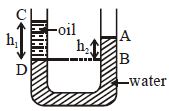
In a $U-$ tube experiment, a column $AB$ of water is balanced by a column $‘CD’$ of oil, as shown in the figure. Then the relative density of oil is
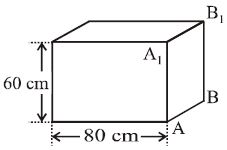
Calculate the minimum amount of work necessary to over-turn a crate of weight $100 \ kg$, first about edge $AB$, then about edge $A_1B_1$. The dimensions of the crate are given in the figure ............... $\mathrm{J}$
A deep rectangular pond of surface area $A,$ containing water (denstity $=\rho,$ specific heat capactly $=s$ ), is located In a region where the outside air temperature is at a steady value of $-26^{\circ} {C}$. The thickness of the frozen ice layer In this pond, at a certaln Instant Is $x$.

Taking the thermal conductivity of Ice as ${K}$, and its specific latent heat of fusion as $L$, the rate of Increase of the thickness of ice layer, at this instant would be given by 

The relation between phase difference  $ (\Delta \phi) $ and path difference $ (\Delta x) $ is
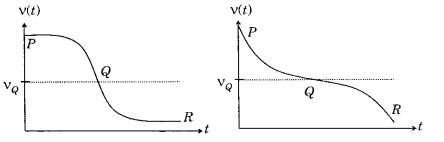
Two loudspeakers $M$ and $N$ are located $20 \mathrm{~m}$ apart and emit sound at frequencies $118 \mathrm{~Hz}$ and $121 \mathrm{~Hz}$, respectively. $A$ car is initially at a point $P, 1800 \mathrm{~m}$ away from the midpoint $Q$ of the line $M N$ and moves towards $Q$ constantly at $60 \mathrm{~km} / \mathrm{hr}$ along the perpendicular bisector of $M N$. It crosses $Q$ and eventually reaches a point $R, 1800(m$ away from $Q$. Let $v(t)$ represent the beat frequency measured by a person sitting in tlie car at time $t$. Let $v_P, v_Q$ and $v_R$ be the beat frequencies measured at locations $P . Q$ and $R$, respectively. The speed of sound in air is $330 \mathrm{~m} \mathrm{~s}^{-1}$. Which of the following statement($s$) is(are) true regarding the sound heard by the person?

($A$) $v_P+v_R=2 v_Q$

($B$) The rate of change in beat frequency is maximum when the car passes through $Q$

($C$) The plot below represents schematically the variation of beat frequency with time

(image)

($D$) The plot below represents schematically the variation of beat frequency with time

(image)
A simple pendulum hanging from the ceiling of a stationary lift has a time period $T_1$. When the lift moves downward with constant velocity, the time period is $T_2$, then
A simple pendulum with iron bob has a time period $T$. The bob is now immersed in a non-viscous liquid and oscillated. If the density of liquid is $\frac{1}{12}$ th that of iron, then new time period will be
Remote sensing satellites move in an orbit that is at an average height of about $500 \,km$ from the surface of the earth. The camera onboard one such satellite has a screen of area $A$ on which the images captured by it are formed. If the focal length of the camera lens is $50 \,cm$, then the terrestrial area that can be observed from the satellite is close to ............... $A$
The magnetic field at the origin due to a current element $\text{i}\text{d}\ \vec{\text{l}}$ placed at a position $\overrightarrow{\text{r}}$ is:
  1. $\frac{\mu_0\text{i}}{4\pi}\frac{\text{d}\overrightarrow{\text{l}}\times\overrightarrow{\text{r}}}{\text{r}^3}$
  2. $-\frac{\mu_0\text{i}}{4\pi}\frac{\overrightarrow{\text{r}}\times​​\text{d}\overrightarrow{\text{l}}}{\text{r}^3}$
  3. $\frac{\mu_0\text{i}}{4\pi}\frac{\overrightarrow{\text{r}}\times​​\text{d}\overrightarrow{\text{l}}}{\text{r}^3}$
  4. $-\frac{\mu_0\text{i}}{4\pi}\frac{\text{d}\overrightarrow{\text{l}}\times\overrightarrow{\text{r}}}{\text{r}^3}$
Choose the correct option: