Question
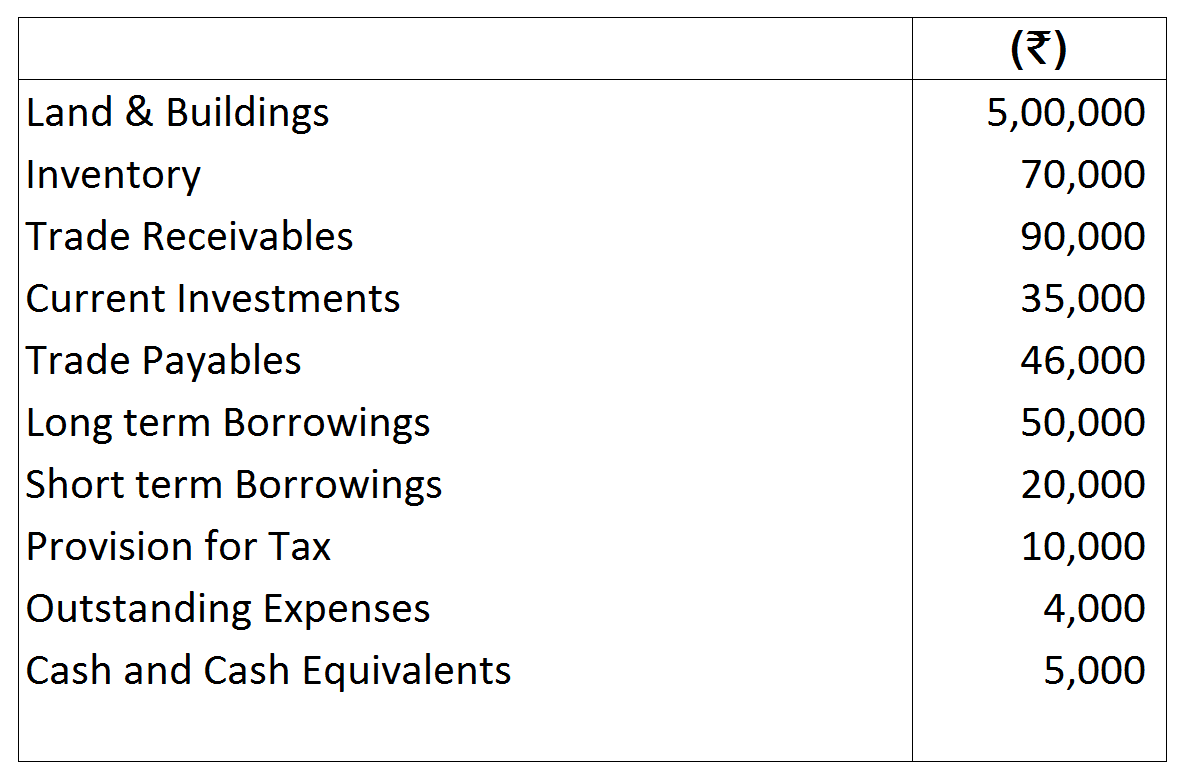
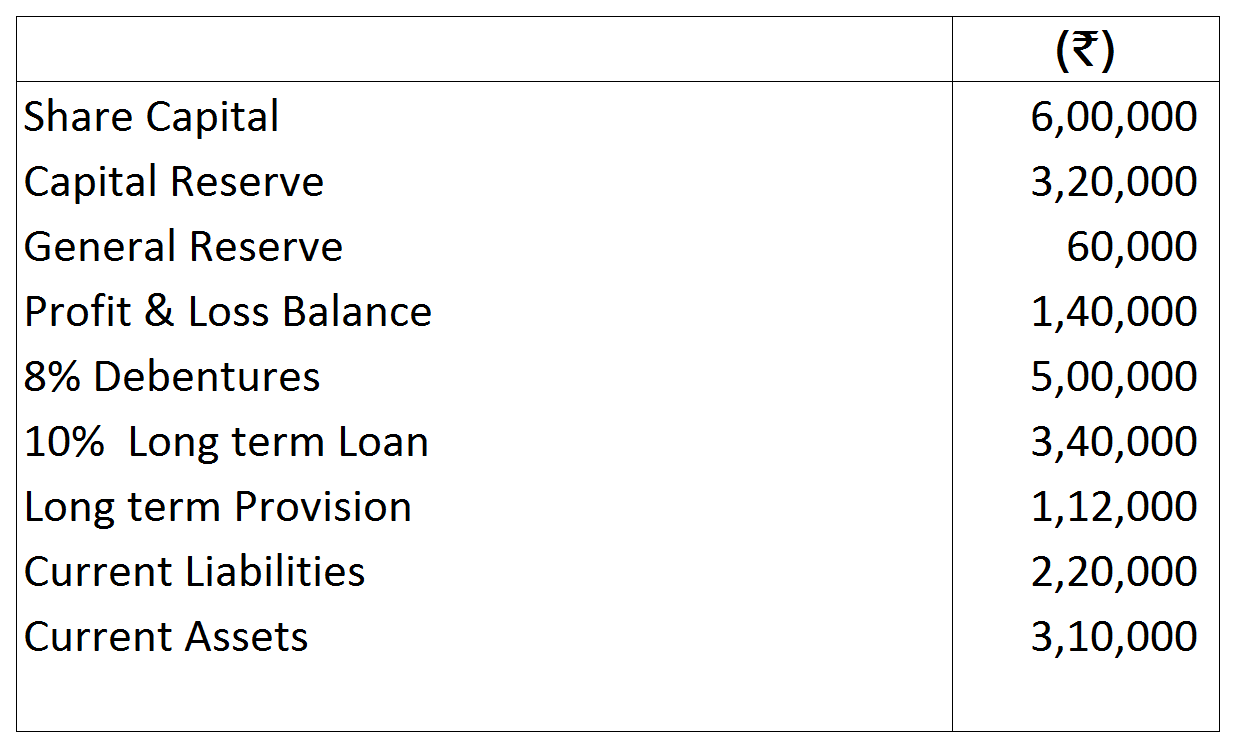
From the following ascertain Debt - Equity Ratio:

Answer

Debt - Equity Ratio $=\frac{\text{Debt}}{\text{Equity}}\text{ or }\frac{\text{Long term Debts}}{\text{Shareholder's Funds}}$
Long term Debts = 8% Debentures + 10% Long term Loan + Long term Provision.
= ₹ 5,00,000 + ₹ 3,40,000 = ₹ 1,12,000
= ₹ 9,52,000
Shareholder's Funds = Share Capital + Capital Reserve + General Reserve + Profit & Loss Balance.
= ₹ 6,00,000 + ₹ 3,20,000 + ₹ 60,000 + ₹ 1,40,000
= ₹ 11,20,000
Debt Equity Ratio $=\frac{₹\ 9,52,000}{₹\ 11,20,000}=0.85:1.$

Need a full question paper?

Generate a complete, print-ready paper with questions like this in minutes — across 16+ boards, with answer keys.

Start Generating Free

Similar questions

From the following particulars compute the Current Ratio:
Following is the position of Current Assets and Current Liabilities of Z Ltd.

The Company incurred a loss of ₹ 30,000 during the year. Calculate Cash from operating activities.
‘Tractors India Ltd.’ is registered with an authorized capital of ₹ 10,00,000 divided into 1,00,000 equity shares of ₹ 10 each. The company issued 50,000 equity shares at a premium of ₹ 5 per share. ₹ 2 per share were payable with application, ₹ 8 per share including premium on allotment and the balance amount on first and final call. The issue was fully subscribed and all the amount due was received except the first and final call money on 500 shares allotted to Balram.
Present the ‘Share Capital’ in the Balance Sheet of ‘Tractors India Ltd.’ as per Schedule III Part I of the Companies Act, 2013. Also prepare Notes to Accounts for the same.
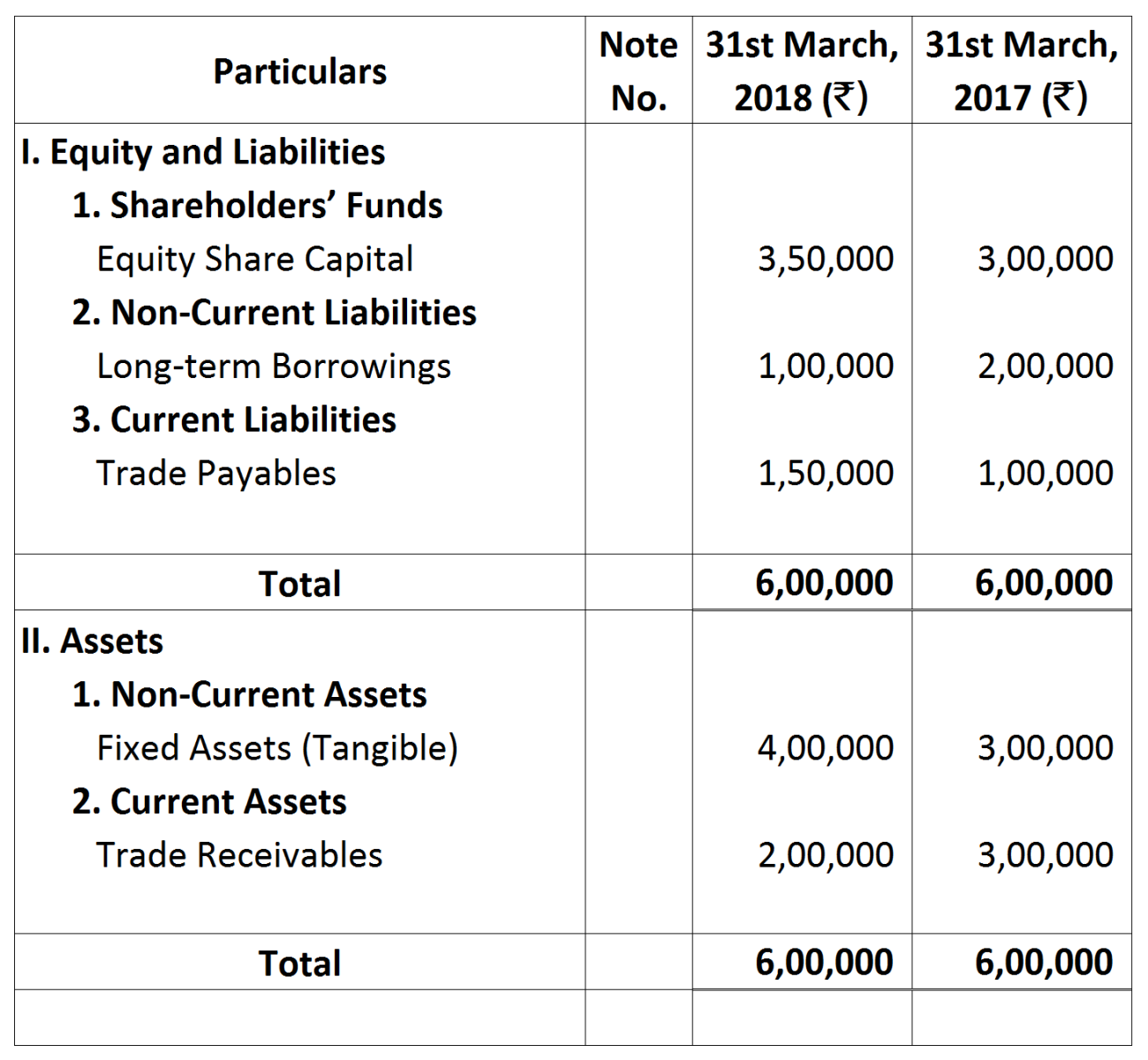
From the following balance sheet, prepare the comparative balance sheet of D Ltd.
From the following information, calculate Change in inventory of work-in-Progress:
Opening and Closing Work-in-Progress ₹ 1,50,000 and ₹ 1,45,000 respectively.
From the following informations, calculate Return on Investment (or Return on Capital Employed):
Particulars
Share Capital.
Reserves and Surplus.
Net Fixed Assets.
Non-current Trade Investments.
Current Assets.
10% Long-term Borrowings.
Current Liabilities.
Long-term Provisions.
5,00,000
2,50,000
22,50,000
2,50,000
11,00,000
20,00,000
8,50,000
NIL
Net Profit before Tax: ₹ 6,00,000.
Under what heads and sub-heads will the following items appear in the Balance Sheet of a company as per Revised Schedule VI Part I of the Companies Act 1956:
  1. Debentures;
  2. Loose tools;
  3. Calls-in-advance.
Credit Revenue from Operations ₹ 5,60,000; Trade Receivables Turnover Ratio 7 times; Closing Trade Receivables were three times than that in the beginning. Calculate Opening and Closing Trade Receivables.
R Ltd. purchased the assets of S Ltd. for ₹ 5,00,000. It also agreed to take over the liabilities of S Ltd. amounted to ₹ 2,00,000 for a purchase consideration of ₹ 2,80,000. The payment of S Ltd. was made by issue of 9% Debentures of ₹ 100 each at par.
Pass necessary journal entries in the books of R Ltd.
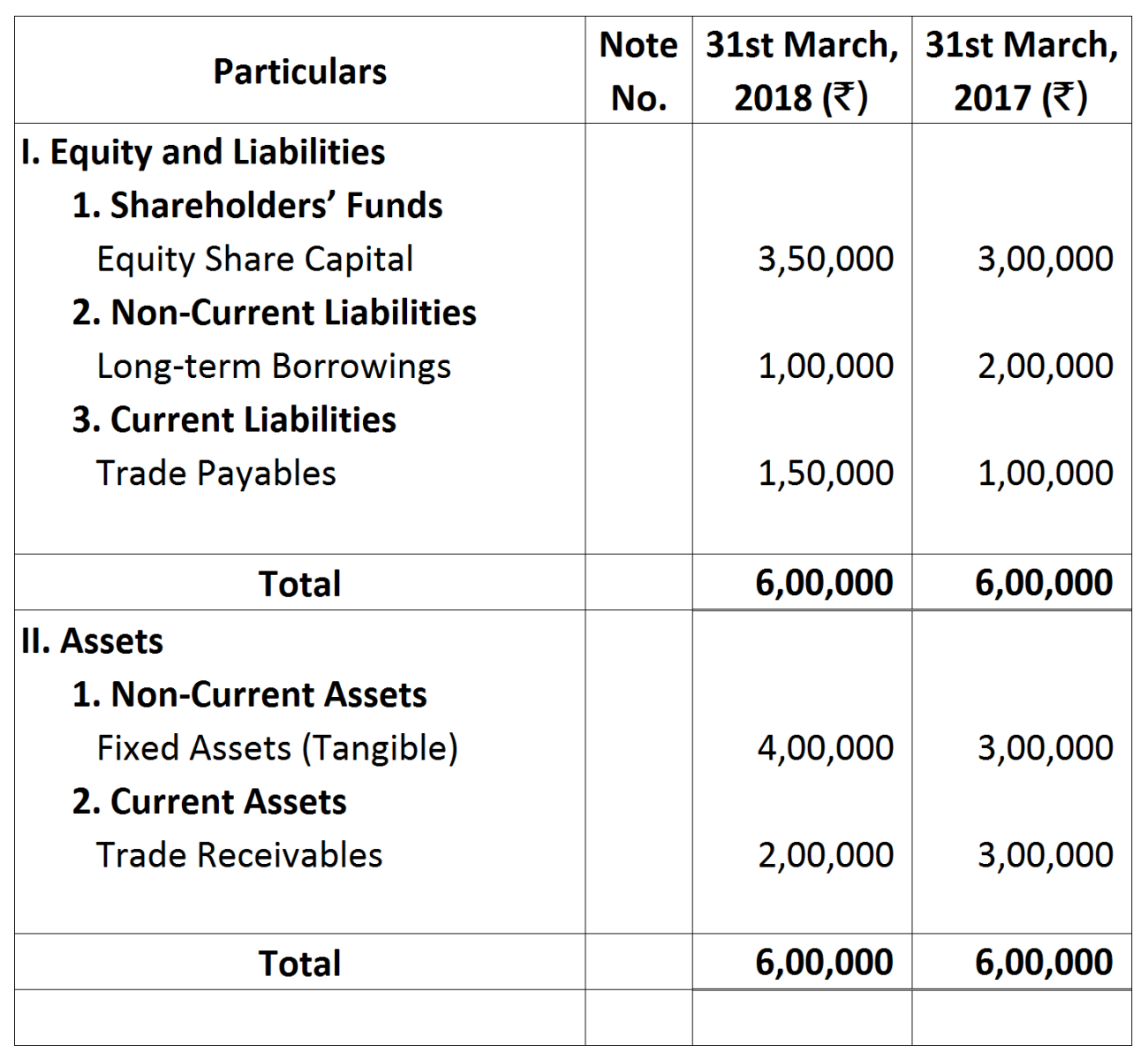
From the following balance sheet, prepare the comparative balance sheet of D Ltd.