Question
Gravitational force has only on sign but coulomb force has:

Answer

  1. Both a and b.

Need a full question paper?

Generate a complete, print-ready paper with questions like this in minutes — across 16+ boards, with answer keys.
Start Generating Free

Similar questions

Phase difference between voltage across the ends of an inductor coil and capacitor in radians is:
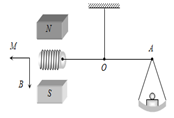
A small coil $C$ with $N = 200$ turns is mounted on one end of a balance beam and introduced between the poles of an electromagnet as shown in figure. The cross sectional area of coil is $A= 1.0 \ cm^2,$ length of arm $OA$ of the balance beam is $l = 30 \ cm$. When there is no current in the coil the balance is in equilibrium. On passing a current $I = 22\ mA$ through the coil the equilibrium is restored by putting the additional counter weight of mass $\triangle m = 60\ mg$ on the balance pan. Find the magnetic induction at the spot where coil is located.
The force between two charges 0.06 m apart is 5 N. If each charge is moved towards the other by 0.01 m, then the force between them will become(a) 7.20 N(b) 11.25 N(c) 22.50 N(d) 45.00 N
       
Polar molecules has:
The resistance of a discharge tube is(a) Ohmic(b) Non-ohmic(c) Both (a) and (b)(d) Zero
       
Which of the following about potential difference between any two points is true?
  1. It depends only on the initial and final position.
  2. It is the work done per unit positive charge in moving from one point to other.
  3. It is more for a positive charge of two units as compared to a positive charge of one unit.
In ${ }_0^1 n \rightarrow{ }_1^1 H +{ }_{-1}^0 \beta$ symbol ${ }_1^1 H$ represents :
A point source of light is placed in front of a plane mirror:
  1. All the reflected rays meet at a point when produced backward.
  2. Only the reflected rays close to the normal meet at a point when produced backward.
  3. Only the reflected rays making a small angle with the mirror, meet at a point when produced backward.
  4. Light of different colours make different images.
An electric dipole placed in a non-uniform electric field can experience
Ampere’s circuital law states that: