Question
Identify the paramagnetic substance
|
(a) Iron |
(b) Aluminium |
(c) Nickel |
(d) Hydrogen |
Identify the paramagnetic substance
|
(a) Iron |
(b) Aluminium |
(c) Nickel |
(d) Hydrogen |
(b) Aluminium
Generate a complete, print-ready paper with questions like this in minutes — across 16+ boards, with answer keys.
The equivalent resistance between the points P and Q in the network given here is equal to (given r =  )
)

|
(a) |
(b) 1 W |
(c) |
(d) 2 W |
In an L–R circuit connected to a battery the rate at which energy is stored in the inductor is plotted against time during the growth of the current in the circuit. Which of the following best represents the resulting curve
|
(a)
|
(b)
|
(c)
|
(d)
|
In a transistor in CE configuration, the ratio of power gain to voltage gain is
|
(a) a |
(b) b / a |
(c) ba |
(d) b |
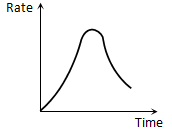
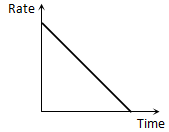
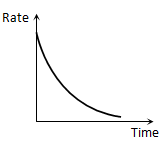
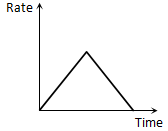
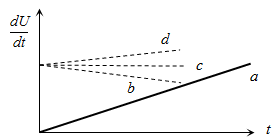
A constant current i is passed through a resistor. Taking the temperature coefficient of resistance into account, indicate which of the plots shown in figure best represents the rate of production of thermal energy in the resistor
|
(a) a |
(b) b |
(c) c |
(d) d |
Half life of radioactive element depends upon
|
(a) Amount of element present |
(b) Temperature |
|
(c) Pressure |
(d) Nature of element |
The Rutherford a-particle experiment shows that most of the a-particles pass through almost unscattered while some are scattered through large angles. What information does it give about the structure of the atom
|
(a) Atom is hollow |
|
(b) The whole mass of the atom is concentrated in a small centre called nucleus |
|
(c) Nucleus is positively charged |
|
(d) All the above |