Question
In the Geiger-Marsden experiment, the force that scatters particles is:

Answer

  1. Coulomb force
Explanation:
Coulomb force is responsible for scattering of particles. When the alpha particles (positive in charge) get closer to the nucleus, which is positive in charge, they get repelled through various angles.

Need a full question paper?

Generate a complete, print-ready paper with questions like this in minutes — across 16+ boards, with answer keys.
Start Generating Free

Similar questions

Which of the following statement is false:
The refractive index of water and glass with respect to air is $1.3$ and $1.5$ respectively. Then the refractive index of glass with respect to water is
The condensers of capacity $C_1$ and $C_2$ are connected in parallel, then the equivalent capacitance is
The intensity of magnetic field is H and moment of magnet is M. The maximum potential energy is(a) MH(b) 2 MH(c) 3 MH (d) 4 MH
       
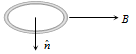
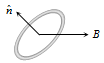
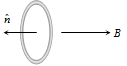
A current carrying loop is placed in a uniform magnetic field in four different orientations$\text{, I,II, III IV}$ arrange them in the decreasing order of potential Energy
$(a)$$(b)$  $(c)$  $(d)$
Identify the similarity between isotopes of the same element.
A metallic sheet is inserted between the plates of a parallel plate capacitor. The capacitance of the capacitor(a) Increases(b) Is independent of the position of the sheet(c) Is maximum when the metal sheet in the middle(d) a, b


A radioactive sample has $N_0$ active atoms at $t = 0.$ If the rate of disintegration at any time is $R$ and the number of atoms is $N,$ then the ratio $R/N$ varies with time as
Assertion :   The energy (E) and momentum (p) of a photon are related by p = E/c.
Reason     :  The photon behaves like a particle.(a) If both assertion and reason are true and the reason is the correct explanation of the assertion.(b) If both assertion and reason are true but reason is not the correct explanation of the assertion.(c) If assertion is true but reason is false.(d) If the assertion and reason both are false.


Equipotential surfaces of a single point charge are _____ surfaces centred at the charge.