MCQ
Kepler discovered
  • A
    Laws of motion
  • B
    Laws of rotational motion
  • Laws of planetory motion
  • D
    Laws of curvilinear motion

Answer

Correct option: C.
Laws of planetory motion
c
(c)

Need a full question paper?

Generate a complete, print-ready paper with questions like this in minutes — across 16+ boards, with answer keys.

Start Generating Free

Similar questions

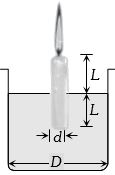
A candle of diameter $ d$ is floating on a liquid in a cylindrical container of diameter $D $  $(D>>d)$  as shown in figure. If it is burning at the rate of $2$ cm/hour then the top of the candle will
The position vector of a particle related to time $t$ is given by $\overrightarrow{ r }=\left(10 t \hat{ i }+15 t ^2 \hat{ j }+7 \hat{ k }\right) m$ The direction of net force experienced by the particle is
The magnitudes of the gravitational force at distances ${r_1}$ and ${r_2}$ from the centre of a uniform sphere of radius $R$ and mass $M$ are ${F_1}$ and ${F_2}$ respectively. Then
Four bodies $P, Q, R$ and $S$ are projected with equal velocities having angles of projection $15^o , 30^o , 45^o $  and $60^o $ with the horizontal respectively. The body having shortest range is
If we can throw a ball upto a maximum height $H$, the maximum horizontal distance to which we can throw it is
A particle starts from the origin at $\mathrm{t}=0$ with an initial velocity of $3.0 \hat{\mathrm{i}} \;\mathrm{m} / \mathrm{s}$ and moves in the $x-y$ plane with a constant acceleration $(6.0 \hat{\mathrm{i}}+4.0 \hat{\mathrm{j}}) \;\mathrm{m} / \mathrm{s}^{2} .$ The $\mathrm{x}$ -coordinate of the particle at the instant when its $y-$coordinate is $32\;\mathrm{m}$ is $D$ meters. The value of $D$ is
A body takes $4$ minutes to cool from ${100^o}C$ to ${70^o}C$. To cool from ${70^o}C$ to ${40^o}C$ it will take ........ $\min.$ (room temperature is ${15^o}C$)
The escape speed of a projectile on the earth's surface is $11.2\; km s ^{-1} .$ A body is projected out with thrice this speed. What is the speed (in $km/s$) of the body far away from the earth? Ignore the presence of the sun and other planets.
A carnot engine is made to work between $200\,^oC$ and $0\,^oC$ first and then between $0\,^oC$ and $-200\,^oC$. The ratio of efficiencies $\left( {\frac{{{\eta _2}}}{{{\eta _1}}}} \right)$ of the engine in two cases is
A steel rail of length $5\,m$ and area of cross-section $40\,cm^2$ is prevented from expanding along its length while the temperature rises by $10\,^oC$. If coefficient of linear expansion and Young's modulus of steel are $1.2\times10^{-5}\, K^{-1}$ and $2\times10^{11}\, Nm^{-2}$ respectively, the force developed in the rail is approximately