MCQ
'Mirage' is a phenomenon due to
  • A
    Reflection of light
  • B
    Refraction of light
  • Total internal reflection of light
  • D
    Diffraction of light

Answer

Correct option: C.
Total internal reflection of light
c
(c) Mirage is a phenomenon observed due to the total internal reflection of light when light travels from a denser medium to a rarer medium. When the angle of incidence of light is more than the critical angle for the two adjacent media, the light gets totally internally reflected.

Need a full question paper?

Generate a complete, print-ready paper with questions like this in minutes — across 16+ boards, with answer keys.

Start Generating Free

Similar questions

In extrinsic P and N-type, semiconductor materials, the ratio of the impurity atoms to the pure semiconductor atoms is about
A charged oil drop is suspended in a uniform field of $3 \times$ $10^{4} V / m$ so that it neither falls nor rises. The charge on the drop will be $.....\times 10^{-18}\; C$

(take the mass of the charge $=9.9 \times 10^{-15} kg$ and $g=10 m / s ^{2}$ )
 

The refractive index of flint glass for blue line is $1.6333$ and red line is $1.6161$, then dispersive power of the Prism is
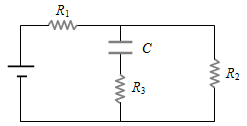
In the circuit here, the steady state voltage across capacitor C is a fraction of the battery e.m.f. The fraction is decided by
Between the plates of a parallel plate condenser, a plate of thickness $t_1$ and dielectric constant $k_1$ is placed. In the rest of the space, there is another plate of thickness $t_2$ and dielectric constant $t_2$. The potential difference across the condenser will be
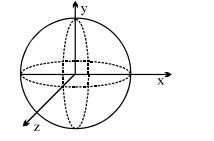
Three rings, each having equal radius $R,$ are placed mutually perpendicular to each other and each having its centre at the origin of co-ordinate system. If current $I$ is flowing thriugh each ring then the magnitude of the magnetic field at the common centre is
If lateral magnification is $-2$ for virtual object for a spherical mirror then 
In a cyclotron, the angular frequency of a charged particle is independent of
The frequency of the incident light falling on a photosensitive metal plate is doubled, the kinetic energy of the emitted photoelectrons is
In a wave, the path difference corresponding to a phase difference of $ \phi$  is