Question
Need a full question paper?
Generate a complete, print-ready paper with questions like this in minutes — across 16+ boards, with answer keys.
Explore more
Similar questions
→→→→
Read the passage given below and answer the following questions: If some solute is added to a solvent, the boiling point of solution increases. This is known as elevation in baiting point. $\Delta\text{T}_\text{b}=\text{K}_\text{b}\text{m}$ where, Kb = Molal elevation constant, $\Delta\text{T}_\text{b}\propto\text{m}$ Hence, it is a colligative property, Also, $\text{K}_\text{b}=\frac{\text{MRT}^2_\text{b}}{\Delta\text{Vap}\text{H}\times1000}$ where, M = Molar mass of solvent, $\Delta\text{vap}$ H = Enthalpy of vaporisation, Molar mass can also be calculated using elevation in boiling point. $\text{M}_\text{B}=\frac{\text{K}_\text{B}\times\text{W}_\text{B}\times1000}{\Delta\text{T}_\text{b}\times\text{W}_\text{A}}$ A statement of assertion followed by a statement of reason is given. Choose the correct answer out of the following choices.
→→- Assertion and reason both are correct statements and reason is correct explanation for assertion.
- Assertion and reason both are correct statements but reason is not correct explanation for assertion.
- Assertion is correct statement but reason is wrong statement.
- Assertion is wrong statement but reason is correct statement.
- Assertion: In a pressure cooker, the water is brought to boil. The cooker is then removed from the stove. Now on removing the lid of pressure cooker, the water starts boiling again.
Reason: The impurities in water bring down its boiling point.
- Assertion: On dissolving 3.24g of sulphur in 40g of benzene, boiling point of solution get higher than that of benzene by 0.081K, then the formula of sulphur is S8. (Kb for benzene = 2.53K kg mol-1)
Reason: Molecular mass of sulphur comes out to be 253.
- Assertion: When sugar is added to water, boiling point of water increases.
Reason: When a non-volatile solute is added to a solvent, elevation in boiling point is observed.
- Assertion: Cooking time in pressure cookers is reduced.
Reason: Boiling point inside the pressure cooker in raised.
- Assertion: Elevation in boiling point of two isotonic solutions is same.
Reason: Boiling point depends upon the concentration of the solute.
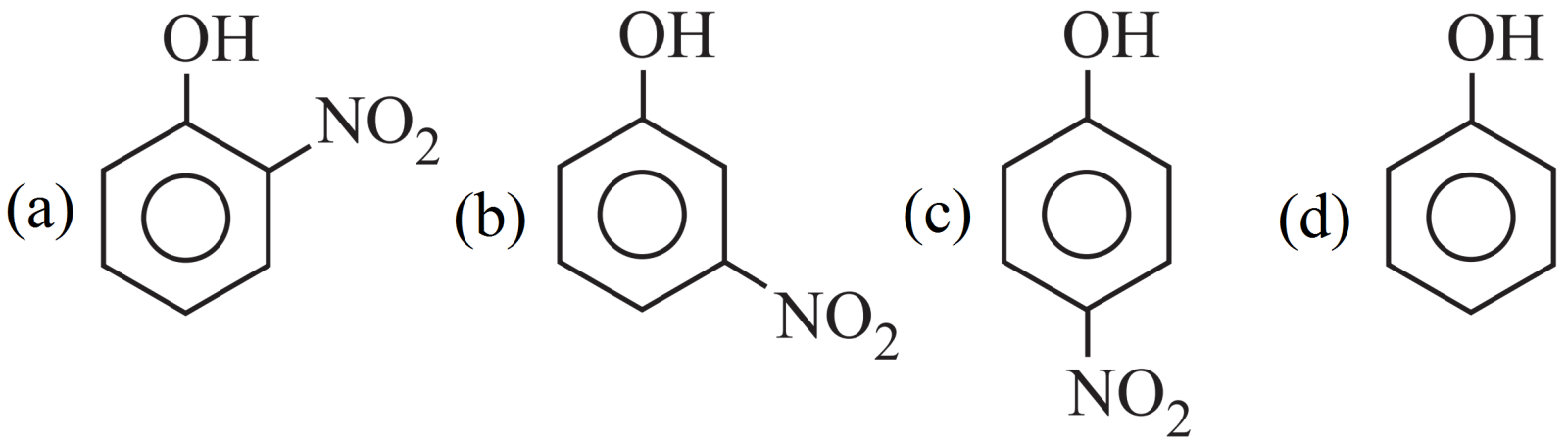
Read the passage given below and answer the following questions: Transition metal oxides are compounds fanned by the reaction of metals with oxygen at high temperature. The highest oxidation number in the oxides coincides with the group number. In vanadium, there is a gradual change from the basic V2O3 to less basic V2O4 and to amphoteric V2O5· V2O4 dissolves in acids to give VO2+ salts. Transition metal oxides are commonly utilized for their catalytic activity and semi conductive properties. Transition metal oxides are also frequently used as pigments in paints and plastic. Most notably titatnium dioxide. One of the earliest application of transition metal oxides to chemical industry involved the use of vanadium oxide for catalytic oxidation of sulfur dioxide to sulphuric acid. Since then, many other applications have emerged, which include benzene oxidation to maleic anhydride on vandium oxides; cyclohexane oxidation to adipic acid on cobalt oxides. An important property of the catalyst material used in these processes is the ability of transition metals to change their oxidation state under a given chemical potential of reductants and oxidants. The following questions are multiple choice questions. Choose the most appropriate answer:
→- Which oxide of vanadium is most likely to be basic and ionic?
- VO
- V2O3
- VO2
- V2O5
- Vanadyl ion is:
- $\text{VO}^{2+}$
- $\text{VO}^{+}_2$
- $\text{V}_{2}\text{O}^+$
- $\text{VO}^{3-}_4$
- Which of the following statements is false?
- With fluorine vanadium can form VF5.
- With chlorine vanadium can form VCl5.
- Vanadium exhibits highest oxidation state in oxohalides VOCl3, VOBr3 and fluoride VF5.
- With iodine vanadium cannot form Vl5 due to oxidising power of V5+ and reducing nature of I-.
- The oxidation state of vanadium in V2O5 is:
- $\frac{+5}{2}$
- +7
- +5
- +6
- Identify the oxidising agent in the following reaction.
V2O5 + 5Ca → 2V + 5CaO
- V2O5
- Ca
- V
- None of these.
Read the passage given below and answer the following questions:
The f-block elements are those in which the differentiating electron enters the (n -2)f orbital. There are two series of F-block elements corresponding to filling of 4f and 5f-orbitals. The series of 4f-orbitals is called lanthanides. Lanthanides show different oxidation states depending upon stability of f0, f7 and F14 configurations, though the most conunon oxidation states is +3. There is a regular decrease in size oflanthanides ions with increase in atomic number which is known as lanthanide contraction.
The following questions are multiple choice questions. Choose the most appropriate answer:
The f-block elements are those in which the differentiating electron enters the (n -2)f orbital. There are two series of F-block elements corresponding to filling of 4f and 5f-orbitals. The series of 4f-orbitals is called lanthanides. Lanthanides show different oxidation states depending upon stability of f0, f7 and F14 configurations, though the most conunon oxidation states is +3. There is a regular decrease in size oflanthanides ions with increase in atomic number which is known as lanthanide contraction.
The following questions are multiple choice questions. Choose the most appropriate answer:
- The atomic numbers of three lanthanide elements X, Y and Z are 65, 68 and 70 respectively, their Ln3+ electronic configuration is:
- 4f8, 4f11, 4f13
- 4f11, 4f8, 4f13
- 4f0, 4f2, 4f11
- 4f3, 4f7, 4f9
- Lanthanide contraction is observed in:
- Gd
- At
- Xe
- Te
- Which of the following is not the configuration oflanthanoid?
- [Xe]4f106s2
- [Xe]4f15d16s2
- [Xe]4d145d106s2
- [Xe]4f75d16s2
- Name a member of the lanthanoid series which is well known to exhibit +4 oxidation state.
- Cerium (Z = 58)
- Europium (Z = 63)
- Lanthanum (Z = 57)
- Gadolinium (Z = 64
- Identify the incorrect statement among the following.
- Lanthanoid contraction is the accumulation of successive shrinkages.
- The different radii of Zr and Hf due to consequence of the lanthanoid contraction.
- Shielding power of 4f electrons is quite weak.
- There is a decrease in the radii of the atoms or ions as one proceeds from La to Lu.
Read the passage given below and answer the following questions: Ligands are atoms or ions which can donate electrons to the central atoms. Ligands can be monodentate, bidentate or polydentate as well. Few ligands can coordinate with the central atom through more than one site, these are called ambidentate ligands. When a di- or polydentate ligand uses its two or more donor atoms to bind a single metal ion, it is said to be a chelating ligand. In these questions (Q. No. i-iv), a statement of assertion followed by a statement ofreason is given. Choose the correct answer out of the following choices.
- Assertion and reason both are correct statements and reason is correct explanation for assertion.
- Assertion and reason both are correct statements but reason is not correct explanation for assertion.
- Assertion is correct statement but reason is wrong statement.
- Assertion is wrong statement but reason is correct statement.
- Assertion: Glycinate ion is an example of monodentate ligand.
Reason: Glycinate contains N and O as donor atoms.
- Assertion: EDTA forms complex with divalent metals of 3d-series in the ratio of 1 : 1.
Reason: EDTA has 4 - COOH groups.
- Assertion: Oxalate ion is a bidentate ligan.
Reason: Oxalate ion has two donor atoms.
- Assertion: A chelating ligand must possess two or more lone pairs at such a distance that it may form suitable strain free 5 and 6 membered rings with the metal ion.
Reason: H2N - NH2 is a chelating ligand.
- Assertion: In Zeise's salt coordination number of Pt is five.
Reason: Ethene is a monodentate ligand.
Read the passage given below and answer the following questions: For understanding the structure and bonding in transition metal complexes, the magnetic properties are very helpful. Low spin complexes are generally diamagnetic because of pairing of electrons, whereas high spin complexes are usually paramagnetic because of presence of unpaired electrons. Larger the number of unpaired electrons, stronger will be the paramagnetism. However magnetic behaviour of a complex can be confirmed from magnetic moment measurement. Magnetic moment $\mu=\sqrt{\text{n(n+2)}}\text{B.M.}$ where n = number of unpaired electrons. Greater the number of unpaired electrons, more will be the magnetic moment. In these questions (Q. No. i-iv), a statement of assertion followed by a statement ofreason is given. Choose the correct answer out of the following choices.
→→→- Assertion and reason both are correct statements and reason is correct explanation for assertion.
- Assertion and reason both are correct statements but reason is not correct explanation for assertion.
- Assertion is correct statement but reason is wrong statement.
- Assertion is wrong statement but reason is correct statement.
- Assertion: Both [Cr(H2O)6]2+ and [Fe(H2O)6]2+ have same magnetic moment.
Reason: Number of unpaired electrons in Cr2+ and Fe2+ are same.
- Assertion: [Fe(H2O)5NO]SO4 is paramagnetic.
Reason: The Fe in [Fe(H2O)5NO]SO4 has three unpaired electrons.
- Assertion: [Co(en)3]3+ is paramagnetic.
Reason: It is an inner orbital complex.
- Assertion: [Ni(CO)4] is diamagnetic and tetrahedral in shape.
Reason: [Ni(CO)4] contains no unpaired electrons and involves dsp2 hybridisation.
- Assertion: [Ni(CN)4]2- is diamagnetic complex.
Reason: It involves dsp2 hybridisation and there is no unpaired electron.
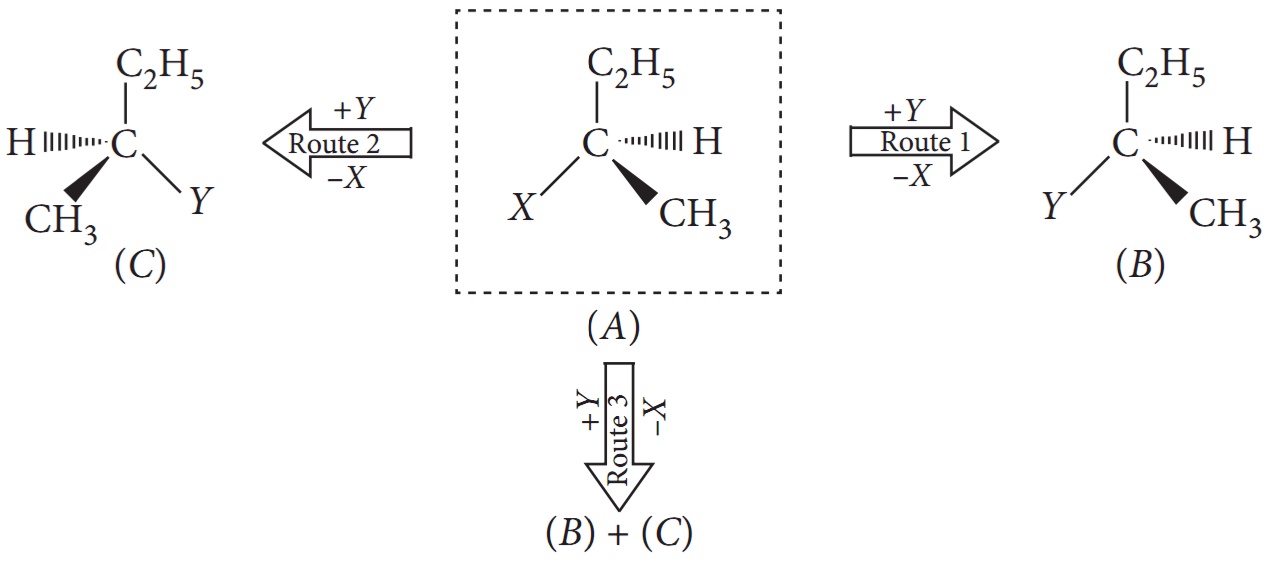
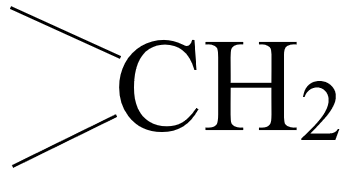 group on treatment with Zn-Hg and cone. HCl (Clemmensen reduction) or with hydrazine followed by NaOH or KOH in highly boiling solvent such as ethylene glycol (Wolff-Kishner reduction).Aldehydes differ from ketones in their oxidation reactions. Aldehydes are easily oxidised to carboxylic acids on treatment with HNO3, KMnO4, K2Cr2O7 etc. Even mild oxidising agents mainlyTollens' reagent and Fehling's solution also oxidise aldehydes. Ketones are generally oxidised under vigorous conditions i.e., strong oxidising agents and at elevated temperatures, to give mixture of carboxylic acids having lesser number of C-atoms than the parent ketone.
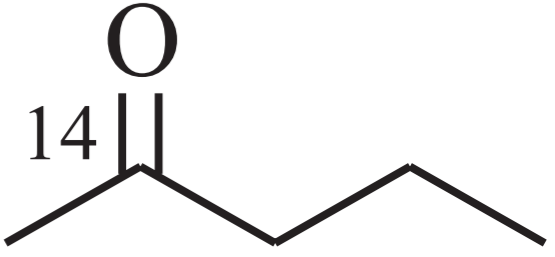 by acidified K2Cr2O7, the products are: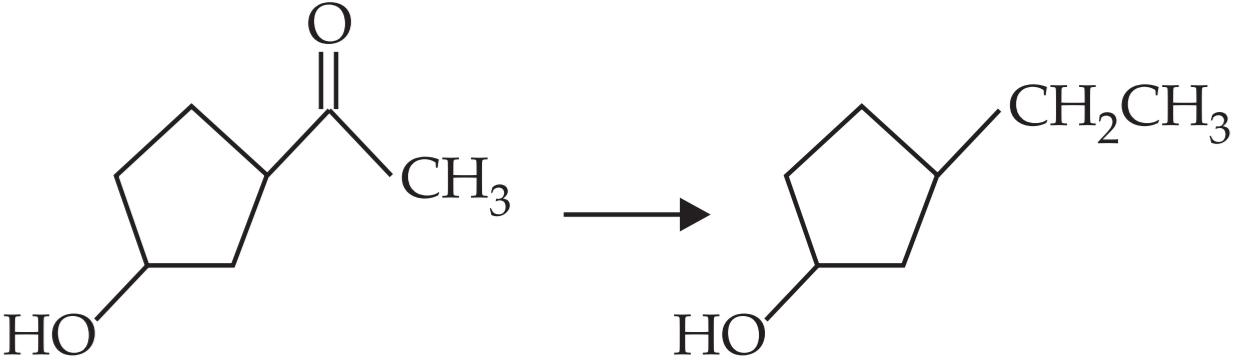
Read the passage given below and answer the following questions:
A chlorocompound (A) on reduction with Zn-Cu and ethanol gives the hydrocarbon (B) with five carbon atoms. When (A) is dissolved in dry ether and treated with sodium metal it gave 2, 2, 5, 5 - tetramethylhexane. The treatment of (A) with alcoholic KCN gives compound ( C).
The following questions are multiple choice questions. Choose the most appropriate answer:
A chlorocompound (A) on reduction with Zn-Cu and ethanol gives the hydrocarbon (B) with five carbon atoms. When (A) is dissolved in dry ether and treated with sodium metal it gave 2, 2, 5, 5 - tetramethylhexane. The treatment of (A) with alcoholic KCN gives compound ( C).
The following questions are multiple choice questions. Choose the most appropriate answer:
- The compound (A) is:
- 1-chloro-2, 2-dimethylpropane.
- 1-chloro-2, 2-dimethyl butane.
- 1-chloro-2-methyl butane.
- 2-chloro-2-methyl butane.
- The reaction of (C) with Na, C2H5OH gives:
- (CH3)3C CH2CONH2
- (CH3)3C NH2
- (CH3)3C CH2CH2NH2
- (CH3)2CHCH2NH2
- The reaction of (C) with Na, C2H5OH is called:
- Gilman reaction.
- Mendius reaction.
- Grooves process.
- Swart's reaction.
- The reaction of (A) with aq. KOH will preferably favour:
- SN1 mechanism.
- SN2 mechanism.
- E1 mechanism.
- E2 mechanism.
- Compound (B) is:
- N-pentane.
- 2, 2-dimethylpropane.
- 2-methylbutane.
- None of these.