Question
State Henry’s law. Write its one application. What is the effect of temperature on solubility of gases in liquid?

Answer

Henry’s law states that the mole fraction of gas in the solution is proportional to the partial pressure of the gas over the solution.
Applications: solubility of CO2 gas in soft drinks/solubility of air diluted with helium in blood used by sea divers or any other.
Solubility of gas in liquid decreases with increase in temperature.

Need a full question paper?

Generate a complete, print-ready paper with questions like this in minutes — across 16+ boards, with answer keys.
Start Generating Free

Similar questions

How will you bring about the following conversion?
Ethane to bromoethene.
Explain oxidation of aldehydes and ketones.
Discuss structures and magnetic properties of manganate and permanganate ions
Explain Hell-Volhard-Zelinsky reaction of carboxylic acids.
Explain (% W/V) Mass by volume Percentage with examples.
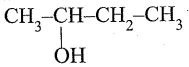
Write common name and IUPAC name of following alcohol compound.
Image
Note: In the following questions a statement of assertion followed by a statement of reason is given. Choose the correct answer out of the following choices.
  1. Both assertion and reason are true and the reason is the correct explanation of assertion.
  2. Both assertion and reason are true and the reason is not the correct explanation of assertion.
  3. Assertion is true but the reason is false.
  4. Both assertion and reason are false.
  5. Assertion is false but reason is true.
Assertion: For measuring resistance of an ionic solution an AC source is used.
Reason: Concentration of ionic solution will change if DC source is used.
Explain reaction of carboxylic acids with metals and alkalies. ### Write the equations for the reactions showing that carboxylic acids are acidic in nature and state theusefulness of this reactions.
Calculate the time to deposit 1.5 g of silver at cathode when a current of 1.5 A was passed through the solution of AgNO3. (Molar mass of Ag = 108 g mol-1, 1F = 96500 C mol-1)
Compare the general characteristics of the first series of the transition metals with those of the second and third series metals in the respective vertical columns. Give special emphasis on the following points:
Ionisation enthalpies.