The displacement equation of a particle is $x = 3\sin 2t + 4\cos 2t.$ The amplitude and maximum velocity will be respectively
Medium


Download our appand get started for free
Experience the future of education. Simply download our apps or reach out to us for more information. Let's shape the future of learning together!No signup needed.*
Similar Questions
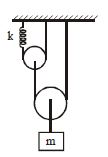
- 1What is the period of small oscillations of the block of mass $m$ if the springs are ideal and pulleys are massless ?View Solution
- 2A mass $m$ is vertically suspended from a spring of negligible mass; the system oscillates with a frequency $n$. What will be the frequency of the system if a mass $4 m$ is suspended from the same springView Solution
- 3If the length of a clock pendulum increases by $0.2 \%$ due to atmospheric temperature rise, then the loss in time of clock per day is ........... $s$View Solution
- 4Function $x$ = $A sin^2 wt + B cos^2 wt + C sin wt \ cos wt$ does not represents $SHM$ for this conditionView Solution
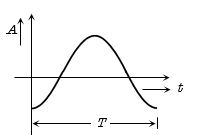
- 5Acceleration $A$ and time period $T$ of a body in $S.H.M.$ is given by a curve shown below. Then corresponding graph, between kinetic energy $(K.E.)$ and time $t$ is correctly represented byView Solution
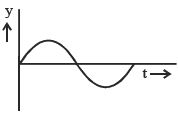
- 6The displacement versus time graph of $SHM$ is Which of the following is its acceleration versus time graph ?View Solution
- 7If $A$ is the area of cross-section of a spring $L$ is its length $E$ is the Young's modulus of the material of the spring then time period and force constant of the spring will be respectivelyView Solution
- 8$Assertion :$ Resonance is a special case of forced vibration in which the natural frequency of vibration of the body is the same as the impressed frequency of external periodic force and the amplitude of forced vibration is maximum.View Solution
$Reason :$ The amplitude of forced vibrations of a body increases with an increase in the frequency of the externally impressed periodic force. - 9A body executing simple harmonic motion has a maximum acceleration equal to $ 24\,metres/se{c^2} $ and maximum velocity equal to $ 16\;metres/sec $. The amplitude of the simple harmonic motion isView Solution
- 10A particle performs $SHM$ with a period $T$ and amplitude $a.$ The mean velocity of the particle over the time interval during which it travels a distance $a/2$ from the extreme position isView Solution