MCQ
The formula for electrostatic potential is _____________.
- AElectrostatic potential = Work done × charge
- BElectrostatic potential = Work done/ charge
- CElectrostatic potential = Work done + charge
- DElectrostatic potential = Work done - charge
Explanation:
The formula for electrostatic potential is Electrostatic potential = Work done/ charge.
Generate a complete, print-ready paper with questions like this in minutes — across 16+ boards, with answer keys.
The magnitude and direction of the current in the circuit shown will be
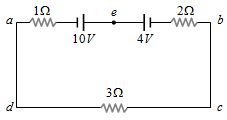
|
(a) |
(b) |
|
(c) 1 A from b to a through e |
(d) 1 A from a to b through e |
Assertion : Television signals are received through sky-wave propagation.
Reason : The ionosphere reflects electromagnetic waves of frequencies greater than a certain critical frequency.
|
(a) If both assertion and reason are true and the reason is the correct explanation of the assertion. |
|
(b) If both assertion and reason are true but reason is not the correct explanation of the assertion. |
|
(c) If assertion is true but reason is false. |
|
(d) If the assertion and reason both are false. |
Which of the following plots may represent the thermal energy produced in a resistor in a given time as a function of the electric current

|
(a) a |
(b) b |
(c) c |
(d) d |
The region of the atmosphere above troposphere is known as
|
(a) Lithosphere |
(b) Uppersphere |
(c) Ionosphere |
(d) Stratosphere |
